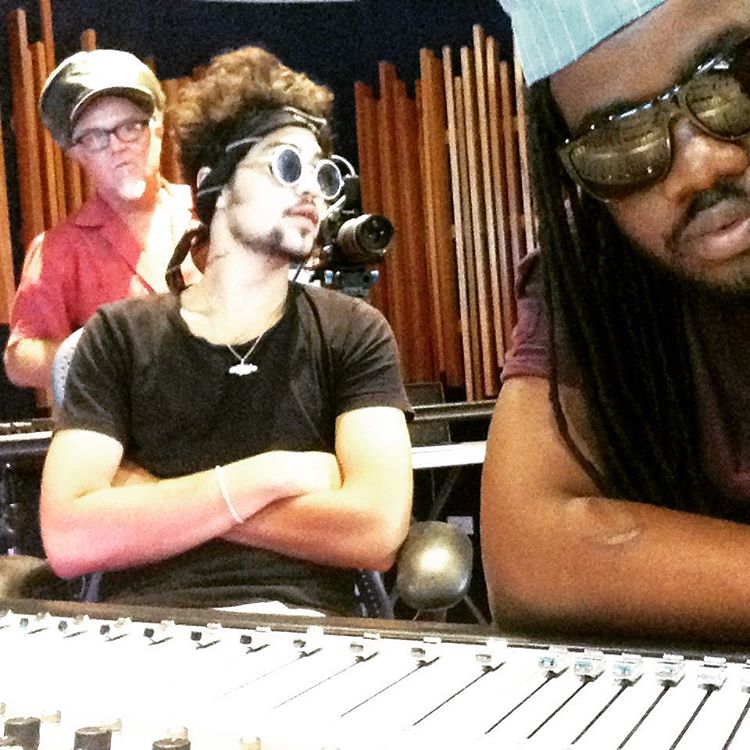
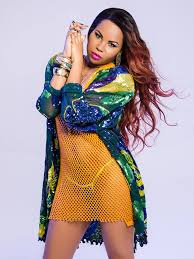
Tag: dubcorner

  • Rich Land, Poor Soul: The American Paradox and the Search for ‘One Love’

    Rich Land, Poor Soul: The American Paradox and the Search for ‘One Love’

    America is the wealthiest nation in history, yet its sidewalks are lined with the wreckage of its own citizens. It is a land of excess where the trash cans are full and the stomachs are empty. We see more people sleeping on the concrete in Los Angeles or New York than in many so-called "Third World" countries where resources are scarce but community is abundant. It’s a paradox that defies logic but follows a very specific, cold-blooded design.

    The Concrete Graveyard: Why the Wealthy Starve

    In many developing nations, the "poor" have a safety net that isn't printed on a government check: it’s etched into the culture. It’s the family compound, the village elder, the neighbor who shares the breadfruit. In the West, we’ve traded community for "independence," and the price of that independence is isolation. We have built a society where empathy is a premium service and survival is a solo sport.

    The cost of living has been engineered to be a trap. When a studio apartment costs more than a full-time minimum wage salary, the math doesn't just fail: it kills. We watch our brothers and sisters freeze in the shadows of billion-dollar skyscrapers. This isn't a lack of resources; it’s a lack of soul. It’s a refusal to see the humanity in the man holding the cardboard sign. We’ve become a nation of strangers living in fear of one another, clinging to our fences while the world burns outside.
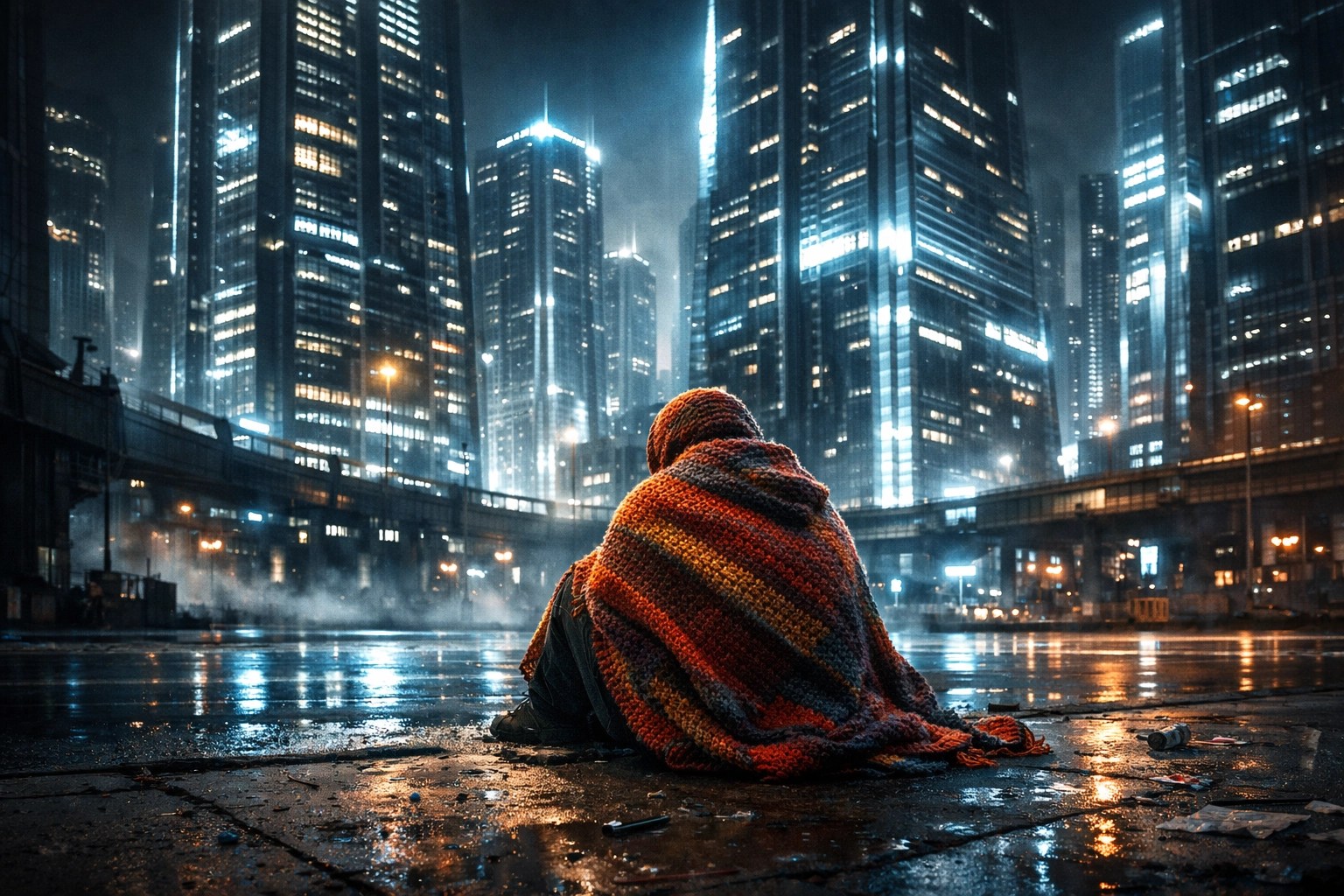
    A person sitting on an urban sidewalk against neon skyscrapers, highlighting the American paradox of poverty and wealth.

    The Food Trap: Poison on the Shelf

    If the homelessness doesn't get you, the supermarket will. America is a country that experiments on its own people under the guise of "convenience." Walk into any grocery store and you are surrounded by colorful boxes of slow-acting poison. Processed sugar, chemicals banned in Europe, and "unhealthy fast food" on every corner: it’s an assault on the body.

    The real tragedy is the "premium" on health. To eat food that actually nourishes you, you have to pay a tax. Healthy food shouldn't be a luxury for the rich; it should be a human right. Even when you try to do the right thing: when you head to places like Sprouts or specialized markets: you’re playing a game of "fake organic." You have to be a scientist just to read a label to make sure you aren't buying a lie packaged in green.

    It feels like a design. A sick population is a profitable population. Big Pharma and Big Food are two sides of the same coin, flipping back and forth while the citizen stays caught in the middle. We are treated like guinea pigs in a massive lab, fed trash until we break, then billed for the "cure." It’s a cycle of extraction that leaves the spirit drained and the body failing.

    Corruption by Design

    When we look at the state of the nation, we have to ask: is this a failure or is it working exactly as intended? The system seems rigged to keep the population in a state of constant survival mode. If you’re busy worrying about your rent and your rising blood pressure, you don't have the energy to challenge the structures of power.

    This is the "corruption" that reggae artists have been singing about for decades. When you listen to Komplain – Corruption, you hear the resonance of a global struggle against a "beast" that feeds on the vulnerable. It’s not just a political issue; it’s a spiritual one. The "Design" is meant to keep us separated, sick, and cynical.

    World Crisis - Blaz Mob Album art

    Borders, Passports, and the Great Lie

    The current narrative around immigration in America is one of the greatest hypocrisies of our time. This is a country built on the backs of immigrants: voluntary and involuntary. Unless you are Native American, you are a guest on this soil. Yet, we see a growing hostility toward those crossing borders in search of the same "dream" that brought everyone else here.

    The rest of the world is overpopulated, and instead of finding ways to integrate and elevate, the West builds walls. But these walls are psychological as much as they are physical. We are killing off our own population through bad food and neglect, then complaining about immigration when the very fabric of the country requires new life to survive.

    Passports are just paper. Cultural boundaries have their place in preserving heritage, but the world has changed. We are more globalized than ever. The idea that someone born on the other side of an invisible line is "less than" or "illegal" is a rejection of the "One Love" philosophy.

    Where Is The Love?

    The question remains: Where is the love?

    We are all people of this Earth. We are connected by the same air and the same sun. We aren't separated by the seas or the mountains; we are joined by them. The divisions we see today: the borders, the class warfare, the racial tension: are all artificial constructs designed to keep us from realizing our collective power.

    Until we meet the "aliens from other planets" that everyone seems so obsessed with, we are all we have. We are one tribe. Embracing an immigrant isn't just a political act; it’s a human one. Loving your neighbor isn't a suggestion; it’s a necessity for survival.

    Two hands of different backgrounds united in a grip, representing global connection and a world without borders.

    The One Love Vibration

    The music we cover here at DubCorner isn't just about a bassline or a rhythm: it’s about a message. It’s about the Rastafari Children and the roots era that demanded we look at the world with open eyes. The "One Love" philosophy is the only antidote to the "American Paradox."

    We have to start demanding more: not just from our politicians, but from ourselves. We have to demand real food, real community, and real empathy. We have to stop treating each other like competitors and start treating each other like family.

    Three Male Reggae Artists Outdoors

    The system is designed to keep you cold, but the fire of unity is harder to put out. Whether it's through the music we share or the way we treat the person on the street corner, it’s time to bring the soul back to the land. No more borders in the mind. No more poison on the plate. Just the truth.

    Why This Works

    • Raw Honesty: It tackles the "Design" theory head-on, reflecting a deep skepticism of systemic structures.
    • Cultural Rooting: It ties modern socio-political frustrations back to the core tenets of reggae and Rasta philosophy.
    • Global Perspective: It challenges the Western individualist mindset by comparing it to communal "Third World" structures.

    Perfect For

    • Readers who feel the "system" is failing them.
    • Fans of roots reggae who understand music as a tool for social change.
    • Anyone questioning the high cost of health and the low cost of human life in the modern West.

    A serene person with tropical and urban designs, embodying the spirit of roots reggae and conscious cultural unity.


    Join the movement for a more conscious world.
    Check out our Upful Vibes Playlist to keep your spirit high while we navigate these times.

    Explore more at DubCorner.

  • The Artist’s Yearly Guide: What to Release and When 🎶

    The Artist’s Yearly Guide: What to Release and When 🎶

    Timing isn’t just a logistical detail in the music industry: it’s the pulse of the culture. I’ve been looking through my photo archives from last year, scrolling through shots of the G Jam sessions and the road trips with the Jolly Boys, and it hit me how much the "vibe" of our releases matched the seasons we were moving through. Music is a living thing. It reacts to the temperature, the light, and the collective mood of the people listening.

    If you drop a heavy, introspective trip-hop track in the middle of a July heatwave, you’re fighting the sun. If you drop a high-energy dancehall anthem in the dead of a bleak February, you’re screaming into a void of people who just want to curl up under a blanket. Strategic releasing is about alignment. It’s about being the soundtrack to the moment the world is already living.

    At DubCorner, we see it all the time. The artists who win aren’t just talented; they’re savvy. They know when to hold back and when to let the bass drop. This is the breakdown of how to map out your year, Dizzle-style.

    ❄️ Winter (Jan – Feb): The Fresh Start & The Heart

    January is the industry’s "clean slate." The holiday noise has finally died down, the major labels are still hungover from their Q4 pushes, and listeners are looking for something new to define their year. This is the month of the "New Year, New Me" anthem.

    If you’ve got high-energy, motivational tracks or heavy workout bangers, January is your window. People are hitting the gym, setting goals, and looking for a sonic kick in the teeth to get them moving. It’s a quiet period for media, which means your pitch has a better chance of landing in an inbox that isn't already overflowing with 500 other "Best of the Year" emails.

    Three producers and musicians in a recording studio

    Then comes February. It’s the shortest month, but it carries a heavy emotional weight. You’ve got Valentine’s Day, which everyone thinks is just for the lovers: but the real money is in the heartbreak. Ballads are cool, but the world needs anti-Valentine’s tracks. Songs about independence, grit, and the wreckage of a bad breakup often resonate deeper than another generic love song. We’ve talked about this before in our Producer’s Survival Guide to Dating, and that same emotional honesty is what you need to bottle up for your February releases.

    Genre Suggestions: Upbeat Workout Anthems, Motivational Trap, Raw Acoustic Ballads, Heartbreak R&B.

    Engage Your Fans: "What’s your go-to 'new beginning' song? Is it a high-energy banger or a quiet acoustic vibe?"


    🌱 Spring (March – May): The Awakening

    Spring is about the thaw. As the weather warms up, the music should start to feel lighter and more hopeful. This is the territory of indie-pop, folk, and light acoustic sounds. It’s the "awakening" phase.

    In the studio at G Jam, we start seeing artists move away from the heavy, dark winter production and toward something with more air. March and April are tricky because of massive industry events like SXSW. If you aren't playing the festival circuit, you want to time your releases either just before the March madness starts or in the "late spring" window of mid-April.

    By May, the "Pre-Summer" hype is real. This is the perfect time to drop that track that feels like a beach trip or a road trip with the windows down. You want to catch the early summer playlists before the heavy hitters start dropping their June blockbusters. If you’re thinking about visuals, now is the time to learn how to create a Spotify Canvas that matches that blooming, vibrant energy.

    Genre Suggestions: Indie-Pop, Tropical House, Folk, Light Roots Reggae, Neo-Soul.

    Engage Your Fans: "If your life was a movie scene in a park, what song would be playing in the background right now?"


    ☀️ Summer (June – Aug): The Peak Energy

    This is where we live. This is the "island vibe" territory. Summer is the season for Reggae, Dancehall, and Afrobeats. It’s high energy, it’s danceable, and it’s loud.

    When I look back at the photos of the Jolly Boys performing outdoors, you can see it in the crowd: the rhythm just hits differently when the sun is out. This is the peak festival season. You want music that works in a backyard BBQ, a club, or a massive outdoor stage.

    Three male reggae artists outdoors

    June and July are for the anthems. Think Blaze Mob – Rastafari Children energy. You want tracks that make people move. By August, the mood shifts slightly into "late summer nostalgia." It’s the "one last party" vibe. Songs that feel like a sunset or a bittersweet end to a holiday do incredibly well here.

    Don't forget to push your tracks to our Upful Vibes Playlist during this window: it’s curated specifically for this peak energy.

    Female artist in vibrant dancehall-inspired outfit

    Genre Suggestions: Dancehall, Afrobeats, Roots Reggae, Summer Pop, EDM.

    Engage Your Fans: "I’m looking for the ultimate BBQ track: should I go with classic Roots Reggae or a modern Dancehall remix? Tell me below!"


    🍂 Fall (Sept – Nov): The Deep Dive

    As the leaves start to change and the days get shorter, the music needs to get deeper. September is the "back to reality" month. People are settling into routines: school, work, the grind. Alternative Rock, Lo-Fi beats, and more complex electronic sounds work well here.

    October is the "darker" side. This is where you can get experimental. Think Trip-Hop, moody Jazz, or anything with a bit of grit. It’s the season for storytelling. People are spending more time indoors, listening more closely to lyrics. If you have a track that’s lyrically dense or musically challenging, this is its time to shine.

    Soulful artist with headphones on an urban fire escape, capturing the moody vibe of fall music releases.

    November brings the "coziness." As the temperature drops, people want music that feels like a warm blanket. Soul, R&B, and singer-songwriter tracks are perfect for this window. You’re building a mood that’s reflective and poetic.

    Genre Suggestions: Alternative Rock, Lo-Fi, Trip-Hop, Experimental Jazz, Soulful R&B.

    Engage Your Fans: "When the leaves start falling, do you prefer a playlist that makes you think or a playlist that makes you dance?"


    🎄 December: The Holiday (or the Silent) Period

    December is a beast. Unless you have a genuine holiday song or a massive "Song of the Year" contender, it is incredibly difficult to break through the noise. The major labels dump their biggest assets, and holiday classics dominate the airwaves.

    The smart move for independent artists? Use December for the recap. Drop an acoustic version of your biggest hit from the year. Release a "Best of" EP or a live session from the studio. It’s about maintaining connection with your fans without trying to fight the Christmas giants. It’s also a great time to clean up your digital presence, like merging your YouTube artist channels so you’re ready to hit the ground running in January.

    Genre Suggestions: Acoustic Versions, Live Sessions, Holiday Covers, Remixes.

    Engage Your Fans: "What was YOUR song of the year? Tag the artist who made your 2025!"


    The Release Strategy: How Often?

    It’s not just about when in the year you release, but the cadence. Research shows that streaming platforms reward consistency. Instead of dropping one 12-track album once a year and then disappearing, break it up.

    The "Dizzle-approved" strategy is the single-led approach. Drop a single every 6 to 8 weeks. This keeps you in the algorithms and gives you a reason to talk to your fans constantly. A 12-song album can be:

    1. Single 1
    2. Single 2
    3. EP (Singles 1 & 2 + 2 new tracks)
    4. Single 3
    5. Full Album

    This creates five separate promotional opportunities instead of one. It builds momentum. It gives each song room to breathe.

    Pro-Tips for Your Journey

    • Plan 3 Months Ahead: If you want a summer anthem, you need to be finishing the mix in March and pitching to playlists in April.
    • Release on Wednesdays or Thursdays: While Friday is the industry standard for major labels, dropping on a Wednesday can help you avoid the "Friday flood" and get more dedicated attention from your core fans.
    • Use Your Personal Story: Looking back at my photos from the road with the Jolly Boys, those images tell a story that the music alone can't. Document your process. Share the studio sessions. Use your life to sell the vibe.

    Music is more than just audio; it's a moment in time. Align your sound with the season, stay consistent with your releases, and keep the energy authentic.

    See you in the studio.

    ( Dizzle)

  • Soundtracking the Chaos: How 2026’s World Events are Reshaping Music

    Soundtracking the Chaos: How 2026’s World Events are Reshaping Music

    March 2026 feels like the volume got turned up overnight—and songs like Blaze Mob’s “World Crisis” and Gyptian’s “Serious Times” are catching that pressure in real time.

    The world in February 2026 feels like a pressure cooker with the lid rattling. Between the shifting frontlines in Ukraine, the ongoing heartbreak in Gaza, the defiant echoes of Iran’s street protests, and the tension of ICE raids closer to home, the global atmosphere is heavy. It’s thick with wreckage and grit. But history shows us that when the world goes into a tailspin, music stops being mere background noise and starts becoming a spiritual transmission, a survival frequency we all need to tune into.

    Gyptian’s “Serious Times” fits the moment like a glove—because it doesn’t act surprised by any of it. It reminds you we’ve been navigating these waters for a long time. Different headlines, same pressure.

    And Blaze Mob’s “World Crisis” hits from the other side of the same storm—less comfort, more confrontation. It’s a straight report from the street: corruption, manipulation, systems eating people alive. No dramatic pause. Just the truth on beat.

    At DubCorner, we’ve always believed that music isn’t just about the beat; it’s about the message being carried through the wires. Right now, that message is getting louder, weirder, and more essential than ever.

    Days of Ash: U2 and the Fragmented Protest

    U2 just pulled a classic U2 move. No warning, no months of cryptic billboards, just a digital drop of the Days of Ash EP. It’s visceral. It’s the kind of project that reminds you why they became a monolith in the first place. This isn’t the polished, stadium-rock optimism of their middle years. This is "Sunday Bloody Sunday" levels of raw, updated for a world where the conflict isn't just on one street, but on every screen simultaneously.

    The tracks move through the wreckage of our current headlines. They’ve managed to weave the desperation of the Iranian youth movement and the claustrophobia of the ICE raids into a sonic landscape that feels like a warning. But there’s a massive difference between U2 dropping a protest record in 1983 and doing it in 2026.

    Back then, a big record could unify the conversation. Today, we live in a fragmented digital landscape. While Bono is singing about the "Ash of Kyiv," half the world is watching a 15-second TikTok remix of a cat dancing to a distorted bassline. The "protest song" has changed. It’s no longer just a top-down anthem; it’s a million little flickers of resistance scattered across decentralized platforms. Days of Ash highlights the tension: a legacy band trying to hold a mirror up to a world that has already smashed the mirror into a thousand different pieces.

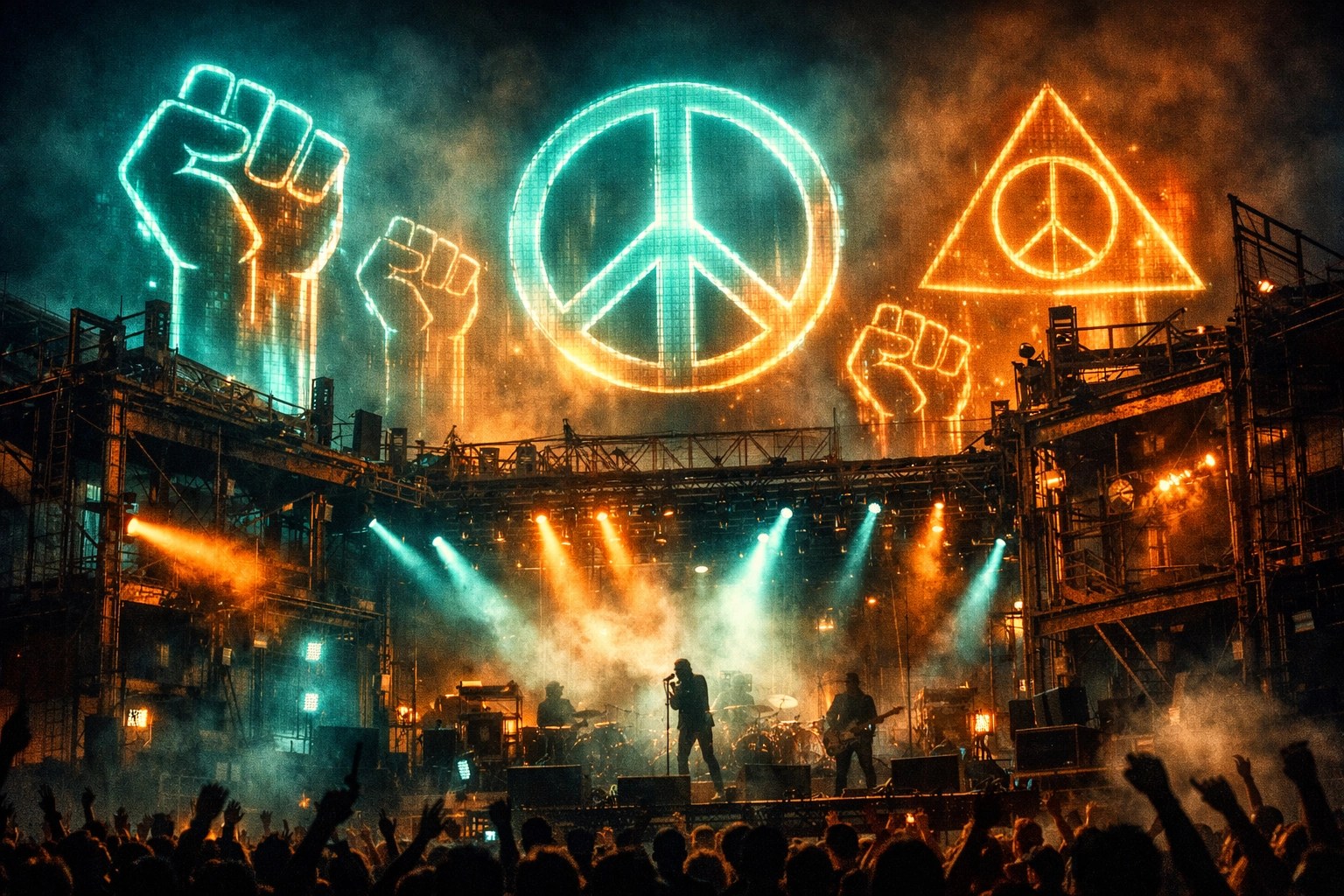
    Industrial concert stage with holographic raised fists symbolizing modern protest music and social change.
    A futuristic, politically-charged concert stage where holographic protest slogans flicker against a backdrop of industrial wreckage.

    This shift toward social commentary isn't just for the legends. We’re seeing it across the board, from the roots-reggae scene to the hardest dancehall—songs like Blaze Mob’s “World Crisis” still cut through because they’re built like warning sirens. No stadium polish. Just the nerve exposed.

    And here’s the contrast that’s been hitting hard lately: even while the headlines stay ugly, the culture still finds ways to come home. That’s why moments like Chronixx’s emotional homecoming at Lost In Time land so heavy—less “escape,” more reconnection. One side is global chaos. The other side is community, basslines, and people remembering who they are in real time.

    Because while the tech and the platforms change, the roots message stays the same. The beacon doesn’t move. It just finds new speakers.

    Take a look at the lyrics for Komplain's "Corruption", it’s the same energy. It’s that raw, unfiltered take on social injustice that cuts through the noise of 2026.

    The Bad Bunny Border War: Culture vs. Nationalism

    If U2 represents the old guard’s attempt to interpret the chaos, Bad Bunny’s recent Super Bowl Halftime show was the frontline of the culture war. It was supposed to be a celebration of global Latin culture, a victory lap for the most-streamed artist on the planet. Instead, it became a political lightning rod.

    The fallout was immediate. The FCC was flooded with complaints, fueled by a wave of nationalistic critiques labeling the performance as "un-American." Why? Because it didn't center the traditional English-speaking narrative. It was unapologetically Caribbean, loud, and defiant.

    This controversy isn’t just about music; it’s about the friction created when global culture collides with rising nationalistic sentiment. For many, the show was a spiritual transmission of pride and identity. For others, it was a threat to a perceived "national brand." The FCC’s decision to investigate, and the political firestorm that followed, shows that in 2026, the stage isn't just a place for entertainment. It’s a battlefield where the definition of "belonging" is being fought out in real-time.

    A global Latin artist performing on a neon stadium stage representing cultural identity in music.
    A massive sports arena stage bathed in neon purples and golds, featuring a global Latin icon standing defiant before a sea of digital screens and flags.

    The Recessional Utility: Streaming in an Age of Inflation

    Let’s talk money, because that’s where the chaos hits home for most of us. With geopolitical tensions driving energy prices through the roof and inflation making a simple grocery run feel like a heist, the way we consume music has shifted.

    In 2026, digital streaming has become what economists are calling a "recessional utility." People are cutting their cable, skipping the movies, and staying away from the $200 concert tickets, but they aren’t giving up their Spotify or Apple Music. It’s the cheapest form of high-quality entertainment left. It’s the sanctuary.

    But here’s the rub: while we’re all leaning on these platforms for our mental health, the artists are starving. The "protest" isn’t just in the lyrics anymore; it’s in the business model. We’re seeing a massive push for new payment structures. Artists are fighting for a larger slice of the pie as the cost of living makes the traditional royalty check look like a joke. The industry is reaching a breaking point where "exposure" doesn't pay the electric bill.

    This economic pressure is forcing creators to get smarter. We're seeing more artists focusing on building their own channels and reclaiming their presence. If you're an artist navigating this, you know how vital it is to merge your YouTube Topic Channel with your Official Artist Channel just to keep your brand clean and your revenue streams direct.

    Visualization of digital audio data flowing through cables and transforming into streaming royalty coins.
    A visualization of digital sound waves flowing through a fiber-optic cable and transforming into a cascade of glowing digital coins and currency symbols.

    AI and the War for Trust

    If the economy is the body of the industry, trust is its soul—and right now, that soul is under attack. 2026 has seen the rise of sophisticated AI voice cloning fraud. It started with "fake" Drake songs back in the day, but now it’s evolved into a full-blown crisis. Scammers are using AI to mimic artist voices for fraudulent endorsements, fake collaborations, and even "social engineering" attacks on labels.

    It’s reached a point where you can’t trust your ears. But the industry isn’t just rolling over. We’re in the middle of a high-tech "AI vs. AI" battle. Labels and tech firms are deploying "Guardian AI" to scan platforms in real-time, identifying the subtle digital artifacts that give away a clone.

    This isn't just about copyright; it’s about the sanctity of the human voice. In a world full of corruption and havoc, the one thing we crave is authenticity. That’s why songs like Blaze Mob’s “World Crisis” and Gyptian’s “Serious Times” matter as reference points—they’re human pressure on wax, no filter, no lab coat, no cosplay. Just real people calling the moment exactly how it feels. And when that gets too heavy, the antidote isn’t denial—it’s gathering. It’s nights like Lost In Time where artists like Chronixx step back into the arms of the people and the whole room remembers: the world can be on fire and the spirit can still be intact.

    Clash of digital audio frequencies representing the industry's fight against AI voice cloning fraud.
    A dark digital void where two abstract, crystalline AI entities clash, sending sparks of binary code and soundwave fragments into the darkness.

    The Spiritual Transmission

    Despite the chaos, or maybe because of it, music is more vital in 2026 than it has ever been. We are living through a time of unprecedented corruption and havoc. The old systems are creaking, the economy is tight, and the tech is getting scary. But that’s exactly when music does its best work.

    It’s that spiritual transmission that keeps us sane. Whether it’s a protest EP from a legacy act, a defiant Super Bowl show, or a local artist pouring their heart out in the studio, music is the thread that keeps us connected to our humanity. It’s about the Upful Vibes we curate to block out the noise of the news cycle. It’s about finding the Love Loops in a world that feels increasingly cold.

    So, yeah, the world is a mess. But as long as there’s a beat to follow and a voice to listen to, we’re not lost. We’re just soundtracking the chaos.

    Stay tuned, stay passionate, and keep the volume up.

    Dizzle
    Label Manager / Technical Director, DubCorner

  • The WYFL Rhythm: DJ Mac’s 2026 Dancehall Takeover (Tracklist & Context)

    The WYFL Rhythm: DJ Mac’s 2026 Dancehall Takeover (Tracklist & Context)

    The streets don’t lie, and right now, the streets are screaming one name: DJ Mac. By March 2026, the ‘What You Feel Like’ (WYFL) rhythm hasn’t just entered the charts: it has colonized them. This isn’t your standard juggling; it’s a cultural shift. Produced by the powerhouse duo of DJ Mac and CrashDummy, the WYFL riddim is the definitive sound of the year, blending that signature Mac emotional weight with the raw, unpolished grit of the new ‘Genna’ generation.

    It’s the kind of production that forces you to feel something before you even hear the first lyric. The bass is heavy, the melodies are haunting, and the atmosphere is thick with the reality of 2026 Kingston.

    Why This Works: The Architecture of a Hit

    DJ Mac has mastered a specific frequency: a blend of “pain music” and street anthemics that resonates with anyone who has ever had to hustle. The WYFL rhythm works because it refuses to be background noise. It demands attention through its sonic texture: dark, spacious, and urgent.

    In an era where Dancehall tunes can sometimes feel over-produced and clinical, WYFL feels human. It’s got flaws. It’s got soul. It’s got that specific “grit” that separates a viral moment from a timeless classic. The production leans heavily into minor keys and reverb-soaked synth pads, creating a landscape where artists can either vent their frustrations or celebrate their victories.

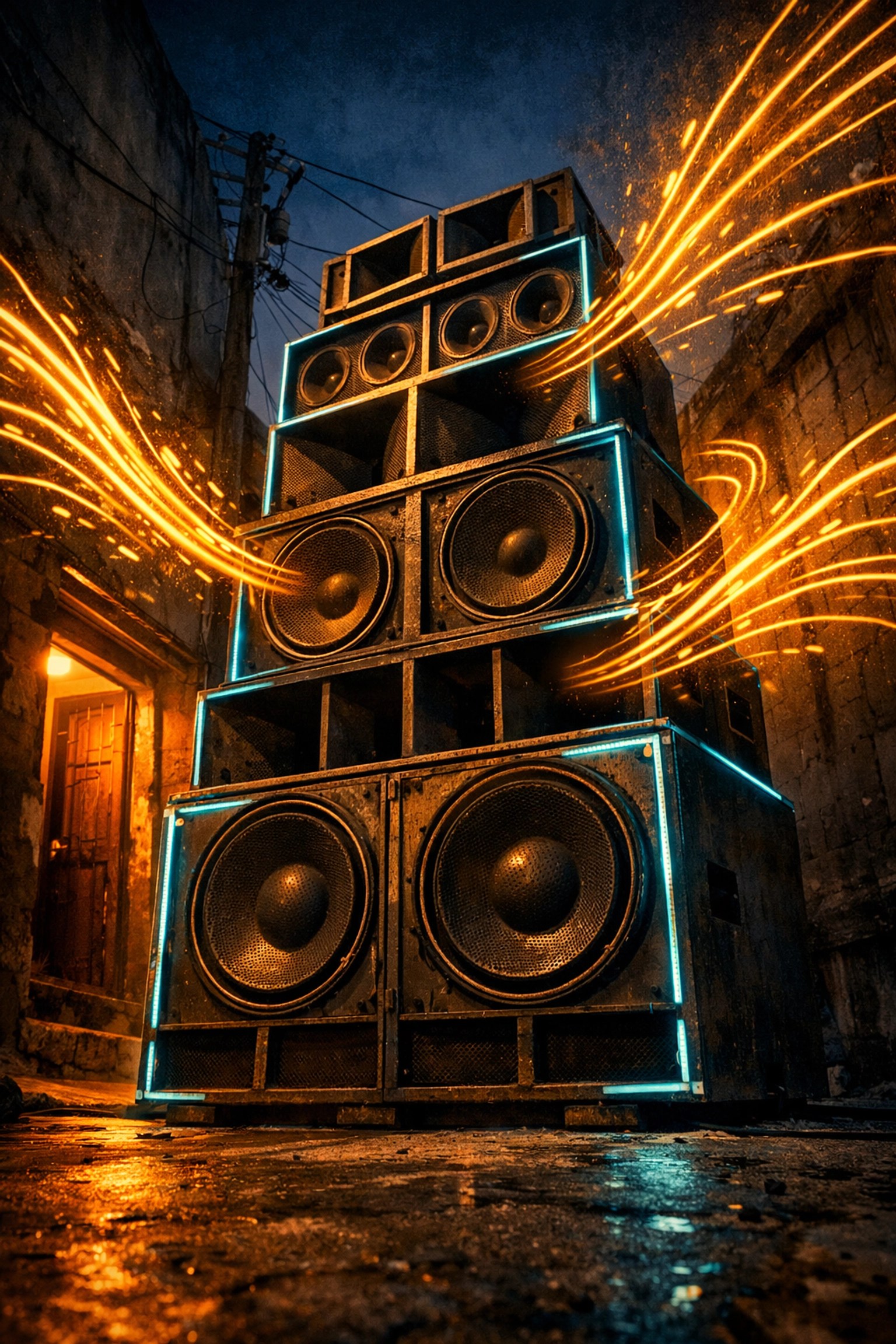
    A massive Kingston sound system stack in a dark alley representing the gritty WYFL dancehall rhythm.

    The Tracklist: The Heavy Hitters

    The project isn’t just a handful of songs; it’s a massive compilation featuring over 180 tracks across various edits, but a few key players have defined the narrative.

    Skippa : “WYFL”

    This is the lead anthem. Currently sitting comfortably in the Top 3, Skippa’s title track is the blueprint for the entire project. His cadence is relaxed but lethal. He isn’t trying too hard: he’s just stating facts. It’s the “What You Feel Like” lifestyle: unapologetic, self-assured, and rooted in the present moment. Skippa’s ability to ride the beat with a conversational flow makes the track feel like a direct message to the listener.

    Chronic Law : “Badness Upgrade 2.0”

    The Law Boss doesn’t miss. Chronic Law takes the WYFL rhythm and turns it into a gritty introspection on survival. “Badness Upgrade 2.0” isn’t just about violence; it’s about the evolution of the street code. Law’s voice, weathered and authoritative, perfectly complements the somber undertones of DJ Mac’s production. It’s a masterclass in modern street narrative.

    Valiant : “Oh When”

    Valiant brings the melodic infectiousness that has made him a global face for the genre. “Oh When” plays with the rhythm’s space, using silence as much as sound. It’s catchy enough for the radio but deep enough for the late-night drive. Valiant understands the emotional weight of the track and leans into it, proving why he remains at the top of the food chain in 2026.

    The Extended Roster:

    • Govana – “Pond Turtle”
    • Jahshii – “Expensive Structure”
    • Skeng – “No Flunk”
    • Stylo G – “Mukky”
    • Nigy Boy – “Risk It All”
    • Shatta Wale – “Big Lie Dat”

    WYFL in the Gospel Space: Crossover Reach

    The WYFL rhythm didn’t stay boxed in by dancehall codes. It crossed the aisle.

    D.A.Jay stepped in and delivered a gospel cut on the same WYFL rhythm—same cold bass, same haunted space, but the message flips from street testimony to spiritual testimony. And Pastor Ryan Mark’s presence in the conversation adds weight to that crossover, because it shows this riddim isn’t just a trending instrumental—it’s a platform people are using to speak to entirely different audiences.

    That’s reach. That’s impact. One rhythm, multiple realities—club, street, prayer.

    The ‘Genna’ Strategy: Investing in the Youth

    DJ Mac isn’t just a producer; he’s a scout. His dominance in 2026 stems from a deliberate strategy: working with the younger generation of ‘Genna’ artists. While others chase the established legends for a quick hit, Mac is in the studio with the newcomers, the ones still hungry, the ones whose lyrics are still stained with the dust of the road.

    This isn’t charity: it’s smart business. By aligning himself with the Genna movement, Mac ensures his sound remains relevant to the demographic that actually drives the culture. These artists bring a different energy: a frantic, high-stakes urgency that pairs perfectly with his atmospheric beats. He provides the professional structure; they provide the raw, unfiltered reality. This synergy is exactly why DubCorner is seeing such a massive surge in interest around these specific collaborations.

    Street Narratives and Emotional Weight

    The WYFL rhythm is part of a broader trend in 2026 Dancehall: the return of the “pain song.” For a few years, the genre leaned heavily into “party and trap” vibes, often losing the storytelling element that made it a global powerhouse. DJ Mac has brought that back.

    The “emotional weight” mentioned in every review of this riddim isn’t just about sad melodies. It’s about the tension between wanting a better life and the chaos required to get there. When you listen to Jahshii on “Expensive Structure” or Nigy Boy on “Risk It All,” you aren’t just hearing lyrics: you’re hearing a report from the front lines of the 2026 experience.

    It’s about the struggle: the wreckage of broken systems and the grit required to build something new.

    Story Behind the Sound: DJ Mac x CrashDummy

    The collaboration between DJ Mac and CrashDummy is one of the most successful partnerships in recent music history. They operate like a two-headed beast. Mac brings the ear for melody and the commercial sensibilities; CrashDummy brings the experimental edge and the technical precision.

    Their process is reportedly intense. They don’t just “make a beat.” They build a world. The WYFL rhythm went through dozens of iterations before the final version was released. They weren’t just looking for a hit; they were looking for a vibe: something that could hold up 180 different artists without becoming repetitive.

    This level of dedication is why their artist updates are always at the top of the news cycle. They aren’t just releasing music; they are curate-releasing culture.

    Close-up of a producer's hand on a mixing desk showing the technical production of the WYFL rhythm.

    Why WYFL Dominates 2026

    It’s easy to credit the success to the big names like Skippa or Chronic Law, but the real winner here is the consistency. In a digital landscape where music is consumed and discarded in seconds, the WYFL riddim has staying power. It has “legs.”

    It’s versatile. You can hear it in a car on Constant Spring Road, in a club in Brixton, or through headphones in a bedroom in Brooklyn. It’s a global language spoken through a Jamaican dialect. It bridges the gap between the old-school juggling culture: where multiple artists jump on one beat: and the modern era of single-driven streaming success.

    Perfect For:

    • Late Night Drifting: The spacious production is made for night drives.
    • The Hustle: Lyrics that validate the hard work and the risks.
    • The Sound System: The low-end frequencies are designed to shake the ground.
    • Lyrical Analysis: For those who still care about what is being said, not just how it sounds.

    Lyrics: A Taste of the Grit

    Skippa – “WYFL”
    “What you feel like? / No regular life / Man move precise / Price of the ice / Keep the circle tight…”

    Chronic Law – “Badness Upgrade 2.0”
    “Upgrade the system / No more glitching / Every move is a mission / Listen…”

    These lines aren’t complex, but they are effective. They capture the sentiment of a generation that is tired of talk and ready for action. They reflect the same urgency found in our features on Jahmi Roc: an artist who also understands the power of a final, definitive statement.

    The Verdict

    The WYFL Rhythm isn’t just the hottest juggling of 2026; it’s a timestamp. Years from now, when people look back at the sound of the mid-2020s, this is what they will point to. It’s the sound of the Genna generation finding their voice under the guidance of a producer who knows exactly how to frame their reality.

    DJ Mac and CrashDummy have set a bar that few will be able to clear this year. It’s authentic, it’s street-focused, and most importantly, it’s exactly what the culture needed.

    Check out the full rhythm and more updates:

    The takeover is here. What do you feel like?

  • The Blueprint: Why Veteran Artists Are the Ultimate Influencers

    The Blueprint: Why Veteran Artists Are the Ultimate Influencers

    The music industry likes to chase the new, the shiny, and the viral: but the veterans are the ones holding the actual map. While the youth culture drives the immediate hype and the TikTok trends, it’s the older artistes who provide the architectural integrity for the entire scene. They aren't just "legacy acts" or voices from the past; they are the ultimate influencers because they possess the one thing you can’t download, stream, or fake: lived experience.

    In 2026, the term "influencer" has been hijacked by people with ring lights and trending audios. But real influence is the ability to move a culture, to shift a mindset, and to sustain a career across decades of technological upheaval. The veterans are the blueprint. They are the data centers of the industry, and if the new generation isn't downloading that info, they’re building on sand.

    The Storytelling Advantage

    There is a weight to a voice that has seen the industry transition from vinyl to tape, from CD to streaming, and from stage shows to virtual reality. Veteran artists have a way of telling a story that resonates with a level of authenticity the youth simply hasn't earned yet. It’s the difference between reading about a struggle and living through the era that defined it.

    This authenticity translates into a unique cultural impact. When an OG speaks, the room goes quiet. That’s not just respect for age; it’s respect for the "storytelling advantage." They leverage their lived experiences to create narratives that connect across generations. They aren't just making songs; they are documenting a lineage. This is why a track from a veteran can feel as relevant in a high-end lounge as it does in a grit-filled sound system session. They know how to move people because they’ve been doing it since before the algorithm existed to tell them how.

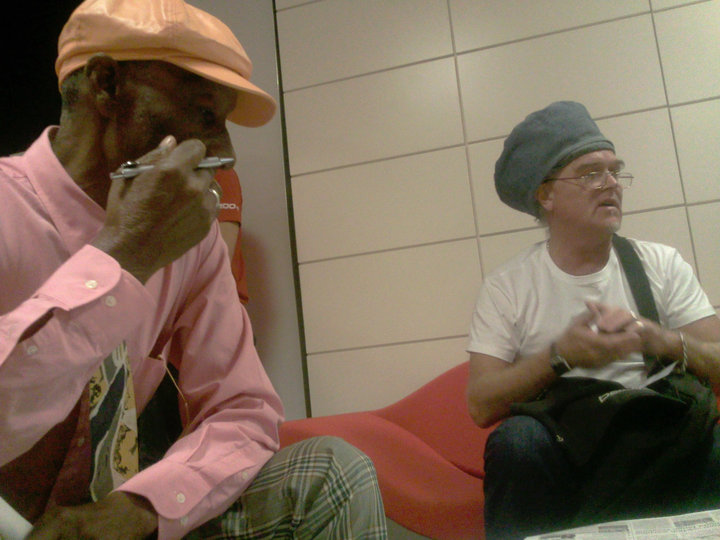
    Two men in conversation

    Why This Works: The Knowledge Transfer

    The dynamic between the veteran and the rising star is where the real magic happens. Look at the current landscape: whenever a "Genna" wave artist links up with a foundation legend, the result is almost always a classic. Why? Because the veteran provides the structure.

    The Blueprint of Production
    Older artists understand the fundamentals of a "hit" beyond the 15-second hook. They understand the bridge, the cadence, and the call-and-response that keeps a crowd engaged for an entire set. They bring a technical director's mindset to the booth. They know when a rhythm needs to breathe and when it needs to hit with the force of a freight train.

    Navigating the Industry Minefield
    The music business is a wreckage of one-hit wonders who didn't have a mentor. Veteran artists are the ultimate influencers because they’ve survived the sharks. They understand publishing, royalties, and the importance of owning your masters: conversations that are often sidelined in the rush for viral fame. They are the ones who can tell a young producer why they need to check their Spotify specifications before they drop a project, ensuring the visual matches the sonic quality.

    The Invisible Hand of Mentorship

    You won't always see the influence on a public feed. A lot of the most vital "influencing" happens in the shadows: in the DubCorner studio, in the late-night sessions, and on the long drives to stage shows. This is where the veteran shares the "info": the nuances of stagecraft, the psychology of a crowd, and the discipline required to stay relevant for thirty years.

    They function as leaders through a dual identity: they are creators who can still "move people and change minds," and they are survivors who have demonstrated the sacrifice required for longevity. This isn't just about music; it’s about organizational models that recruit and retain talent. When a veteran artist backs a new movement, they give it a stamp of approval that no marketing budget can buy. They are the bridge between the rich cultural history of the roots era and the electronic music or dancehall-tunes of today.

    Veteran artist mentoring a young musician in a recording studio, representing the blueprint of music industry knowledge.

    Influence Beyond the Booth

    The data back this up. In 2026, we’re seeing veteran figures dominate platforms not just by following trends, but by setting the tone. Whether it’s in the military veteran community or the music veteran community, the principle is the same: authority matters. These individuals have massive followings because they offer something more than entertainment: they offer wisdom.

    They are vital to the creative economy. Organizations like the U.S. Veterans Arts Alliance have long recognized that those with deep experience bring a specific "artistic skill and meaningful influence" to the film and entertainment spheres. In the Caribbean music context, this is even more pronounced. The veterans are the ones who understand the economics of the culture. They know how to turn a moment into a movement.

    The Blueprint: What the Youth Can Learn

    If you’re a young artist or producer coming up in the scene right now, the veteran isn't your competition: they are your resource. The blueprint they’ve laid down covers:

    • Pacing: How to build a career that doesn't burn out in eighteen months.
    • Narrative: How to write lyrics that mean something ten years from now, much like the Blaze Mob – Rastafari Children lyrics.
    • Presence: How to command a stage without relying on a backing track.
    • Networking: Building relationships that aren't just transactional.

    Five men, likely musicians, relax on sofas

    The DubCorner Connection

    At DubCorner, we’ve always been about bridging that gap. Whether it’s through Riddim Saturdays or our Upful Vibes Playlist, the goal is to keep the conversation between the generations flowing. We see it every day in the studio: when an older artiste walks in, the energy shifts. There’s a level of focus and a lack of ego that comes from years of knowing exactly who you are.

    The veterans don't need to chase the clout: they are the clout. They are the ones who remind us that while the tools might change, the soul of the music remains the same. They are the influencers who don't need a filter to look good because their work speaks for itself.

    Perfect For:

    • Rising Artistes: Looking to add depth to their sound and longevity to their careers.
    • Producers: Seeking to understand the foundational elements of rhythm and storytelling.
    • Music Historians: Interested in how the "old school" continues to shape the modern dancehall-tunes landscape.
    • Fans: Who want to understand the lineage of the music they love.

    The next time you see a veteran artist on a lineup or in the studio, don't just ask for a picture. Ask for the "info." Ask about the blueprint. Because in a world of temporary trends, their knowledge is the only thing that’s permanent.

    Ready to build your own legacy? Book studio time and get into the environment where the blueprint is being redrawn every single day.

  • Five Years of the Blackheart Man: Remembering Bunny Wailer’s Legacy

    Five Years of the Blackheart Man: Remembering Bunny Wailer’s Legacy

    Today marks five years since the transition of Neville O’Riley Livingston: the man the world knew as Bunny Wailer. On March 2, 2021, the last of the original holy trinity of reggae moved on to the ancestral realm, leaving behind a void that no one else can fill. He wasn't just a singer. He wasn't just a songwriter. He was the spiritual cornerstone of The Wailers, the one who carried the flame of the movement’s most esoteric and mystic dimensions.

    While Bob Marley became the global face and Peter Tosh became the militant revolutionary, Bunny remained the soul. He was the root that stayed deep in the Jamaican soil while the branches reached across the ocean. Five years later, his presence is felt every time a needle drops on heavy vinyl or a bassline rattles the ribs of a sound system.

    The Mystic of the Original Trio

    To understand Bunny is to understand the balance of The Wailers. In the early days of Trenchtown, Joe Higgs taught the trio how to harmonize, but Bunny brought a specific, haunting clarity to those arrangements. He was the "mystic." While Bob was focused on the message and Peter on the struggle, Bunny was often looking toward the divine.

    He was the one who most strictly adhered to the Nazarite vow. His refusal to tour excessively in the early '70s: a move that contributed to the eventual fracturing of the original lineup: wasn't about a lack of ambition. It was about a commitment to a lifestyle that required unprocessed foods, meditation, and a connection to the land that the grueling grind of international touring threatened to disrupt.

    He chose the hills over the hotels. He chose the meditation of the country over the chaos of the city. That choice defined the frequency of his music. It gave his work a weight and a spiritual "thickness" that feels different from the polished output of his contemporaries.

    Mystic Rastafarian figure in the misty Blue Mountains of Jamaica, reflecting the roots of Bunny Wailer’s music.

    1976: The Masterpiece Called Blackheart Man

    When the original Wailers disbanded in 1973, the world waited to see what the "quiet one" would do. In 1976, he answered with Blackheart Man. It remains, arguably, the greatest debut solo album in the history of reggae music.

    The title track itself is a masterpiece of storytelling and social commentary. In Jamaican folklore, the "Blackheart Man" was a boogeyman figure used by parents to scare children into staying home: a mysterious traveler who would take your heart. Bunny flipped the script. He reclaimed the term, identifying the Blackheart Man not as a monster, but as the Rasta: the rejected, the misunderstood, the one who wanders the wilderness in search of truth.

    It’s a song about the fear of the unknown and the eventual realization that what we fear is often where the wisdom lies. The cadence of the track is slow, deliberate, and hypnotic. It doesn't rush you. It forces you to sit with the narrative. This is roots reggae at its most intellectual and most visceral.

    Dreamland and the Vision of Zion

    You cannot talk about Bunny Wailer without talking about "Dreamland." Originally written and recorded during his time with the group, the version on the Blackheart Man album is the definitive one.

    "There's a land that I have heard of, far away across the sea…"

    It is the ultimate anthem of repatriation and spiritual longing. It’s a song that feels like a lullaby and a prayer simultaneously. The harmonies are lush, layering like clouds over a steady, heartbeat rhythm. It captures the essence of the Rastafarian dream: a return to a state of grace and a physical home in Africa.

    Listening to "Dreamland" today, five years after his passing, it feels like Bunny finally reached that destination. It’s a track that continues to anchor our Upful Vibes Playlist, serving as a reminder that reggae is more than entertainment; it’s a vessel for the soul's journey.

    World Crisis - Blaz Mob Album art

    The Transition: From Group to Solo Identity

    The shift from being a member of the world’s biggest reggae group to a solo artist is a treacherous path. For Bunny, it was a metamorphosis. He stopped being just a harmony singer and emerged as a master of the "one-drop" rhythm and a visionary producer.

    He took the foundation laid in the Studio One and Lee "Scratch" Perry eras and expanded it. His solo career wasn't just a continuation of The Wailers; it was a refinement. He brought a sense of dignity to the genre that was undeniable. Whether he was singing about the "Rastaman" or the "Fig Tree," his lyrics were steeped in biblical allegory and the lived reality of the Jamaican experience.

    His work during this era set the standard for what we now call "Roots." It wasn't just about the beat; it was about the intention. This is something we often discuss in our music education sections: the importance of the "feel" over the technical perfection. Bunny had both, but the feel always led the way.

    The Guardian of the Legacy

    In his later years, Bunny became the de facto gatekeeper of The Wailers' history. He won three Grammy Awards: all for albums that either paid tribute to the group's legacy or revisited the classic roots sound.

    1. Time Will Tell: A Tribute to Bob Marley (1991)
    2. Crucial! Roots Classics (1995)
    3. Hall of Fame: A Tribute to Bob Marley's 50th Anniversary (1997)

    He understood that as the last surviving member, it was his duty to ensure the story was told correctly. He didn't let the industry's tendency to commercialize the movement dilute the message. He remained vocal, sometimes controversially so, about the rights of the original creators and the spiritual purity of the music.

    Three male reggae artists

    The Technical Soul: Production and Sound

    For those of us at DubCorner who live in the studio, Bunny’s technical contribution is just as important as his vocal one. He was a multi-instrumentalist who understood the architecture of a track. He knew where the percussion needed to sit to create that "walking" feel. He understood the frequency of the bass: how it needed to be heavy enough to move the earth but clean enough to let the message through.

    His production style on the Solomonic label was a masterclass in independent music ownership. He was an early pioneer of the "DIY" spirit that we see today in the digital music landscape. He owned his masters, he directed his visuals, and he maintained control over his brand long before that was a standard industry buzzword.

    Vintage 1970s analog recording studio console, representing the independent production of classic roots reggae.

    Why He Still Matters in 2026

    Five years after his death, the world is a louder, more chaotic place. We are dealing with global crises, social injustice, and a digital landscape that often feels shallow. In this environment, Bunny Wailer’s music acts as a grounding wire.

    When you hear a track like "Battering Down Sentence," you aren't just hearing a song about prison life; you're hearing a critique of the "Babylon" system that continues to marginalize the poor. His music is a tool for survival. It provides the "life, health, and strength" he often spoke about in interviews.

    For the new generation of artists: the ones we feature in our lyrics breakdowns: Bunny is the blueprint. He showed that you can be successful without compromising your soul. He proved that the most "local" stories, when told with enough heart, become the most universal ones.

    The Final Verse

    Bunny Wailer was the last of the Mohicans. When he left us, an era of reggae ended, but the era of his influence is just beginning to mature. He taught us that the "Blackheart Man" isn't someone to be feared, but someone to be understood. He taught us that "Dreamland" isn't a place you find on a map, but a state of mind you cultivate through faith and music.

    As we look back on these five years, we don't mourn his death as much as we celebrate the fact that he was here at all. He gave us the spiritual depth that defined an entire era of roots reggae. He was the anchor, the mystic, and the soul.

    Rest in power, Jah B. The music continues.

    Producers in a recording studio

    Explore More on DubCorner:

  • Back to the Trunk: J. Cole’s Honda Civic and the Death of the Digital Rollout

    Back to the Trunk: J. Cole’s Honda Civic and the Death of the Digital Rollout

    J. Cole is currently dismantling the modern music industry’s obsession with "Link in Bio" culture by driving a beat-up 2000s Honda Civic across the interstate.

    The "Trunk Sale Tour '26" isn’t just a promotional run for his long-awaited album The Fall-Off; it’s a high-stakes rejection of the frictionless digital era. While his peers are fighting for three seconds of attention on TikTok, Cole is leaning into the friction of the physical world. He’s selling CDs: actual, silver, plastic discs: for a single dollar, directly from the trunk of a car that looks like it belongs to a college student struggling to make rent. It’s a move that feels less like a marketing plan and more like a recovery of the soul.

    The Hustle in Retrograde

    The journey started quietly in North Carolina, weaving through the backroads before hitting the heavy traffic of Atlanta and the narrow streets of New York City. There is something jarring about seeing one of the biggest rappers on the planet standing on a curb, taking wrinkled dollar bills from fans. It’s a sight that shouldn't make sense in 2026. This is a man who can sell out the Garden in minutes, yet here he is, dealing with the humidity and the noise, participating in the "hand-to-hand" combat of the streets.

    Vintage black Honda Civic on a desert highway during J. Cole's Fall-Off trunk sale tour.
    A vintage Honda Civic sits at a dusty roadside, the hood still warm from a cross-country trek: the unlikely vessel for hip-hop’s most anticipated rollout.

    The price point is the first clue that this isn't about the money. A dollar barely covers the cost of the jewel case. By pricing The Fall-Off at $1, Cole is removing the financial barrier while simultaneously increasing the effort required to own it. You can’t stream this level of intimacy. You have to find him. You have to wait. You have to talk to him. In an era where music has become background noise for the algorithm, Cole is forcing a moment of presence.

    The Phoenix Breakdown: When the Machine Fails, the Culture Wins

    Every great road trip needs a disaster, and for Cole, it happened on February 23, 2026. While pushing toward Los Angeles, the black Honda Civic finally gave up the ghost in the Arizona heat. For any other artist, a mechanical failure in Phoenix would be a PR nightmare or at least a reason to call a private jet and ghost the city.

    Cole did the opposite.

    He didn't hide in a hotel. He stayed with the car. When fans realized the "Trunk Sale" was stalled at a local auto shop, the vibe shifted from a breakdown to a block party. The mechanic shop became an impromptu tour stop. Mechanics in grease-stained coveralls were suddenly the gatekeepers to the biggest album of the year. Cole spent hours signing copies of The Fall-Off while the Civic was on a lift. He eventually moved the operation into a sprinter van to keep the momentum, but the image of the superstar hanging out in a garage while his 20-year-old car got its oil changed is what stuck.

    It proved the point: the vehicle was just a prop, but the commitment to the "low-end" experience was real.

    Why the "Trunk Sale" Works: An Editorial Deep-Dive

    If you look at this through a New York Times-style lens, you see a masterclass in weaponized nostalgia. We are living in a period of digital exhaustion. Our playlists are curated by machines, and our artists are avatars on a screen. By reverting to the "trunk sale" method, Cole is tapping into the foundational myth of hip-hop: the era of Master P and the early No Limit days when the hustle was measured in miles and gas receipts.

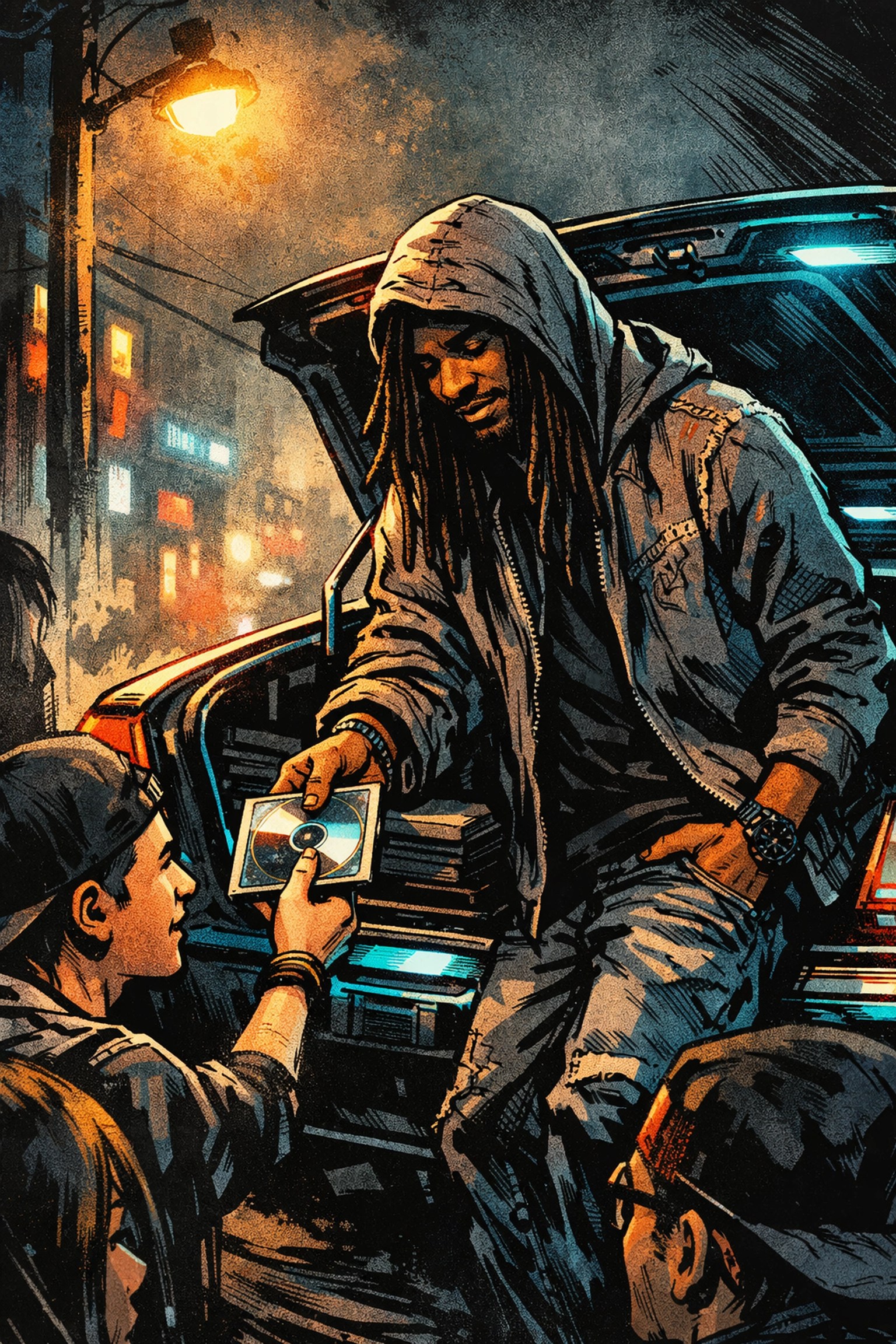
    J. Cole handing a physical CD to a fan from his car trunk under a city streetlamp.
    J. Cole (AI-style) leaning against the open trunk of his Civic, hand-delivering a CD to a small, diverse group of fans under the glow of a streetlamp.

    This isn't just about being "old school." It’s about creating scarcity in an age of infinite abundance. You can find the lyrics to Komplain’s Corruption or Blaze Mob’s Rastafari Children online in seconds, but you can’t download the feeling of standing next to J. Cole in a Phoenix parking lot while he hands you a physical artifact.

    The Strategy of Scarcity:

    • The Inevitable Podcast: Cole has been laying the groundwork through his podcast, providing the "why" behind his transition into The Fall-Off era. It’s the narrative bridge that makes the Honda Civic feel like a choice rather than a stunt.
    • The Death of Dreamville Fest: By announcing the end of his signature festival, Cole signaled the closing of a chapter. He’s stripping away the corporate layers to get back to the grit.
    • Physical Over Digital: Even as artists learn how to create a Spotify Canvas to keep users engaged on the app, Cole is betting that the most engaging thing he can do is leave the app entirely.

    The Psychology of the $1 CD

    There is a psychological weight to a physical CD that a stream simply cannot replicate. When you hold a copy of The Fall-Off, you aren't just holding data; you’re holding a receipt of a specific moment in time. Cole understands that the value of music has been decimated by the "all-you-can-eat" model of streaming platforms. By charging $1 and making the acquisition difficult, he actually makes the music feel more expensive.

    It’s the same energy we see in our Upful Vibes Playlist. People crave authenticity. They want the "growl" of the engine, the smell of the exhaust, and the tactile feel of the jewel case.

    Research Insights: Connecting the Dots

    Our research into the "Trunk Sale Tour '26" reveals a multi-layered campaign that is much more calculated than it looks. While it appears to be a man and a car, the logistical backend is significant. The tour is a precursor to a massive 73-date world tour starting in July. This "trunk" phase is the "loss leader": an investment in brand equity and street credibility that will pay off when he’s filling arenas in Johannesburg and London.

    Three Male Reggae Artists Outdoors

    Cole is playing both sides of the fence. He is the global superstar who can navigate the complexities of YouTube claiming and merging artist channels, but he acts like the underdog who just finished his first demo. It’s a brilliant bit of positioning. He’s making himself untouchable by making himself completely accessible.

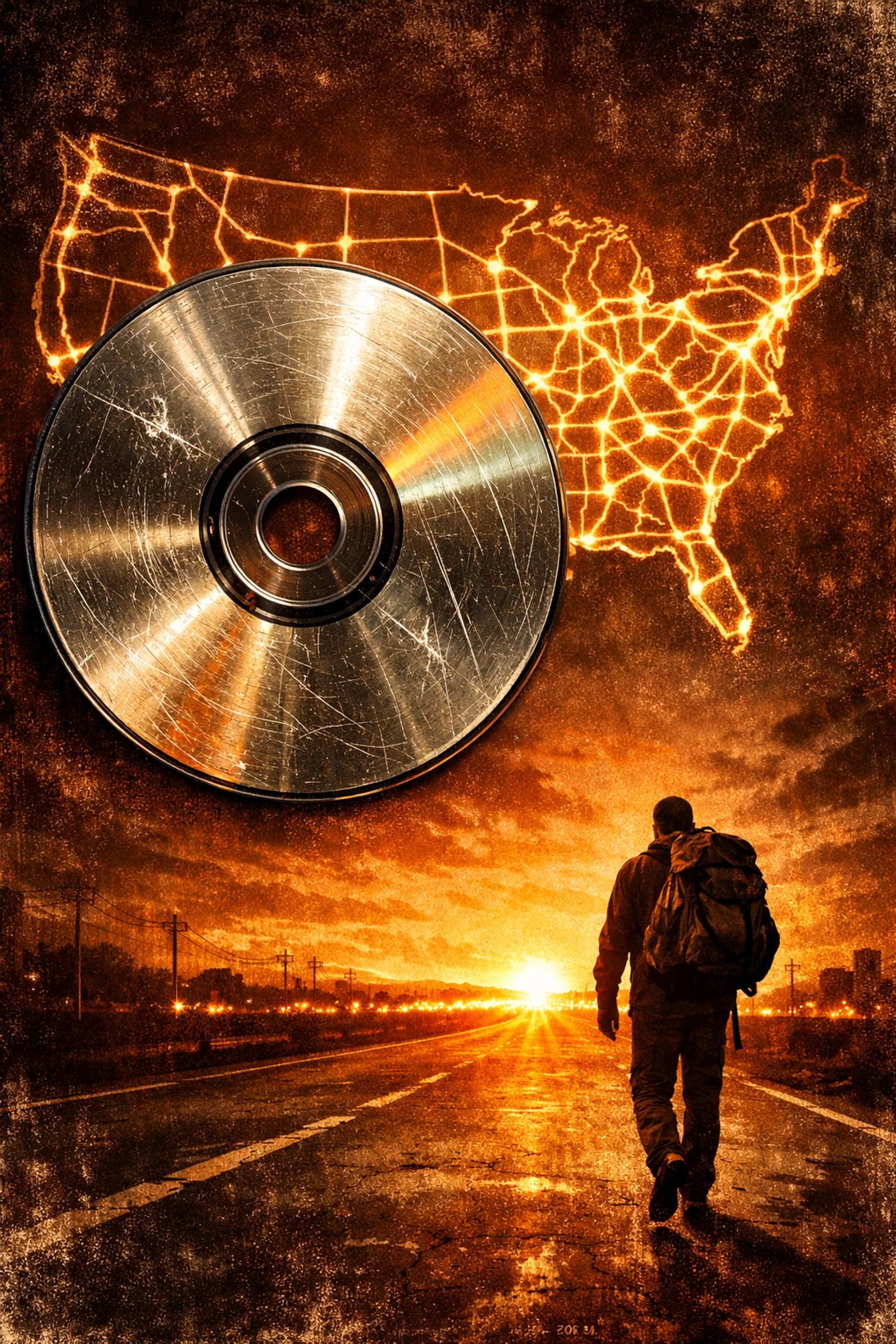
    Editorial graphic of a scratched CD and US map showing J. Cole's journey for The Fall-Off.
    A moody, editorial graphic in the style of a high-end newspaper, juxtaposing a map of the US interstate system with a scratched CD and a silhouette of a man walking toward the horizon.

    The Final Lap

    As Cole heads toward the final stops of this journey, the industry is watching closely. Can you scale "hand-to-hand" engagement? Probably not. But you can use it to set the tone for an entire album cycle. The Fall-Off isn't just an album title; it’s a commentary on the state of the game. Cole is showing everyone that the only way to avoid the "fall off" is to stay grounded.

    Whether he’s in a Honda Civic or a private jet, the message is clear: the music is the mission, but the connection is the point. If you’re lucky enough to catch him before he hits the West Coast, bring a dollar and a little bit of patience. The machine might break down, but the hustle is inevitable.

    For more deep dives into the culture, check out our featured posts or see how other artists are navigating the love and loss of the industry.

    Peace,
    Dizzle / DubCorner 🎹👑

  • Inside “Sweet Like Mango”: From Riddim to Romance #jahmirocsjottings

    Inside “Sweet Like Mango”: From Riddim to Romance #jahmirocsjottings

    Podcast Transcript (see full version at https://wix.to/MfCpfqn)

    Welcome, beautiful people, to Season 3, Episode 2 of Jahmi Roc’s Jottings—the seriously silly space for intentional musicology, sonic joy, and the kind of reggae insight that’ll keep your mind rocking and your thoughts swaying! I’m your host, Jahmi Roc, also known as Racquel Bernard, and today we’re diving into a song that is very, very close to my heart: “Sweet Like Mango.”
    This tune is extra special because it’s my first purely reggae/dancehall release. I do a lot of fusion—reggae mixing with R&B, soul, gospel, hip hop—but this time, I went all in on that reggae dancehall lane. And we’re going to talk about how it came to life, how y’all have been responding to it, and what it means for where I’m heading musically.


    The moment “Sweet Like Mango” was born
    “Sweet Like Mango” first started forming when I was at home alone, just me and the music. I was listening to Dale Dizzle Virgo’s reggae beat tape, Volume 1—the riddim is called “Becca”—and the moment it came on, I felt this wave of romance.

    A big part of that was the subtle keyboard synth in the riddim. It has this soft, glowy, romantic feel to it, like the musical version of candlelight reflecting off somebody’s skin. And I had already told a certain mystery human that I was going to write a love song about them. So when I heard that synth line, my brain and my heart just went, “Oh yeah, this is the one.” The romance was already sitting there in the riddim, just waiting for lyrics to land.

    The very first thing that came out of me was that melismatic “sweet”—and it came all at once, as both lyric and melody. I wasn’t sitting there workshopping it like, “Hmm, what fits this chord?” It just dropped in: “Swee-ee-eet”—fully formed, like the song had decided it wanted to exist and chose that note to announce itself.

    From there, the rest of the song didn’t come in a single lightning bolt, but it did come pretty quickly. After that first hook showed up, I wrote the first verse in that same session. Then I came back on another day, in a different headspace, and wrote the second verse. So “Sweet Like Mango” was born in two main writing sessions: hook + verse one, then verse two later.
    And yes, I did have a specific person in mind while I was writing—but they will remain nameless. Not everyone needs to know the source of your joy for them to be inspired by it. What I really wanted to capture was that feeling of nascent romance—those first couple of months where you have butterflies in your belly, you can’t get enough of each other, and everything feels warm, exciting, and a little bit obsessive in the cutest way.

    First performance: “More mango! More mango!”
    The first time I performed “Sweet Like Mango” was at a small event in October 2025 at a nonprofit called Project 43. It was an outdoor space, intimate and community-centered. The crowd was mostly other performers, vendors, and their tried-and-true supporters—the kind of people who really come out for culture, creativity, and connection.

    I remember finishing the song and looking to the left side of the stage. There was a group of men there, smiling wide, clearly vibing. And one of them called out: “More mango, more mango! Dah one deh sweet!” That right there was my first confirmation that the song was hitting the way I felt it in my spirit.

    Even though I didn’t go back and rewrite the lyrics because of that moment, I did carry the energy of that reaction into how I eventually recorded the song. Dizzle kept pushing me to add more style and swagga to the way I sang the hook—to lean into the attitude, the sweetness, the flirtation. Thinking back to how that crowd reacted helped me channel that exact vibe when we were finalizing the performance style for the track.

    Juggling releases and circling back to the mango
    Now, “Sweet Like Mango” didn’t come out right away. Life—and music—started moving fast. November, December, and January got very busy with releases: “Write Your Name,” “Liberation Night,” and then the “Write Your Name” House Remix.


    Those three songs pulled a lot of my attention because it wasn’t just about recording; it was promotion mode. I had a photoshoot. I had a visualizer shoot. I had to edit the visualizer. I had to plan the single release party for the House Remix, and that party had a lot of moving pieces. All of that took my mind off “Sweet Like Mango” for a while, because when you’re deep in release logistics, your brain is like a project manager, not necessarily a songwriter.

    But the beautiful part is that the single release party ended up bringing my attention right back to “Sweet Like Mango,” because I put it on the set list. So even while we were celebrating another song, “Sweet Like Mango” was there, simmering in the background, getting ready for its own spotlight.
    Working with Dizzle on those other songs was also a kind of training ground for “Sweet Like Mango.” I’m honestly very lucky to work with a musical genius like him. Collaborating on multiple tracks got me comfortable building harmonies and ad-libs with his creative direction. I learned how to refine my ideas, to listen critically to myself and say, “Okay, that’s cute, but it’s not sharp enough yet.” That process of revising, tightening, and really shaping my sound made me more prepared when it was time to lock in the vocals for “Sweet Like Mango.”

    The single release party: finale energy
    When I performed “Sweet Like Mango” at the single release party, we made it the finale of the night. That choice was very intentional. The show was structured to start with songs that were already out—“Liberation Night” and “Write Your Name”—and then move into unreleased material. So we journeyed from what the audience already knew into what was coming next.
    We did “Last Time,” this soulful breakup song that sits in a very emotional, reflective space. Then we moved into “We Made It,” which is this jazzy, gospelesque anthem—uplifting, triumphant. And after taking folks through heartbreak and then victory, it just made sense to end the night with a reggae and dancehall party. That’s where “Sweet Like Mango” came in—a burst of energy, playfulness, and sensual joy at the end of the arc.
    It was one of three songs with dancers that night. The dancers were Oriana and Minor, and the choreography was put together by George Sy. George came in with the choreography structure, and then we all worked together to finalize how the moves would actually look and feel on stage. It was a collaborative process, adjusting details so that the movement matched not just the rhythm but the emotion of the track.

    By the time we got to “Sweet Like Mango,” I had been singing and dancing for about twenty minutes straight. So when the crowd started asking me to sing it again, my spirit was thrilled, but my body was like, “Girl… are we sure?” I was exhausted but very flattered. I had a tiny panic moment, like, “Am I even prepared to do this again? This song is still so new!” I was out of breath, but also deeply touched that people wanted more of it already.
    Instead of running the song again live, Dizzle slid into “They Try,” another reggae song we’ve been working on. He only played the first verse and chorus, which turned out to be the perfect compromise. Even though I was tired, I could still perform it and make it work. I did have to skip one line at one point just to grab some deep breaths—but that’s the live show life!

  • Book Studio Time Now @ The Dizzle Lab

    Book Studio Time Now @ The Dizzle Lab

    “You could make some great sounds with technology, that’s what recording is all about. What happens in the studio is very magical, and should be” – Tony Visconti

    One of the best recording studios known internationally is giving you the opportunity to build something great behind its walls. Now is your chance to book your studio time at the cost of $3000 per hour, minimum 2hrs per booking!

    Call us at 1876-212-2721 or send an email to info@dubcorner.com for more information.

    #dubcorner #recordingstudio #studiotime #bookNOW #recordyourmusic

    Click here to book