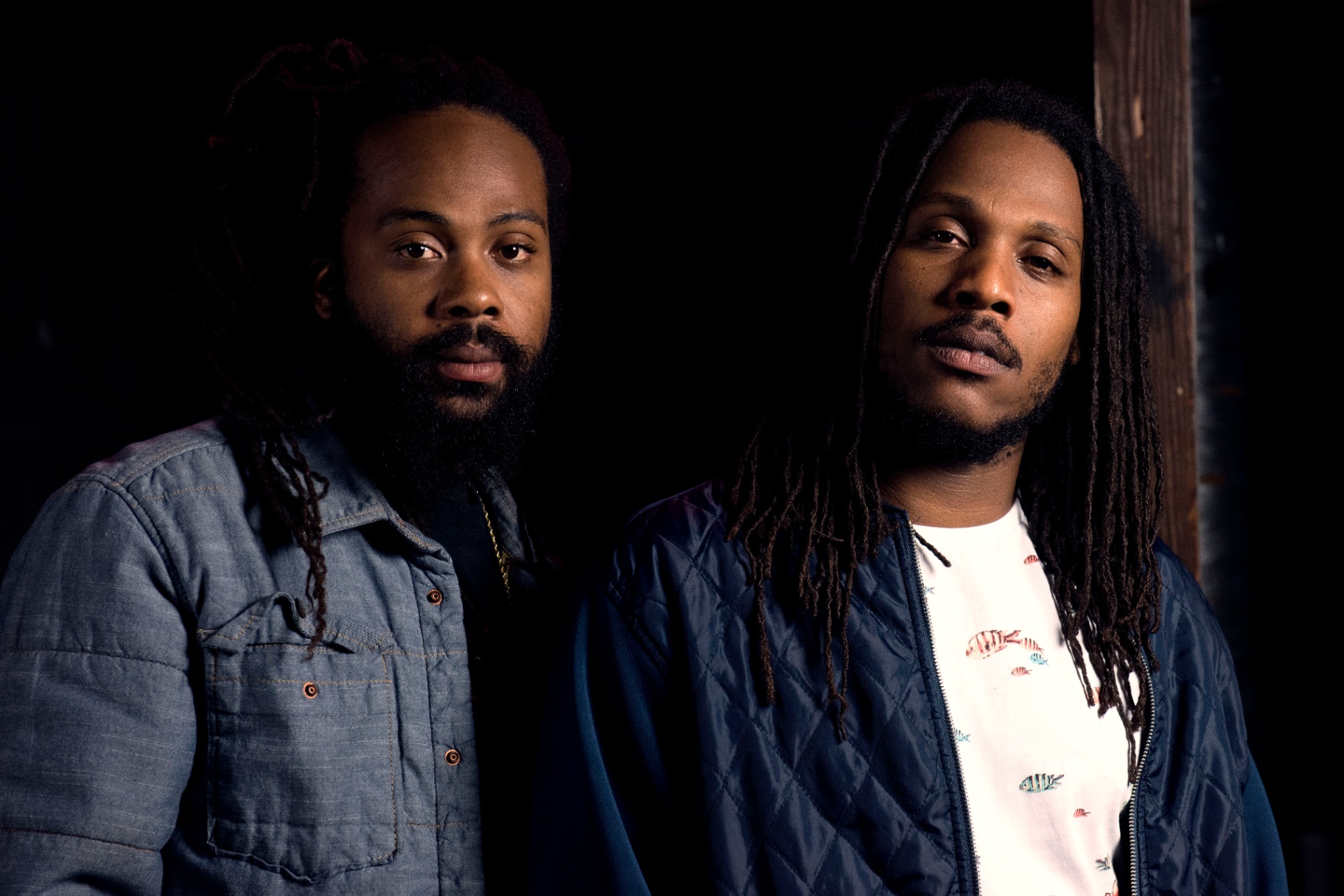
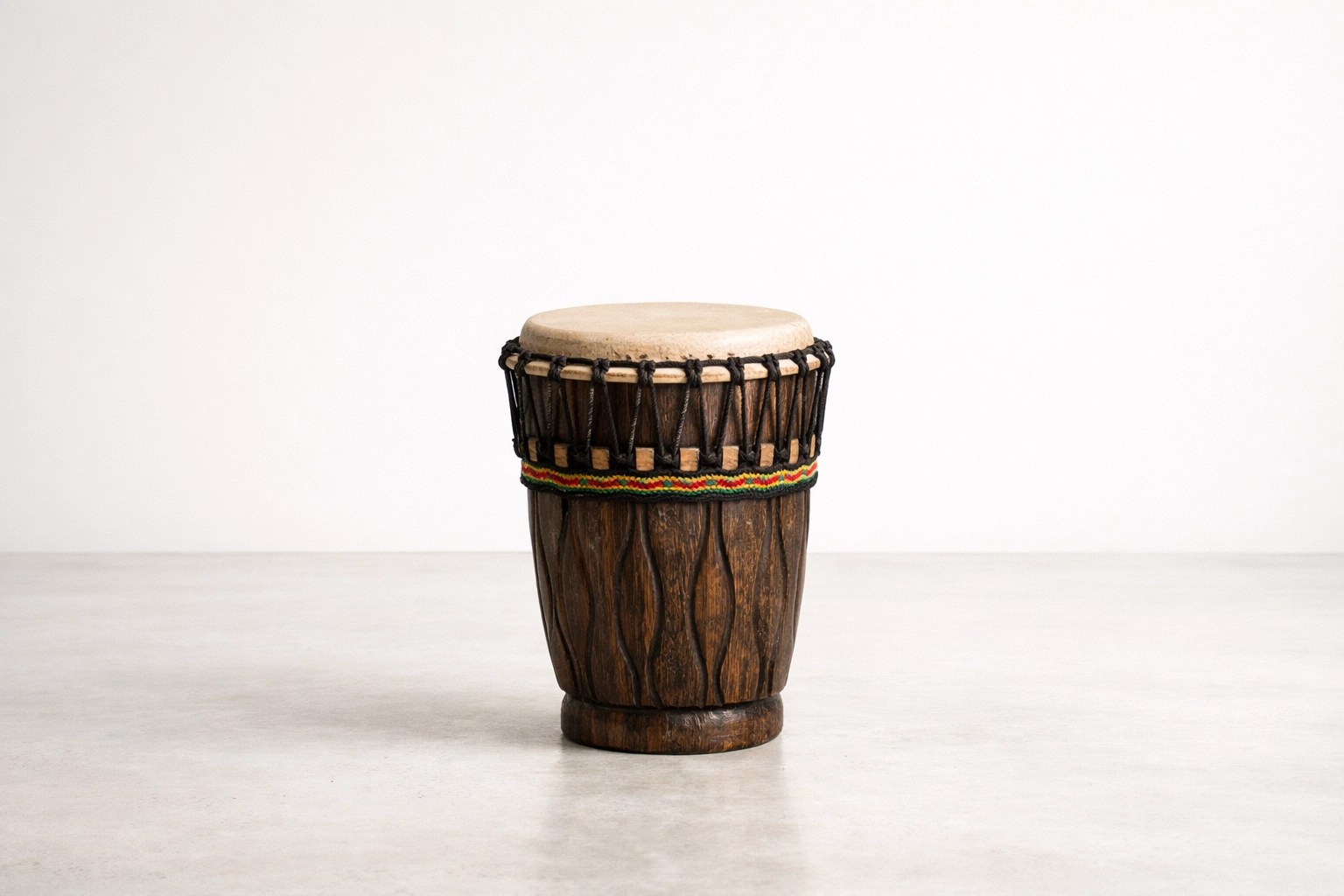
Tag: dale virgo

  • beatsbyDZL & Dale Virgo “Hey Alexa”: A Future Frequency Electronic Instrumental from the Ragga Rave Movement

    beatsbyDZL & Dale Virgo “Hey Alexa”: A Future Frequency Electronic Instrumental from the Ragga Rave Movement

    Hey Alexa single cover art by beatsbyDZL: a neon cyborg DJ at the turntables over a futuristic city

    beatsbyDZL & Dale Virgo have a new one out in the world. “Hey Alexa” is an electronic instrumental, and it’s been streaming everywhere since Friday, October 16, 2026. It runs three minutes and twenty seconds, it has no vocals, and it might be the most futuristic thing I’ve put my name on. Let me tell you how it came about.

    How “Hey Alexa” Started at The Dizzle Lab

    Early in 2026 I was in The Dizzle Lab, my studio in North Hollywood, just vibing and experimenting with electronic sounds. My Alexa device was right there in the room with me, part of the session like another piece of gear. I was in a headspace I call Future Frequency, where you stop thinking about what a genre is supposed to sound like and just follow the signal. By the time the track came together, the title was already sitting in the room waiting for me. It couldn’t be called anything else.

    For more than twenty years, most of my work has been rooted in Jamaican reggae and dancehall. That’s home, and it always will be. But home is also the place you leave from when you want to explore. “Hey Alexa” is me stepping out the door and seeing how far the sound can travel.

    Built by Hand: Synths, Drums and Bass

    This one is all hands on deck, and the hands are mine. I built “Hey Alexa” in Ableton Live, pulling from Splice, Native Instruments’ Kontakt and Massive, and the Serum synth. I played the synthesizers, programmed the drums, and laid down the keys and the bass myself. I composed it, produced it as Dale Dizzle Virgo and mixed it too. For the mastering I called on my brethren DJ Goldchain, who gave it the weight and polish it needed for big systems.

    And because people ask these days, I’ll say it plain: no generative AI was used anywhere in the making of “Hey Alexa.” Every sound on there was chosen, played or programmed by a human being in a room in California. Yes, there’s a smart speaker in the title, but the music is all human.

    Listen: “Hey Alexa” by beatsbyDZL & Dale Virgo

    Part of the Ragga Rave Movement

    “Hey Alexa” belongs to something bigger that I’m building out of California. I call it Ragga Rave. The root is Jamaican dancehall, but the branches reach into techno, house, trance, EDM and wherever else the creativity wants to go. There’s no fixed formula, and I’m not interested in putting fences around the sound. Other musicians have played with this kind of fusion before, and I respect that. Ragga Rave is my own interpretation, and it’s a platform I intend to keep growing.

    I introduced Ragga Rave publicly on October 2 with “Blazing,” my single with Blaze Mob. “Blazing” carries the dancehall energy right up front, while “Hey Alexa” leans further into the electronic side. Put them back to back and you can hear the range of where this movement can go.

    What Is beatsbyDZL?

    beatsbyDZL is the name I use for beat-led instrumental, house and electronic releases. It’s the project where the producer steps into the foreground instead of sitting behind the artiste. I used the same joint billing on “Melrose Ave,” my 2025 techno single, and “Hey Alexa” continues that lane. If you’re a DJ looking for something fresh for your set, a producer curious about cross-genre sound design, or a dancehall head who secretly loves a four-on-the-floor kick, this one was made with you in mind.

    Stream “Hey Alexa” Now

    “Hey Alexa” is out on DZL Records and available on all major platforms:

    Play it loud, add it to your playlists, and if you’re a DJ, test it out on a crowd and let me know how it moves them. The future frequency is open. Tune in.

    One love,
    Dale Dizzle Virgo

  • Blaze Mob Bring the Heat on “Blazing” with Dale Virgo

    Blaze Mob Bring the Heat on “Blazing” with Dale Virgo

    Blaze Mob step into “Blazing” the way a dancehall night still opens: voice first, room second, heat everywhere. The Kingston-raised trio — brothers Shaka “Rock” Dennis, Gyasi “Gong” Dennis, and “King” Saeed Dennis — carry a roots-reggae lineage that listeners feel before they name it. Sons of Garth Dennis, whose path ran through the Wailing Souls and Black Uhuru, they grew up inside Jamaican song culture and later kept building in Southern California’s reggae community. On this single, that heritage is not a footnote. It is the center of gravity.

    Shaka Dennis leads the vocal, turning a short refrain into something the floor can hold. The lyric idea is deliberately simple: “We blazing.” It reads like a chant, a cue, a memory point you can hum after one pass. In a season when dance records live as much in vertical clips and mix-show intros as they do in full-length listens, that kind of hook is useful. It travels. It invites call-and-response without needing a speech. It feels communal — the same energy that made Jamaican sound-system culture so durable — now wrapped in a warmer, more hypnotic club pulse.

    Shaka Dennis of Blaze Mob in dark sunglasses and a black denim jacket on a city street, with an orange-striped “Blazing” title panel reading Shaka, Blaze Mob, Dale Virgo × Blaze Mob, Oct 2
    Shaka Dennis of Blaze Mob carries the lead vocal on “Blazing.” (Release artwork: DZL Records)

    Co-primary billing stays clean: Dale Virgo and Blaze Mob, released October 2, 2026 on DZL Records. Dale Dizzle Virgo produces and mixes, and he plays the floor of the record himself — drums, bass, keyboards, synthesizer. Dj Goldchain masters. The public genres sit in Afro House and Dancehall House, with Dale’s wider Ragga Rave idea as positioning context rather than a subtitle. Ragga Rave, as framed around this release, is the experiment of letting a Kingston-rooted vocal live inside house percussion and rave movement without sanding down either side.

    That meeting point is why “Blazing” belongs on DubCorner. Blaze Mob bring roots-reggae identity into a global club lane; Dale builds the musician-first dance world around them. It is not “featuring” language and it is not a costume-change single. It is a collaboration where the vocal spine and the production architecture share the billing. Listeners who came for Blaze Mob’s family lineage get a modern dance cut that still respects the voice. Listeners who came for Dale’s producer and multi-instrumentalist lane get a record that refuses to treat Jamaican vocal culture as garnish.

    The campaign logic matches the song’s design. No music video is planned for this release; a visualizer is the planned motion asset, with short-form clips meant to lead on movement, heat, and the repeated hook. That approach fits how Afro House, Caribbean dance, and dancehall-adjacent edits currently circulate: percussion, atmosphere, and a vocal phrase that can survive a fifteen-second cut. “Blazing” is built for DJ sets, dance playlists, and radio mixes that need a clear entry point without a long setup.

    You can stream it now. The smart link at https://hypeddit.com/dalevirgo/blazing resolves to live PLAY buttons for Spotify and Apple Music (and lists Deezer as well). Direct destinations: Spotify track https://open.spotify.com/track/38bAWCD0qFyUkJhF8AAnkw, Spotify release page https://open.spotify.com/album/1vkIAQ4La4fGKFFEViTBGt, and Apple Music https://music.apple.com/us/album/blazing/6814757852?i=6814757855.

    Listen to “Blazing” by Blaze Mob and Dale Virgo

    Official audio on YouTube:

    “Blazing” official audio (YouTube)

    For readers who follow Blaze Mob’s catalog, “Blazing” extends an ongoing DZL creative relationship into a warmer, more movement-focused lane than a straight roots single. For readers who follow Dale’s production work, it is a clear statement of musician-led contemporary dance music that still starts from Jamaican vocal culture. Put the hook in your set, save the smart link, and keep the floor language simple: we blazing — and it is amazing.

  • Out Now: Empress Truth Akins – What’s Important

    Out Now: Empress Truth Akins – What’s Important

    Some songs arrive like a checklist. This one arrives like a question you already know the answer to, if you stop long enough to hear it.

    On September 25, 2026 — her mother’s birthday — Empress Truth Akins releases “What’s Important” on DZL Records, produced by Dale Dizzle Virgo. The date is the point: a gift wrapped as a roots reggae single, dedicated to the woman who raised her, served her country, and kept working for veterans long after the uniform came off. Love, in other words, with a release calendar attached.


    Empress Truth Akins is a reggae artist, author, educator, Navy veteran, and healing-centered storyteller. She builds work across music, restorative justice, and the 8 Degrees of Yes platform — including her book Living Life to the Fullest, Eight Degrees of Yes — and she keeps returning to the same spine: truth, resilience, higher consciousness, and community uplift. When she introduces herself in the clips around this release, she names service first — Navy, children, community — then the reflection that service gives back. “What’s Important” carries that spine into a participatory chorus. You can feel the call-and-response before you finish the first listen: what’s important to you, to me, to him, to her, to them — then out toward humanity.

    Empress Truth Akins
    Empress Truth Akins

    The lyric world is concrete on purpose. Truth and love sit next to natural food and fresh water. Affordable healthcare gets named without apology. Family, spiritual trust, unity, and care for Mother Earth land in the same breath as dancing with the sun and chasing the wind. It is not a lecture disguised as a riddim. It is a meditation that wants you to sing along — mantra and community prompt at the same time. The repetition does not thin the message; it widens it, the way a circle of voices widens a prayer until everyone in the room is holding the same line.

    That widening matches how Empress Truth talks about the song when the cameras are rolling. She has described watching family members age and watching healthcare land as an economic weight, not only a medical one. She has sat in Los Angeles County rooms where nonprofits, schools, and neighbors showed up under one cause because the need was obvious. She has also talked about how everyday language around what matters to people sparked the hook — then she stretched it into something communal, spiritual, and practical all at once. If you’ve stood with elders, or sat through a local fight that should have been common sense, the question stops feeling abstract.

    Empress Truth Akins with her book 8 Degrees of Yes
    Empress Truth Akins with her book 8 Degrees of Yes

    Dale Dizzle Virgo produces the roots-reggae groove under that message, keeping the pocket warm and clear so her voice can lead. The record belongs in conscious reggae, wellness, and community-uplift playlists without pretending to be anything colder than a human ask — the same healing-centered lane she walked on “Prayer as a Way of Life,” now aimed at the values that hold a life together.


    That is the DubCorner story worth telling on release day. Not a genre costume. A meeting point between personal testimony and shared responsibility — a mother honored on her birthday, a singer who has served in uniform and in classrooms, and a record that asks whether we are giving our time to what actually sustains us. The song keeps returning to truth and love as the things that stay in front of you when the noise clears. Listening, she says around the campaign, is the case.

    Empress Truth Akins
    Empress Truth Akins

    Listen: early access lives on Hypeddit while Spotify and YouTube clear — https://hypeddit.com/empresstruthakins/whatsimportant. For the wider body of work around the song, visit empresstruthakins.org.

    What’s important? Start with truth and love. Then look at the people you refuse to leave behind.

  • The Engineer Behind the Boards: Dale Dizzle Virgo’s Geejam Story Beyond the Cameo

    The Engineer Behind the Boards: Dale Dizzle Virgo’s Geejam Story Beyond the Cameo

    A reality-TV cameo can last seconds, but the work behind a recording session carries a much longer history.

    During Season 4 of Black Ink Crew: Chicago, Phor’s Jamaica storyline brought viewers into a studio at Geejam in Portland, where Dale Dizzle Virgo appears behind the console. The scene is brief. The story behind it reaches through Jamaican studio culture, reggae and dancehall production, international recording sessions, and the quiet technical decisions that turn an artist’s idea into a usable record.

    What the Black Ink Crew Chicago Jamaica scene shows

    The Jamaica arc unfolds across Season 4 episodes “All Phor One” and “The Last Supper.” Paramount’s official episode guide places Phor and the 9MAG crew in Jamaica for the first episode, with the storyline continuing into the second as Phor’s hoped-for performance becomes complicated.

    The supplied screenshots from the scene show Dale working at the studio console during Phor’s recording session. That visual matters because it places an experienced Jamaican engineer inside a piece of music television that most viewers would naturally read through Phor’s storyline. The show focuses on the artist, the trip, and the surrounding drama. The engineer is part of the machinery that makes the music moment possible.

    That is the difference between being visible and being explained.

    The screenshots do not, by themselves, establish every detail of the session’s production history. The official episode listings identify the Jamaica episodes but do not provide a full studio-credit breakdown. The connection between Dale, the Geejam room, and the filmed Phor session is therefore presented here from the supplied account and images, with the episode and production credits still requiring final verification against official broadcast materials.

    Even with that distinction, the scene opens the right door. It shows the person responsible for keeping the room moving while the artist works.

    Geejam Studios is more than a backdrop

    Geejam is located in Portland, on Jamaica’s northeastern coast, far from the concentrated studio traffic of Kingston. Its identity comes from that distance. The facility combines residential accommodation, recording rooms, writing spaces, and the isolation artists often need when a song is still taking shape.

    According to Geejam Studios’ official description, the property includes three recording facilities alongside villas, guest rooms, and additional writing-room setups. The studio has hosted sessions connected with artists including Drake, Amy Winehouse, Florence + the Machine, Harry Styles, Kendrick Lamar, The Jolly Boys, Popcaan, Sean Paul, and others.

    That roster tells only part of the story. A destination studio is not useful simply because it has a famous client list or a beautiful setting. The room has to function. Equipment must be ready. Monitoring has to translate. Microphones have to be chosen and placed. Files must be organized. The artist has to feel that the session is under control without feeling controlled.

    Geejam’s environment brings together international music business expectations and Jamaican creative instincts. A visiting artist may arrive with a label team, an outside producer, or a rough vocal idea. The local engineer becomes the bridge between that outside process and the reality of working in Jamaica.

    That bridge was central to Dale Virgo’s role.

    Manager-supplied still from the Geejam studio scene showing Dale Dizzle Virgo behind the boards during Phor’s recording session

    Dale Dizzle Virgo’s role behind the boards

    Dale Dizzle Virgo is a Jamaican-born, Los Angeles-based producer, recording engineer, musician, and creative director. His professional background includes reggae and dancehall-rooted production, artist development, vocal coaching, arrangement, and collaborative songwriting.

    He worked at Geejam Studios as an in-house producer and engineer, with additional responsibilities described in supplied career materials as technical director, creative director, and studio manager. Professional profiles place his Geejam tenure at roughly a decade, beginning in 2008.

    Those job titles can sound broad until you understand what a working session demands. An engineer is not simply pressing record. The engineer manages signal flow, gain structure, headphone mixes, microphone choices, session files, playback, and the relationship between the control room and the live room. A producer may shape the arrangement, challenge a lyric, suggest a harmony, coach a vocal, or recognize that the strongest take is not the most polished one.

    In a reggae or dancehall-rooted session, feel is never a minor detail. The pocket has to breathe. The vocal has to sit inside the riddim rather than float above it. A hook may need more space, a verse may need a different cadence, or a backing vocal may need to answer the lead with the right amount of pressure.

    The work is technical, but it is also social and musical. The engineer has to hear what the artist is trying to say before the artist always knows how to describe it.

    That is what the Phor scene represents beyond the television frame. Dale is not there as decoration. He is part of the session’s operating system.

    From Jamaican studio culture to international sessions

    Dale’s supplied biography and professional credits associate him with recording and production work connected to a wide range of Jamaican and international artists. Those associations include sessions linked to Drake’s Thank Me Later era, Kendrick Lamar’s DAMN. era, Amy Winehouse, Florence + the Machine, Harry Styles, and The Jolly Boys.

    The wording matters. These credits should be understood as reported or profile-based associations, and individual roles vary. An assistant engineer, tracking engineer, mixing assistant, producer, and studio manager do not perform the same job. Naming the correct role is part of respecting the work.

    His SoundBetter profile describes him as a producer, musician, and engineer who spent ten years as Geejam’s in-house producer. It also associates him with work involving Drake, Amy Winehouse, The Jolly Boys, Cecile, CeeLo Green, Snoop Lion, Alicia Keys, John Legend, Florence + the Machine, Major Lazer, and Santigold.

    The supplied biography also attributes early production and collaboration history connected to Rihanna’s A Girl Like Me era, Gyptian, and Christopher Martin. Those claims belong in the category of supplied credits and collaborations rather than blanket statements that he produced an entire album or project.

    This distinction does not reduce the importance of the work. It makes the account more accurate.

    A large international record is usually built from many hands: artists, songwriters, producers, engineers, assistants, mixers, vocal coaches, musicians, and studio staff. The final release may carry one artist’s name, but the process is collective.

    The invisible decisions that shape a session

    When people watch an artist in a studio, they often look for the obvious drama: the breakthrough vocal, the argument, the playback, the moment when a song suddenly takes form.

    The engineer is listening for different things.

    Is the microphone catching the artist’s full presence? Is the vocal too close to the preamp? Is the monitoring causing the singer to push too hard? Does the chorus need another pass, or does another pass risk taking the life out of it? Is the arrangement crowded? Does the beat leave enough room for the lyric?

    These decisions happen quickly. Sometimes the right move is to change a microphone. Sometimes it is to mute half the track. Sometimes it is to tell the artist to stop chasing perfection and keep the take with the rough edge.

    Jamaican music has always valued the human texture inside the recording. The drum, bass, guitar, percussion, voice, and room must feel connected. Dale’s career sits inside that tradition while also moving through pop, hip-hop, electronic production, and international studio work.

    His work with The Jolly Boys is a clear example of that balance. The group’s mento lineage demands respect for live feel and instrumental character, while modern production requires structure, clarity, and deliberate sonic choices. That kind of work is not about choosing between old and new. It is about knowing what the record needs.
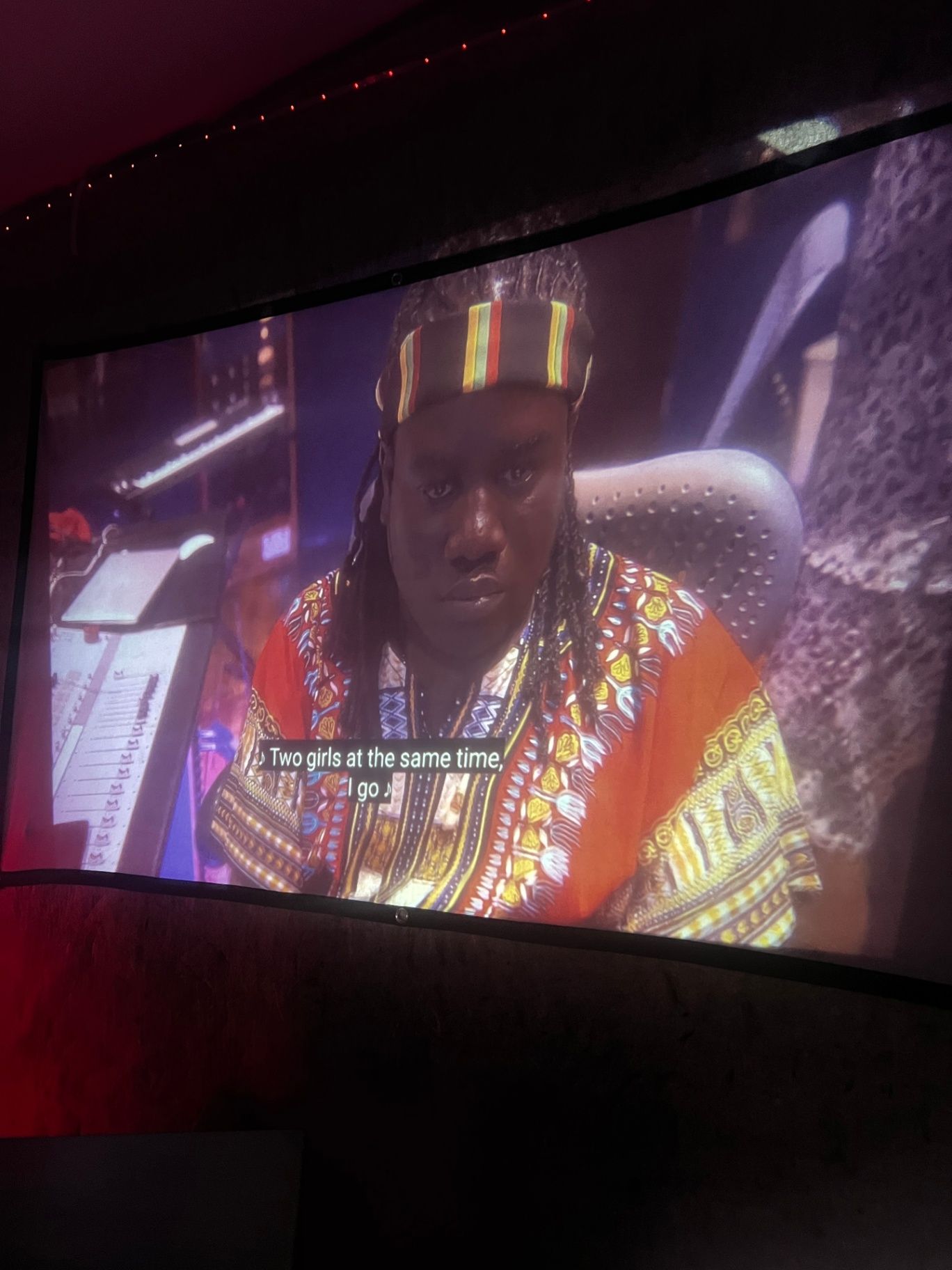
    Manager-supplied still from the Geejam studio scene showing Dale Dizzle Virgo behind the boards at Geejam during the filmed Jamaica session

    Why engineers deserve a visible place in music history

    The Phor studio session is useful because it makes the engineer visible, even if the show does not pause to explain his background.

    That omission happens often. Artists become the face of the moment. Producers may receive a credit. Engineers are left in the metadata, if they are named at all.

    But the engineer shapes the conditions under which the music can exist. The work touches the technical and emotional sides of recording at once. A clean signal is not enough. A session can be perfectly routed and still fail if the artist does not trust the room.

    Dale’s Geejam story reflects that fuller definition of production. It includes technical discipline, musical judgment, cultural fluency, and the ability to work with artists arriving from different countries, genres, and creative habits.

    The console is only the visible object. The real work is everything happening around it.

    The cameo is a portal, not the whole biography

    For viewers of Black Ink Crew: Chicago, Dale may first register as the engineer behind Phor’s Jamaica recording session. That is the entry point, not the conclusion.

    The deeper story is a Jamaican producer and engineer moving through the island’s studio ecosystem, working inside Geejam’s international environment, and carrying reggae and dancehall instincts into sessions with artists from across the global music industry.

    His later independent work through DZL Records fits naturally into that progression. The studio may change. The client may change. The technology may change. The central responsibility stays the same: help the artist find the record.

    That is what the Geejam cameo reveals when the frame is widened. Not a manufactured television moment. Not an excuse for unsupported superlatives. A working engineer, in a real studio environment, doing the job that makes the scene possible.

    DubCorner verdict

    Dale Dizzle Virgo’s appearance in the Black Ink Crew: Chicago Jamaica sequence deserves to be read as a small piece of a much larger studio story. The screenshots show him at the console with Phor. His supplied biography and professional profiles place him within Geejam’s production culture and connect his work to reggae, dancehall, international pop, hip-hop, and roots-oriented projects.

    The important point is simple: the cameo shows the room, but Dale’s career explains why the room works.

    For more DubCorner coverage of artist careers, production, and Caribbean music culture, visit our Music News, browse Artist Updates, or explore the Dale Virgo author archive.

    Category: Music / Industry / Producer Profiles
    Status: Draft

    Source and context note

    This draft is based on the manager-supplied screenshots and career information, alongside the official Geejam Studios website, the Paramount+ Season 4 episode guide for Black Ink Crew: Chicago, Dale Virgo’s SoundBetter profile, and a Tape Op interview with Geejam founder Jon Baker. The episode appearance, studio location, and specific production credits should be verified against official broadcast materials and artist or production records before publication.

  • Mento’s Living Archive: The Jolly Boys, Scholarship, and the Debate That Keeps the Riddim Alive

    Mento’s Living Archive: The Jolly Boys, Scholarship, and the Debate That Keeps the Riddim Alive


    Mento survives because it refuses to stay trapped in one version of the past, and Jahmi Roc’s Jottings : Season 3, Episode 16 makes that argument through the Jolly Boys, Great Expectation, and the productive friction between scholarship and studio instinct.

    Watch “Jahmi Roc’s Jottings : Season 3, Episode 16”


    Watch the Jahmi Roc's Jottings episode on YouTube

    Hosted by Jahmi Roc : Racquel Bernard : the episode continues a conversation about Jamaican mento, the island’s original commercially recorded popular music.
    Nikkita “Nuclear Blackness” and DJ Papalot join the discussion, with Reggae Moms present in spirit, while the central guests return for a deeper look at the Jolly Boys’ modern-era resurgence: ethnomusicologist Dr. Daniel T. Neely and Dale Dizzle Virgo.

    The conversation is rooted in the making of Great Expectation, the Jolly Boys album released in 2010. Dizzle co-produced the record with John Baker, played percussion, and brought his experience as a producer and engineer. Neely served as music director, played banjo and guitar, and carried the historical weight of his mento scholarship into the studio.

    That combination gives the episode its charge. This is not a debate between someone who “understands tradition” and someone who wants to destroy it. It is a debate between two people who understand that tradition is already full of movement.

    The argument: preservation needs a pulse

    The episode’s central argument is clear: mento is not one fixed sound waiting to be protected behind glass.

    Neely explains that mento changes according to region, era, instrumentation, audience, and performance setting. A band in Clarendon does not necessarily sound like a band in Portland. A North Coast hotel ensemble does not carry the same musical identity as musicians performing in West Kingston. The repertoire may overlap, but the feel shifts.

    That matters because mento is often presented as a single historical object : a quaint acoustic precursor to ska and reggae, complete with banjo, guitar, rumba box, maracas, flirtation, and double entendre. The episode pushes against that narrowing. Mento has always been broader and stranger than the simplified postcard version.

    Dizzle’s perspective comes from the studio floor. He describes encountering the Jolly Boys as a traditional acoustic band, then recognizing that the musicians and their repertoire could support something more expansive. The project did not simply document a band playing old songs. It placed their sound into conversation with global pop, rock, punk, hip-hop production, and contemporary recording methods.

    That is where the tension with Neely becomes useful.

    Neely recalls disagreements around arrangements, including the question of whether songs such as The Clash’s “Should I Stay or Should I Go” belonged inside the project. Dizzle was less interested in drawing a hard line around what mento was allowed to touch. His instinct was exploratory: take the old form, listen for what it can carry, then build from there.

    Neither position wins. That is the point.

    The argument becomes a creative engine. Neely protects the historical specificity of the music. Dizzle tests its range. John Baker’s vision : “G Jam as an Apple store in the jungle” : sits in the middle: modern infrastructure, rooted environment, no clean separation between the two.

    Albert Minott brought the archive to life

    The most vivid parts of the episode concern Albert Minott, the Jolly Boys’ lead singer during the Great Expectation period.

    Neely describes Albert as a strident, commanding performer with the flair of an old-time North Coast entertainer. He was a fire eater, a stilt walker, a fashion presence, and a musician with wide-ranging tastes. Dizzle remembers someone who listened beyond the standard mento vocabulary : jazz, blues, Sinatra, R&B, ballads, and even dancehall.

    That detail changes the way the album is heard.

    Albert was not simply a vessel carrying an inherited style. He had his own appetite. He understood performance as spectacle, but also as musical personality. His fashion, movement, voice, and experimental instincts gave the Jolly Boys a center of gravity that could not be manufactured through overdubs or arrangement choices.

    The conversation also makes room for the musicians around him. Johnny is described as an original member and a bearer of the group’s older history. Powa represents another layer of the band’s lineage. Brutus, remembered with affection, brought his own deep musicianship and connection to Burning Spear.

    The Jolly Boys’ story is therefore not a neat succession from “old” to “new.” It is a gathering of different generations, personalities, and musical abilities around a shared name.

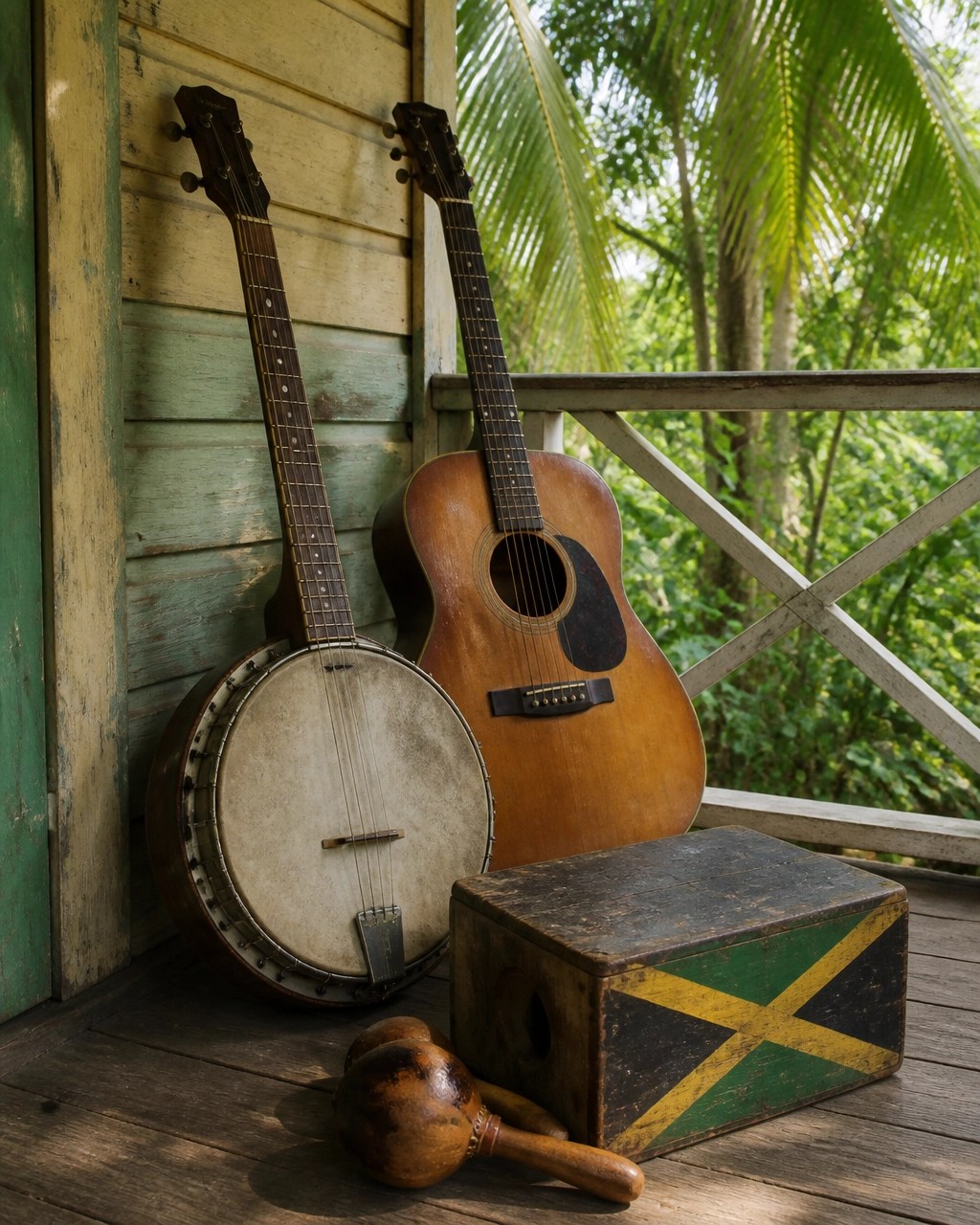
    Four-string banjo, acoustic guitar, rumba box and maracas on a Jamaican veranda

    “Rehab,” the synthesized banjo, and the sound of negotiation

    The discussion of “Rehab,” the Jolly Boys’ Amy Winehouse cover, gives the episode its sharpest production detail.

    Dizzle explains that he built much of the track with modern studio tools, including a drum machine, keyboard, electric bass, piano, and a synthesized banjo sound. Neely then pushed for the presence of a real banjo. The final mix layered the synthetic and acoustic instruments together, with the real banjo sitting deeper in the texture.

    That small production story contains the entire argument.

    The synthesized banjo is not automatically a betrayal of the instrument. The real banjo is not automatically authentic simply because it was played by hand. The finished sound comes from the collision : the fake and the real, the programmed and the performed, the sampled and the live.

    Dizzle also describes using a hip-hop sampling approach in the track. That matters because it places mento inside a larger African diasporic production history. Jamaican music has always absorbed, reshaped, and redistributed sound. The studio is not outside that tradition. It is one of the places where the tradition continues.

    The episode’s treatment of instruments opens an even wider door. The rumba box is discussed as a defining but not universal part of mento’s sound. Acoustic guitar, banjo, fiddle, percussion, bass, and later electrified instruments all enter the story at different points.

    Neely’s explanation of the banjo’s African origins is especially important. The instrument is often filed under American country music, but its deeper history belongs to the African diaspora and the recreation of remembered instruments in the Americas. That history connects Jamaica, Black American musical traditions, country music, gospel, and the movement of missionaries from the American South.

    The episode does not resolve that thread. It identifies the next question.

    From mento to reggae-mento

    The conversation also places mento inside reggae’s continuing bloodstream.

    Neely discusses reggae-mento as a subgenre and points to figures such as Stanley Beckford and Neville Willoughby. The idea is not that reggae suddenly discovered mento in the twenty-first century. Mento rhythms, melodies, performance habits, and lyrical attitudes have continued to surface in reggae and dancehall.

    Dizzle connects that lineage to more recent work, including Steven McGregor’s hill-and-gully-riddim-era productions. The Jolly Boys’ modern project becomes part of a longer cycle: musicians return to older Jamaican forms, not to imitate them perfectly, but to reactivate what they still contain.

    That is why Great Expectation matters beyond its covers. Reworking “Rehab,” “Riders on the Storm,” “The Passenger,” “Ring of Fire,” and other global songs in a Jolly Boys framework introduced mento to listeners who may never have sought out the tradition directly. The album became a bridge between old-time Jamaican performance and global pop recognition.

    The bridge worked because the musicians did not abandon their identity. They carried it into unfamiliar material.

    What the episode does well

    The strongest feature is the chemistry between Neely and Dizzle. Their disagreements feel lived-in rather than staged. There is respect, laughter, correction, memory, and the occasional interruption : the texture of people who actually made something together.

    Jahmi Roc’s hosting keeps the conversation moving while allowing the guests room to wander.
    That wandering produces some of the episode’s best material: the story of meeting Powda in Port Antonio, Herby Miller’s role in Jamaican music history, bestival, the 2011 European tour with Sade, and the unexpected international recognition the Jolly Boys received in Dubai and the Maldives.

    The archival photos and audio clips strengthen the discussion. Seeing Albert’s performance presence, the band’s tour styling, and the wider world surrounding the project gives the history a body. The episode does not treat scholarship as a stack of documents. It lets the people, clothes, instruments, studios, stages, and memories remain visible.

    That approach also gives Jahmi Roc’s Jottings practical value.
    Producers can hear how arrangement decisions become cultural decisions. Musicians can think about adaptation without confusing it with erasure. Researchers get a firsthand account of a major modern mento project. Fans receive context for an album that is easy to describe as a set of covers but much richer when understood as a negotiation between Jamaica’s past and its global present.

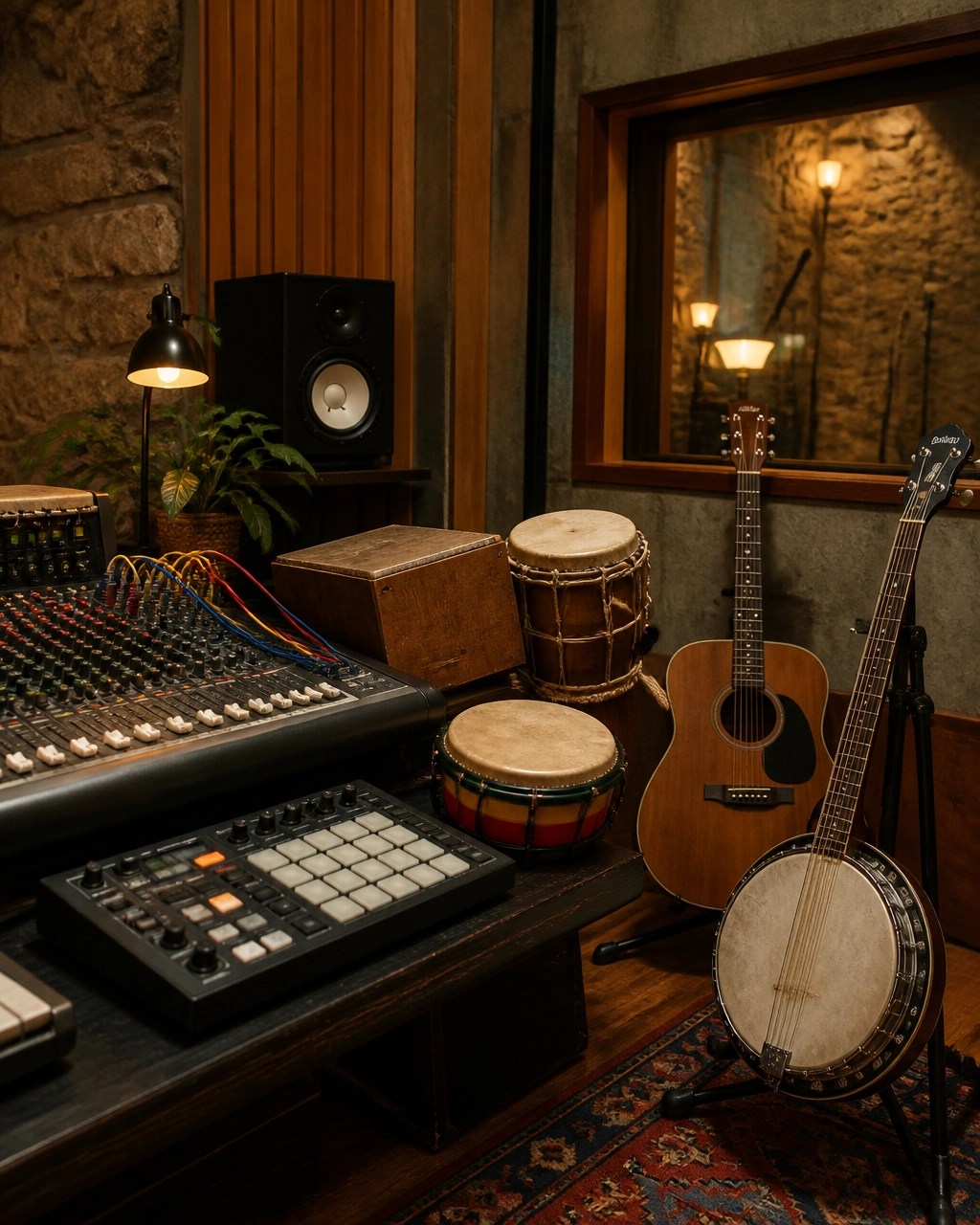
    Mento instruments surrounding a contemporary mixing console

    Where the conversation falls short

    The episode’s informal, at-home podcast production gives it warmth, but it also creates limitations. Audio levels and visual sharing are not always seamless, and some of the photographs and clips depend on the audience following along through the stream rather than receiving a polished documentary presentation.

    The long conversational digressions will also test listeners who want a tightly edited historical lecture. The discussion moves from mento to tourism, Errol Flynn, celebrity press photos, paparazzi, the mechanics of studio production, and the social meaning of performance. Those detours are often entertaining, but they occasionally interrupt the main line of inquiry.

    Some of the most promising subjects are left for future episodes. The history of mento instrumentation deserves a dedicated examination. So does the relationship between the African banjo, American country music, Jamaican gospel, missionary networks, and reggae’s later development. The question of how Jamaican audiences hear mento differently from listeners abroad also remains open.

    Those gaps are not fatal. They reveal how much territory the conversation is trying to cover.

    Final verdict

    Jahmi Roc’s Jottings : Season 3, Episode 16 is a strong video review conversation because it understands that the Jolly Boys’ modern resurgence cannot be reduced to preservation or crossover.

    The episode shows scholarship and production meeting in the same room. It shows a banjo arguing with a synthesizer. It shows a traditional band moving through global pop without surrendering the Jamaican ground beneath it.

    Most importantly, it refuses to make mento small.

    Mento is living DNA : present in reggae, dancehall, gospel, country connections, acoustic performance, studio sampling, flirtation, rhythm, and the instinct to reshape whatever enters the room. Great Expectation matters because it made that DNA audible to a wider world while leaving enough friction in the sound for listeners to hear the argument.

    That argument is still alive.

    For more DubCorner coverage of Caribbean music history, production, and artist stories, visit our Music News section and Media archive. The Jolly Boys’ Great Expectation is also available to explore alongside NPR’s feature on the band. Share the episode with a musician, DJ, researcher, or anyone still claiming that old music has to stay old.

  • Reggae Month Exclusive: The Mento Revolution : Dale Virgo & The Jolly Boys’ Global Odyssey

    The Jolly Boys featuring the late Albert Minott, whose legendary vocals defined the modern mento era.
    The Jolly Boys featuring the late Albert Minott, whose legendary vocals defined the modern mento era.

    February is Reggae Month, and while everyone's celebrating Bob Marley and the golden age of roots reggae, let's rewind the tape further. Before the one-drop rhythm, before Studio One, before ska even existed: there was mento. The original Jamaican sound. The acoustic foundation that everything else grew from. And in 2010, a young producer from Port Antonio helped launch that sound into the modern era.

    Dale Virgo: engineer, drummer, producer, assistant tour manager, and creative bridge between generations: worked alongside The Jolly Boys to reimagine mento for audiences who'd never heard a rumba box or understood why a banjo could carry more soul than any synthesizer.

    This is the story of that collaboration. Port Antonio to Paris. Geejam Studios to Sade's world tour. Elder statesmen and a young visionary building something that honored the past while refusing to be museum music.

    The Jolly Boys: Port Antonio's Living Archive

    The Jolly Boys in their element, preserving the acoustic heartbeat of Jamaican mento through decades of performance.
    The Jolly Boys in their element, preserving the acoustic heartbeat of Jamaican mento through decades of performance.

    The Jolly Boys formed in 1945 in Port Antonio, Jamaica: making them one of the longest-running bands in Caribbean music history. While Kingston was developing its urban sound, Port Antonio stayed rooted in the acoustic traditions brought over from West Africa, filtered through the plantation experience, and mixed with British folk melodies and Caribbean work songs.

    Mento is what happened when African rhythms met Spanish guitar, when call-and-response vocals carried stories about everyday life, humor, and social commentary. It's the music that dockworkers and fishermen played on homemade instruments: rumba boxes (bass), banjos, hand drums, maracas. Raw, acoustic, human.

    By the time Dale Virgo connected with them in the late 2000s, The Jolly Boys were legendary in mento circles but virtually unknown outside Jamaica and niche world music festivals. The surviving members: Albert Minott, Joseph "Powda" Bennett, Derrick "Jonny" Henry, and others: had been playing for decades, preserving a sound that was rapidly disappearing.

    Watch the Original Mento Style

    The Man Wearing Every Hat

    Dale Virgo's role with The Jolly Boys wasn't just "producer." It was producer, studio engineer, session drummer, assistant tour manager, and creative coordinator. When you're working with a group of elder musicians whose combined age could fill a century, and you're trying to modernize their sound without losing its essence, you need someone who can move between worlds.

    At Geejam Studios in Port Antonio: the same facility that's hosted everyone from Amy Winehouse to Drake: Dale worked on capturing the acoustic warmth of mento while introducing contemporary production techniques. Not covering the sound in effects, but finding ways to present it with clarity and power that would translate to modern speakers and streaming platforms.

    "We make sure it has the feel of the classic mento," Dale explained during the recording process. The challenge was balancing the acoustic authenticity with arrangements that incorporated elements from African music, merengue, salsa, and calypso: all the influences that originally shaped mento: while adding subtle modern rhythmic layers.

    As drummer, Dale had to understand the pulse of mento, which sits somewhere between a shuffle and a swing, with polyrhythmic elements that predate reggae's one-drop. As engineer, he had to mic vintage instruments that were never designed for studio recording. As coordinator, he had to schedule sessions around the elder musicians' energy levels and health needs.

    It was cultural preservation work disguised as a recording project.

    Producer and multi-instrumentalist Dale Virgo at the board, where he masterminded the fusion of roots mento and modern production.
    Producer and multi-instrumentalist Dale Virgo at the board, where he masterminded the fusion of roots mento and modern production.
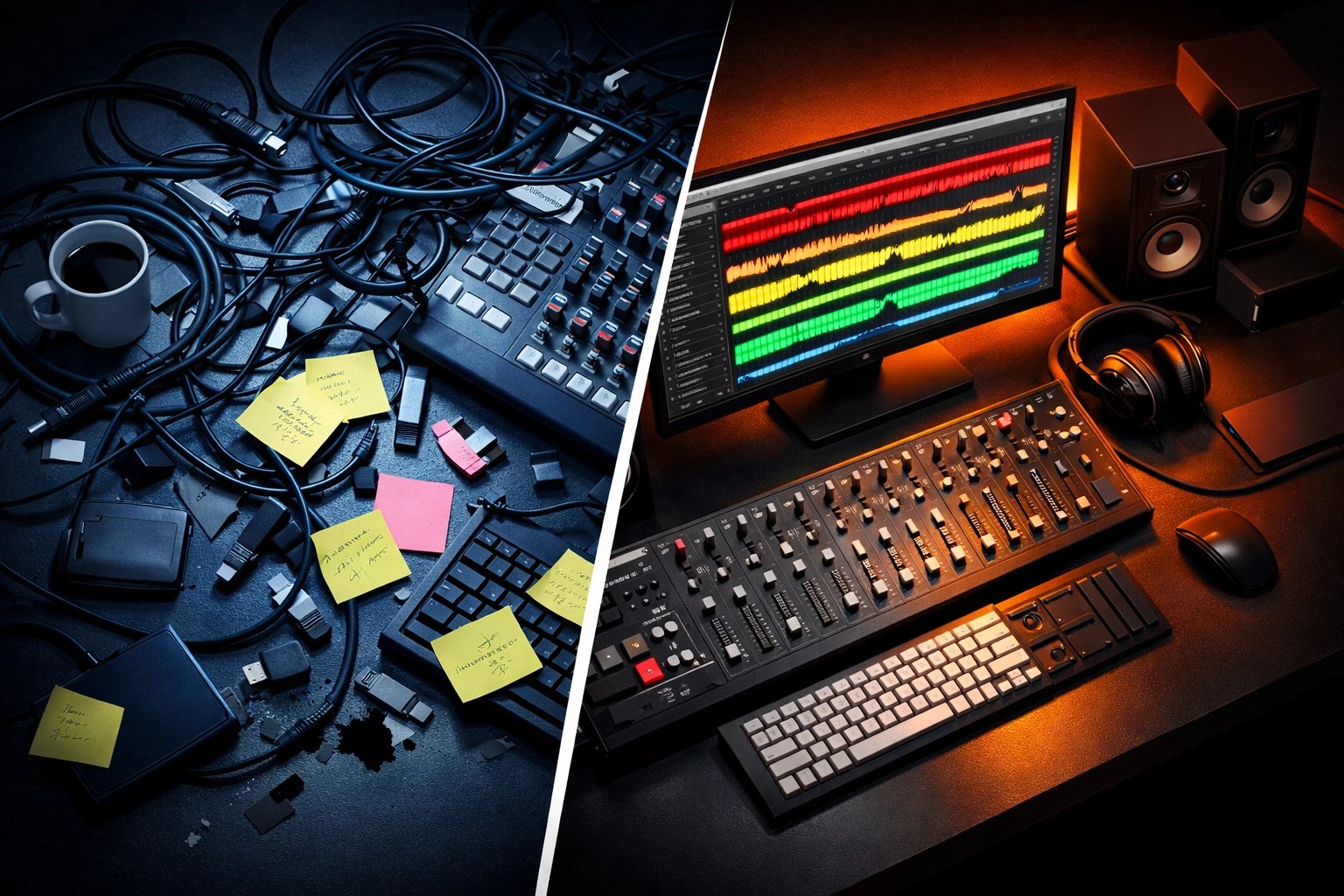
    Great Expectations: Mento Meets Modernity

    The "Great Expectation" album (2010) became the focal point of this reimagining project. Working with Geejam Studios co-owner Jon Baker and with Daniel Neely (a respected mento scholar) as music director, Dale and the team took an unusual approach: alongside traditional mento standards, they recorded mento versions of rock and pop classics.

    Rehab by Amy Winehouse as mento. The Passenger by Iggy Pop with rumba box bass. It sounds like a gimmick until you hear it: then you realize mento's adaptability was always its strength. These songs weren't "covers" in the traditional sense. They were translations. Taking melodies and stories and running them through the acoustic, rhythmic filter of 1940s Jamaica.

    Dale's production work involved developing innovative arrangements that bridged the elder musicians' traditional approach with contemporary sensibilities. The banjos needed to cut through modern mixes. The vocals: often raw and unpolished by commercial standards: needed to retain their character while being intelligible to international audiences.

    The Great Expectation Era (Modern Mento Covers)

    The album didn't try to turn mento into reggae or ska. It presented mento as a complete, sophisticated musical language capable of expressing anything. That was revolutionary.

    Opening for Sade: The Global Leap

    Then came 2011 and the call that changed everything: 25 arena shows opening for Sade on her world tour. Sade: the epitome of sophisticated, timeless soul music: recognized something in The Jolly Boys that connected to her own artistic values. Both acts prioritized authenticity, emotional depth, and musical craftsmanship over trends.

    For Dale, the logistics were massive. Taking a group of elder Jamaican musicians: some in their 70s and 80s: on a world tour through Europe, the United States, and China meant coordinating travel, equipment, health needs, and performance schedules across time zones and cultures. As assistant tour manager, Dale helped ensure the band could focus on performing while everything else was handled.

    The audiences were massive. Arena crowds who came for Sade's smooth sophistication found themselves moving to acoustic Jamaican rhythms from 1945. The response was overwhelming. Suddenly, mento wasn't a historical footnote: it was a living, breathing art form that could captivate thousands of people who'd never heard of Port Antonio.

    The Jolly Boys performing live at the O2 Arena in Dublin during their global tour with Sade, bringing mento to the world’s biggest stages.
    The Jolly Boys performing live at the O2 Arena in Dublin during their global tour with Sade, bringing mento to the world’s biggest stages.

    Live on Sade’s World Tour

    The cultural impact was significant. Here were Black elder musicians from rural Jamaica, playing acoustic instruments, being celebrated on the same stages as international superstars. It validated mento not as "world music" or "folk curiosity," but as sophisticated, powerful performance art.

    The Chemistry: Elders and Visionary

    What made the collaboration work was mutual respect. Dale didn't approach The Jolly Boys as a young producer trying to "fix" their sound or make them "relevant." He approached them as a student and collaborator, recognizing that they carried knowledge and musical wisdom he couldn't learn from a textbook or YouTube tutorial.

    The elder musicians, in turn, trusted Dale to translate their sound for modern audiences without compromising its integrity. They'd seen decades of Jamaican music evolve: ska, rocksteady, reggae, dancehall: and understood that preservation doesn't mean staying frozen in time. It means finding ways to keep the essence alive while allowing for growth.

    In studio sessions, Dale would set up the mics, hit record, and let the musicians play. Then he'd play back what he captured, and they'd discuss the feel. Too clean? Add some room ambience. Too muddy? Tighten the low end. It was a conversation between eras, between acoustic tradition and digital possibility.

    The Day-O Tribute

    The band's recent single "Day-O" (recorded pre-pandemic but released recently) serves as both tribute to Harry Belafonte and memorial to departed members Albert Minott, Joseph "Powda" Bennett, and Derrick "Jonny" Henry. Featuring vocals from Nexus, a renowned Jamaican vocal group, the track continues the mission Dale helped establish: honor the roots, push the boundaries, never compromise the soul.

    Why This Matters for Reggae Month

    During Reggae Month, we celebrate the music that changed the world. But reggae didn't appear from nowhere. It grew from ska's urgency, rocksteady's romance, and mento's storytelling foundation. The rhythms that Bob Marley internationalized have roots in the rumba boxes and banjos of Port Antonio. The call-and-response vocals that define Jamaican music trace back to mento's communal style.

    Dale Virgo's work with The Jolly Boys represents something crucial: intergenerational knowledge transfer. The elder musicians shared their craft with a younger producer who had the skills and vision to present it to the world. Dale, in turn, gave them access to modern recording techniques, international stages, and a production approach that expanded mento's reach without diluting its essence.

    Now, in 2026, The Jolly Boys continue performing, carrying forward a tradition that dates back 81 years. Some of the original collaborators have passed, but new musicians have stepped in, trained by those who came before. The cycle continues because people like Dale understood that preservation requires evolution.

    Modern Mento Fusion Performance

    This Reggae Month, as we play our Bob Marley and Burning Spear playlists, remember the acoustic guitars and rumba boxes that laid the foundation. Remember the elder musicians who kept the tradition alive through decades when nobody was paying attention. And recognize the producers, engineers, and tour coordinators who helped translate that tradition for modern ears.

    From Port Antonio's Geejam Studios to Sade's arena stages: that's the mento revolution. That's the work. That's the legacy Dale Virgo helped build with The Jolly Boys.

    Explore more roots music on DubCorner: Upful Vibes Playlist


    Celebrating Reggae Month 2026 by honoring the music that came before the music. Respect to the elders. Respect to the students. Respect to mento.

  • The Artist’s Yearly Guide: What to Release and When 🎶

    The Artist’s Yearly Guide: What to Release and When 🎶

    Timing isn’t just a logistical detail in the music industry: it’s the pulse of the culture. I’ve been looking through my photo archives from last year, scrolling through shots of the G Jam sessions and the road trips with the Jolly Boys, and it hit me how much the "vibe" of our releases matched the seasons we were moving through. Music is a living thing. It reacts to the temperature, the light, and the collective mood of the people listening.

    If you drop a heavy, introspective trip-hop track in the middle of a July heatwave, you’re fighting the sun. If you drop a high-energy dancehall anthem in the dead of a bleak February, you’re screaming into a void of people who just want to curl up under a blanket. Strategic releasing is about alignment. It’s about being the soundtrack to the moment the world is already living.

    At DubCorner, we see it all the time. The artists who win aren’t just talented; they’re savvy. They know when to hold back and when to let the bass drop. This is the breakdown of how to map out your year, Dizzle-style.

    ❄️ Winter (Jan – Feb): The Fresh Start & The Heart

    January is the industry’s "clean slate." The holiday noise has finally died down, the major labels are still hungover from their Q4 pushes, and listeners are looking for something new to define their year. This is the month of the "New Year, New Me" anthem.

    If you’ve got high-energy, motivational tracks or heavy workout bangers, January is your window. People are hitting the gym, setting goals, and looking for a sonic kick in the teeth to get them moving. It’s a quiet period for media, which means your pitch has a better chance of landing in an inbox that isn't already overflowing with 500 other "Best of the Year" emails.

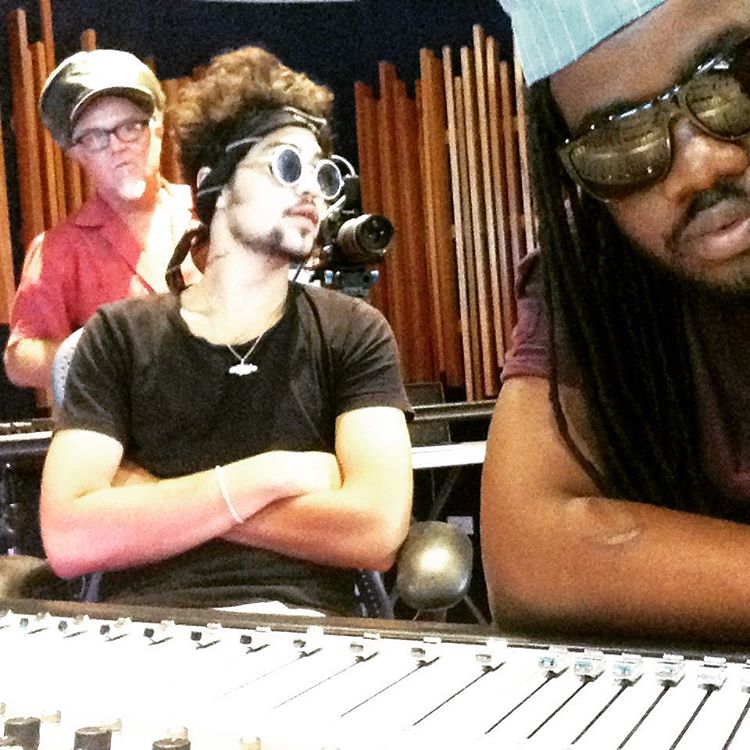
    Three producers and musicians in a recording studio

    Then comes February. It’s the shortest month, but it carries a heavy emotional weight. You’ve got Valentine’s Day, which everyone thinks is just for the lovers: but the real money is in the heartbreak. Ballads are cool, but the world needs anti-Valentine’s tracks. Songs about independence, grit, and the wreckage of a bad breakup often resonate deeper than another generic love song. We’ve talked about this before in our Producer’s Survival Guide to Dating, and that same emotional honesty is what you need to bottle up for your February releases.

    Genre Suggestions: Upbeat Workout Anthems, Motivational Trap, Raw Acoustic Ballads, Heartbreak R&B.

    Engage Your Fans: "What’s your go-to 'new beginning' song? Is it a high-energy banger or a quiet acoustic vibe?"


    🌱 Spring (March – May): The Awakening

    Spring is about the thaw. As the weather warms up, the music should start to feel lighter and more hopeful. This is the territory of indie-pop, folk, and light acoustic sounds. It’s the "awakening" phase.

    In the studio at G Jam, we start seeing artists move away from the heavy, dark winter production and toward something with more air. March and April are tricky because of massive industry events like SXSW. If you aren't playing the festival circuit, you want to time your releases either just before the March madness starts or in the "late spring" window of mid-April.

    By May, the "Pre-Summer" hype is real. This is the perfect time to drop that track that feels like a beach trip or a road trip with the windows down. You want to catch the early summer playlists before the heavy hitters start dropping their June blockbusters. If you’re thinking about visuals, now is the time to learn how to create a Spotify Canvas that matches that blooming, vibrant energy.

    Genre Suggestions: Indie-Pop, Tropical House, Folk, Light Roots Reggae, Neo-Soul.

    Engage Your Fans: "If your life was a movie scene in a park, what song would be playing in the background right now?"


    ☀️ Summer (June – Aug): The Peak Energy

    This is where we live. This is the "island vibe" territory. Summer is the season for Reggae, Dancehall, and Afrobeats. It’s high energy, it’s danceable, and it’s loud.

    When I look back at the photos of the Jolly Boys performing outdoors, you can see it in the crowd: the rhythm just hits differently when the sun is out. This is the peak festival season. You want music that works in a backyard BBQ, a club, or a massive outdoor stage.

    Three male reggae artists outdoors

    June and July are for the anthems. Think Blaze Mob – Rastafari Children energy. You want tracks that make people move. By August, the mood shifts slightly into "late summer nostalgia." It’s the "one last party" vibe. Songs that feel like a sunset or a bittersweet end to a holiday do incredibly well here.

    Don't forget to push your tracks to our Upful Vibes Playlist during this window: it’s curated specifically for this peak energy.

    Female artist in vibrant dancehall-inspired outfit

    Genre Suggestions: Dancehall, Afrobeats, Roots Reggae, Summer Pop, EDM.

    Engage Your Fans: "I’m looking for the ultimate BBQ track: should I go with classic Roots Reggae or a modern Dancehall remix? Tell me below!"


    🍂 Fall (Sept – Nov): The Deep Dive

    As the leaves start to change and the days get shorter, the music needs to get deeper. September is the "back to reality" month. People are settling into routines: school, work, the grind. Alternative Rock, Lo-Fi beats, and more complex electronic sounds work well here.

    October is the "darker" side. This is where you can get experimental. Think Trip-Hop, moody Jazz, or anything with a bit of grit. It’s the season for storytelling. People are spending more time indoors, listening more closely to lyrics. If you have a track that’s lyrically dense or musically challenging, this is its time to shine.

    Soulful artist with headphones on an urban fire escape, capturing the moody vibe of fall music releases.

    November brings the "coziness." As the temperature drops, people want music that feels like a warm blanket. Soul, R&B, and singer-songwriter tracks are perfect for this window. You’re building a mood that’s reflective and poetic.

    Genre Suggestions: Alternative Rock, Lo-Fi, Trip-Hop, Experimental Jazz, Soulful R&B.

    Engage Your Fans: "When the leaves start falling, do you prefer a playlist that makes you think or a playlist that makes you dance?"


    🎄 December: The Holiday (or the Silent) Period

    December is a beast. Unless you have a genuine holiday song or a massive "Song of the Year" contender, it is incredibly difficult to break through the noise. The major labels dump their biggest assets, and holiday classics dominate the airwaves.

    The smart move for independent artists? Use December for the recap. Drop an acoustic version of your biggest hit from the year. Release a "Best of" EP or a live session from the studio. It’s about maintaining connection with your fans without trying to fight the Christmas giants. It’s also a great time to clean up your digital presence, like merging your YouTube artist channels so you’re ready to hit the ground running in January.

    Genre Suggestions: Acoustic Versions, Live Sessions, Holiday Covers, Remixes.

    Engage Your Fans: "What was YOUR song of the year? Tag the artist who made your 2025!"


    The Release Strategy: How Often?

    It’s not just about when in the year you release, but the cadence. Research shows that streaming platforms reward consistency. Instead of dropping one 12-track album once a year and then disappearing, break it up.

    The "Dizzle-approved" strategy is the single-led approach. Drop a single every 6 to 8 weeks. This keeps you in the algorithms and gives you a reason to talk to your fans constantly. A 12-song album can be:

    1. Single 1
    2. Single 2
    3. EP (Singles 1 & 2 + 2 new tracks)
    4. Single 3
    5. Full Album

    This creates five separate promotional opportunities instead of one. It builds momentum. It gives each song room to breathe.

    Pro-Tips for Your Journey

    • Plan 3 Months Ahead: If you want a summer anthem, you need to be finishing the mix in March and pitching to playlists in April.
    • Release on Wednesdays or Thursdays: While Friday is the industry standard for major labels, dropping on a Wednesday can help you avoid the "Friday flood" and get more dedicated attention from your core fans.
    • Use Your Personal Story: Looking back at my photos from the road with the Jolly Boys, those images tell a story that the music alone can't. Document your process. Share the studio sessions. Use your life to sell the vibe.

    Music is more than just audio; it's a moment in time. Align your sound with the season, stay consistent with your releases, and keep the energy authentic.

    See you in the studio.

    ( Dizzle)

  • Koncept x DZL ,  Siren A Wail (Lyrics)

    Koncept x DZL , Siren A Wail (Lyrics)

    At DZL Records, we continue to push music that doesn’t just vibrate the speakers but also stirs the soul and provokes thought. Our latest collaboration, “Siren A Wail” by Koncept and produced by our very own Dale Dizzle Virgo, is a heavy-hitting reality tune that addresses the current state of the streets and the misconceptions of the “gangsta” lifestyle.

    This track is more than just a rhythm; it is a social commentary. As the world deals with rising crime and violence, Koncept uses his lyrical platform to challenge the narrative of what it truly means to be a “gangsta” in today’s society. Backed by a dark, atmospheric production from Dale Virgo, the song captures the tension and the inevitable consequences of choosing a path of destruction.

    The Message Behind the Music

    The song opens with a sobering realization: “certain thing don’t pay nowadays.” This sets the tone for the entire project. In an era where social media often glorifies the “hustle” and the “road life,” Koncept strips away the glamour to show the “Siren” that is always waiting at the end of that road.

    Dale Virgo, acting as the Technical Director and Producer, crafted a soundscape that mirrors this urgency. The heavy bass and sharp percussive elements simulate the heartbeat of a city under pressure, making “Siren A Wail” a standout piece in the current DZL Records discography.

    Verse 1: The Progression of the Streets

    In the first verse, Koncept cleverly uses a numerical progression to describe the escalation of violence. Starting with a “one pop” and moving through the “two two” and “three magazine,” he illustrates how quickly things can spiral out of control for a “school youth.”

    The line “connect like bluetooth” is a brilliant modern touch, showing how seamlessly technology and street life have become intertwined. It’s a warning to the younger generation that the path they are embarking on is efficient in its destruction.

    Promotional cover art for reggae/urban single

    Challenging the “Gangsta” Narrative

    The chorus is the heart of the message. Koncept asks the hard questions that many avoid: “How you fi be gangstas? When you a rob the old lady fi di purse.”

    By contrasting the supposed “toughness” of the street life with the cowardly act of targeting the vulnerable, the song forces the listener to redefine their understanding of strength. True “gangstas” in the traditional sense were protectors of their community, but “Siren A Wail” points out that the modern iteration has lost its way, resorting to “killing off little boys and girls.”

    Minimalist red siren beacon symbolizing the reality of street life in Koncept x DZL - Siren A Wail.

    Verse 2: The Moment of Truth

    Verse 2 dives into the psychology of the “hot head.” Koncept speaks on the false bravado that evaporates the moment the “nozzle point nah your face.” It’s a vivid depiction of the fragility of the life many choose to lead. When the reality of death or jail becomes immediate, the “badness” often turns into pleas for mercy.

    The production emphasizes this tension, with the “Siren” motif woven into the pre-chorus, serving as a constant reminder that the law, or karma, is never far behind.

    Gangsta’s Testimony Moody urban night scene

    Koncept x DZL , Siren A Wail (Full Lyrics)

    [Intro]
    Dem say I di way dem raise
    Ah ah ah, but me ah tell you certain thing don’t pay nowadays

    [Verse 1]
    Said dem start with a one pop, end up with a two two
    Now dem have three magazine weh connect like bluetooth
    Four skull you pour from your lickle as a school youth
    Five o’clock the road ah fi clean all your ear ah shoot shoot

    [Pre-Chorus]
    Siren a, Siren a wail
    Siren a, bear Siren a wail
    Siren a, Siren a wail
    Hope yuh don’t fraid a jail

    [Chorus]
    But yuh say that you’re a gangsta
    Living in a gangsta’s world
    Say that you’re a gangsta
    Gangsta nuh kill off little boys and girls
    Say that you’re a gangsta
    Living in a gangsta’s world
    How you fi be gangstas?
    When you a rob the old lady fi di purse

    [Verse 2]
    What make you worse?
    You a brag about who you kill
    And upon innocent people you a prove your skill
    Bet if the nozzle point nah your face
    Your drop a ground pon yuh knee and say dog just bill
    Spend everything you have just for live
    So you want it, people life and you can’t give
    Tell me where you get out and runnin’
    Wanted, young hot head and haunted
    Runnin’ when dem hear

    [Pre-Chorus]
    Siren a, Siren a wail
    Siren a, bear Siren a wail
    Siren a, Siren a wail
    Hope yuh don’t fraid a jail

    [Chorus]
    But yuh say that you’re a gangsta
    Living in a gangsta’s world
    Say that you’re a gangsta
    Gangsta nuh kill off little boys and girls
    Say that you’re a gangsta
    Living in a gangsta’s world
    How you fi be gangstas?
    When you a rob the old lady fi di purse

    [Pre-Chorus]
    Siren a, Siren a wail
    Siren a, bear Siren a wail
    Siren a, Siren a wail
    Hope yuh don’t fraid a jail
    Siren a, Siren a wail
    Siren a, bear Siren a wail
    Siren a, Siren a wail
    Hope yuh don’t fraid a jail

    [Outro]
    But you say that you’re a gangster Living in a gangster’s world
    Session Studio

    Why This Track Matters

    In the current musical landscape, it’s easy to get lost in party anthems and “feel-good” vibes. While we love those at DZL Records, we also believe in the power of “Education through Entertainment.” Koncept provides a mirror to the society, asking us if we like what we see.

    The track is an essential addition to any Reggae or Dancehall playlist that values lyrical depth. It joins the ranks of other socially conscious releases on our label, such as “Corruption” by Komplain, which also looks at the systemic issues affecting our culture.

    Corruption Single Cover Art

    Production and Technical Direction

    Dale Dizzle Virgo continues to demonstrate why he is a sought-after Technical Director in the industry. The mix on “Siren A Wail” ensures that the vocals remain front and center, because the lyrics are the priority, while the low-end frequencies provide that heavy, “dread” feeling necessary for a tune of this nature.

    For musicians looking to achieve this level of clarity and impact in their own recordings, we invite you to check out our new program for musicians. We are dedicated to nurturing talent that has a message to share with the world.

    Final Thoughts

    “Siren A Wail” is a powerful reminder that every choice has a consequence. Koncept and DZL Records have delivered a track that is as haunting as it is necessary. We hope this song sparks conversations in the communities that need it most.

  • Riddim Saturdays Is Back: All In for the Session

    Riddim Saturdays Is Back: All In for the Session

    North Hollywood is about to get a whole lot louder. If you’ve been following the journey of DZL Records, you know we don't just "do" music: we live it. After a massive debut on U.S. soil last year, our signature event, Riddim Saturdays, is officially returning to The Dizzle Lab on March 14, 2026.

    But this isn't your average "pull up and hang out" session. We’ve evolved. We’ve gamified the experience. And most importantly, we’re putting the power: and the responsibility: directly into the hands of the creators.

    The Roots: From Jamaica to North Hollywood

    To understand Riddim Saturdays, you have to understand the culture that birthed it. In Jamaica, the "riddim" is the heartbeat of the community. It’s not just a backing track; it’s a foundation. One producer creates a vibe, and a dozen different artists might jump on it, each bringing their own flavor, their own story, and their own energy.

    Dale Virgo (aka Dizzle), our Label Manager and Technical Director, grew up immersed in this "one riddim" culture. He saw firsthand how collaboration breeds innovation. When we brought this concept to our recording studio near me in North Hollywood, we wanted to capture that raw, unfiltered energy.

    Last year proved that Los Angeles was hungry for this. We saw rappers, singers, and musicians who had never met before walk into a room and walk out with a potential hit. Now, we’re taking that energy and turning the dial up to ten.

    Futuristic Studio Space at DZL Records

    What Is Riddim Saturdays?

    On March 14, from 3 PM to 9 PM, The Dizzle Lab transforms into a high-octane creative factory. The mission is simple: six hours of live writing, recording, and music production.

    This isn't a workshop where you sit and take notes. This is a session where you get your hands dirty. We provide the professional environment, the high-end gear, and the expert technical direction. You provide the talent.

    Whether you are a seasoned veteran or an emerging artist looking for professional music production services, this is the place to be. We’re cutting through the gatekeeping and the high hourly rates to give you a platform where the only thing that matters is the vibe you bring to the microphone.

    Spin to Win: The Slot Machine Experience

    We didn't want the booking process to be a boring form. We’re in the business of creativity, so we built something that reflects that.

    Before you even step foot in the lab, you have to set your intention. Head over to riddimsat.dizzlelab.com and you’ll find our custom, arcade-style slot machine. This is how you "Reserve Your Vibe."

    Instead of cherries and sevens, you’re spinning for the DNA of the session:

    • Mood: Are we going for something Chill, something Dark, or something High Energy?
    • Style: Are we keeping it Old School, going Modern, or blending genres into a Fusion?
    • Genre: This is where the DZL Records roots shine: choose from Dancehall, Afrobeat, or Reggae.

    You keep spinning until the reels align with exactly what you’re feeling. Once you lock it in, that’s your reservation. It’s a fun gimmick, sure, but it’s also highly intentional. When the room knows the vibe before the first beat drops, we spend less time talking and more time creating.

    Creative vibe selection for a Riddim Saturdays music production session at the DZL Records North Hollywood studio.

    The Jackpot System: Skin in the Game

    Here is the twist: The session only runs when the Jackpot hits.

    Music is a collective experience, and Riddim Saturdays is no different. We need a minimum of 5 confirmed Creator Passes for the session to officially go live. This "Pay to Play" model ensures that everyone in the room is serious about the craft.

    On the app, you’ll see the Jackpot Progress Bar. Every time someone locks in a Creator Pass, the bar moves closer to the goal. When we hit five, the "Jackpot" triggers, and the session is a go.

    This creates a community-driven incentive. If you want to record, you’re not just booking for yourself: you’re helping make the session happen for everyone else. It’s about accountability and shared passion. If you’re looking for a music producer near me who values your time as much as you do, this is the most efficient way to get into a pro room for a fraction of the cost.

    Choose Your Pass

    We’ve kept the pricing simple and accessible because we want the best talent in the room, regardless of budget.

    1. Creator Pass – $10 (Online Only):
      This is for the heavy hitters. With a Creator Pass, you have full studio access. You’re in the booth, you’re at the desk, you’re collaborating. You are the heartbeat of the session.
    2. Vibe Pass – $5 (Online Only):
      Not ready to jump on the mic yet? The Vibe Pass is for the spectators, the networkers, and the fans. Come through, see how the magic happens, and absorb the energy. It’s the perfect way to scout the scene before you commit to a Creator Pass next time.
    3. Walk-ins – $20 at the door:
      We always recommend booking online. Not only do you save money, but you also help us hit that Jackpot sooner. If you decide to roll the dice on the day of the event, the door fee is $20 (assuming spots are still available).

    Reggae Beat Tape Vol. 1 Album Cover

    Why The Dizzle Lab?

    Located at 11320 Burbank Blvd #5, North Hollywood, CA 91601, The Dizzle Lab is more than just a room with some speakers. It is a fully treated, soundproofed creative suite designed for one thing: high-fidelity sound.

    Under the guidance of Dale Virgo, the lab has become a hub for reggae, dancehall, and urban music in Los Angeles. We’ve hosted everything from international superstars to local legends, and we bring that same level of professional intensity to every Riddim Saturday session.

    When you join a session here, you aren't just getting a recording; you’re getting the benefit of decades of industry experience. Check out our discography to see the kind of quality we maintain. We believe that the environment dictates the output, and we’ve built an environment where "good enough" isn't an option.

    Networking and Opportunity

    Beyond the music, Riddim Saturdays is about the connections. The music industry is built on "who you know," but at The Dizzle Lab, it’s about "who you create with."

    By bringing together producers, songwriters, and vocalists in one space, we’re creating a microcosm of the industry. Many of the projects you see on our music page started as casual conversations in the studio. You never know who you might meet: a new manager, a future collaborator, or the producer who helps you find your "hit" sound.

    If you’ve been searching for music production services that feel like a partnership rather than a transaction, this is your entry point.

    Jahmi Roc - DZL Records Artist

    Join the Movement

    We are building a legacy at DZL Records, and we want you to be a part of it. Whether you are coming to lay down the next big dancehall anthem or you just want to see how a professional session is run, March 14 is the date to mark in your calendar.

    Don't wait until the day of: spots for creators are limited, and once we hit that Jackpot, the energy moves fast.

    The Details:

    • Event: Riddim Saturdays
    • Date: March 14, 2026
    • Time: 3 PM – 9 PM
    • Location: The Dizzle Lab | 11320 Burbank Blvd #5, North Hollywood, CA 91601
    • Booking: riddimsat.dizzlelab.com

    Ready to see if you can hit the jackpot? Spin the reels, lock in your vibe, and let’s make some history.

    If you have questions about the session or other services, feel free to contact us directly. We’re always looking for new talent to join the DZL family.

    Stay tuned to our updates for more news on future sessions and releases. We'll see you in the Lab.


    Categories: Music Production, Industry News, Reggae, Los Angeles

  • She’s Done. And She Means It: Jahmi Roc’s “Last Time” Is the Breakup Song We Actually Needed

    She’s Done. And She Means It: Jahmi Roc’s “Last Time” Is the Breakup Song We Actually Needed

    By DZL Records | March 6, 2026


    There’s a certain kind of exhaustion that doesn’t look like crying. It looks like stillness. Like a woman on her knees , not begging, but deciding. That’s exactly where Jahmi Roc places us in her latest single, Last Time, and it’s one of the most quietly powerful moments in recent R&B memory.

    Released today on DZL Records, Last Time isn’t the breakup song that throws dishes across the room or keys a car in a fit of rage. It’s the one that says goodbye with its eyes wide open, fully aware of the cost and fully prepared to pay it. It is a record built on the heavy realization that sometimes, the only way to save yourself is to set everything else on fire.

    The Sound of Silence and Soul

    On Last Time, Jahmi Roc leans into restraint and lets the emotion do the heavy lifting. In a world where music often leans into “more is more”, more layers, more bass, more digital polish, this track chooses a different path. It is a modern R&B/Soul piece that feels incredibly contemporary while keeping its roots firmly in the ground.

    The arrangement stays clean and intentional. There are no massive orchestral swells or over-the-top melodrama because Jahmi’s voice carries all the weight on its own. The beat provides a steady, rhythmic pulse, like a heartbeat that’s finally slowing down after a long period of panic.

    Jahmi Roc doesn’t just sing the lyrics; she inhabits them. Her delivery is conversational yet haunting, making you feel like you’re sitting in the room with her while she packs her bags. It’s a sound that fits perfectly within our discography, pushing the boundaries of what Caribbean-born Soul can achieve on the global stage.

    Verse by Verse: A Masterclass in Ending Things

    The opening verse of Last Time sets the scene with a devastating simplicity that hits you right in the chest:

    “You were my first love and my only / But now you made my heart turn cold / We were about to start a family / Then you turned , tried to take my soul.”

    This isn’t abstract heartbreak. This is specific, visceral pain. Jahmi is talking about a relationship that wasn’t just a fling; it was a foundation. The mention of starting a family adds a layer of grief for a future that will never happen. But notice the shift in the final line: “tried to take my soul.” That’s the turning point. That’s where the victim becomes the survivor.

    The pre-chorus is a repeated, almost ritualistic chant: “You let me down.” It feels less like a plea for sympathy and more like a fact being entered into a permanent record. There’s no questioning left. The evidence is in, and the verdict is final.

    The hook is where the song truly earns its complexity. When Jahmi sings, “Got me weak baby / Down on my knees baby,” it initially sounds like surrender. But she flips the script. This “weakness” isn’t defeat; it’s the physical sensation of a burden finally being dropped. By the time she asks, “Is this the last time / Is this goodbye,” you realize the question isn’t for him, it’s for her. And the answer is already “yes.”

    Last Time cover art

    Jahmi Roc on an urban overpass in a yellow dress

    Jahmi Roc in a patterned jacket near a graffiti pole

    The Visual Narrative: Fire, Roses, and Yellow Dashikis

    If the song is the internal dialogue of a breakup, the artwork is the external manifestation of that transformation. The cover for Last Time says everything the music leaves to the imagination.

    Jahmi Roc is seen kneeling on cracked pavement, wearing a vivid yellow dashiki. In color psychology, yellow often represents joy or energy, but here it represents identity. In a frame filled with gray city rain, burning roses, and actual flames, she is the warmest and most alive thing present. Everything around her, the remnants of the relationship, the shattered photo frame at her fingertips, is being reclaimed by the fire.

    She isn’t running from the flames. She’s the one who lit the match. It’s a powerful visual metaphor for the “wildest breakup” she’s ever had, a theme she has touched on in recent interviews. She’s letting the past burn so she can walk into the future unencumbered.

    Why This Record Matters Right Now

    Last Time sits at a very interesting intersection in the current music landscape. It’s a breakup song that prioritizes dignity over drama. In an era where emotional pain is often performed for clicks or social media spectacle, Jahmi Roc chooses clarity.

    This record is positioned squarely for fans of Modern R&B, Soul, and Adult Contemporary music, but its appeal is much broader. The themes of self-worth and the quiet courage it takes to walk away from a toxic situation are universal. It’s the kind of song that resonates with anyone who has ever stayed in a situation longer than they should have.

    At DZL Records, we believe in music that has a message. Whether it’s the uplifting vibes of Blaze Mob or the social commentary found in our other releases, we aim for “Positive Content.” Last Time fits this mission perfectly because, despite the “hell” mentioned in the outro, the song is ultimately about liberation.

    The Growing Legacy of Jahmi Roc

    While Last Time is a significant moment, it’s just one piece of the puzzle for Jahmi Roc. Listeners might recognize her from her previous work, including the vibrant “Write Your Name” (and its subsequent House Remix which brought a completely different energy to the track).

    Beyond being a recording artist, Jahmi is a multifaceted creator. She has spent time as a podcast host, exploring themes of resilience, identity, and cultural connection. That depth of character is exactly what she brings to her music. She isn’t just a singer; she’s a storyteller who understands the weight of her words.

    When we were working on the single, we looked at her journey, from the tropical, romantic vibes of “Sweet Like Mango” to the soulful grit of “Last Time.” It’s clear that she is an artist who refuses to be boxed in. She can do the “good vibes” and the “uplifting messages,” but she isn’t afraid to go into the dark corners of the human experience when the song calls for it.

    The Final Word

    The outro of Last Time delivers the final blow, and it definitely isn’t gentle:

    “Goodbye, farewell / And by the way, go to hell.”

    That line lands so effectively because the entire song earns it. She doesn’t start with anger. She starts with reflection, moves through the pain, and arrives at a place of total finality. She was done long before the song ended; the outro just makes it official.

    Jahmi Roc doesn’t arrive with noise. She arrives with weight. Last Time is a record that respects the listener enough to trust them — to sit in the tension, feel the release, and understand that saying goodbye can be the most powerful thing a person does. She was done before the outro. The outro just made it official.

    Watch the Video

    Stream Last Time by Jahmi Roc : available now on all platforms.

    If you want to stay updated on Jahmi’s journey or check out more music from our label, feel free to browse our latest updates or contact us directly.

  • 7 Mistakes Artists Make When Hiring a Mixing Engineer Online (And How to Avoid Them)

    7 Mistakes Artists Make When Hiring a Mixing Engineer Online (And How to Avoid Them)

    Hiring a mixing engineer online should be straightforward, but too many independent artists lose time, money, and creative momentum by making avoidable mistakes. Whether you're an emerging artist in Kingston or an established producer in Los Angeles, the wrong choice can turn your passion project into a nightmare.

    After 18+ years mixing for major artists like Drake, Kendrick Lamar, and Rihanna, plus hundreds of independent musicians across reggae, dancehall, hip hop, and R&B, I've seen every mistake in the book. Here's how to avoid the seven most common pitfalls and find the right mixing engineer for your sound.

    1. Being Vague About Your Vision (Or Overreliant on Streaming Links)

    "Make it sound like Drake" isn't a mixing note, it's a recipe for disappointment.

    Too many artists send a Spotify link and expect their engineer to telepathically understand their vision. The problem? Streaming platforms compress audio. Your engineer isn't hearing what you're hearing. Plus, every Drake song sounds different depending on who mixed it, the genre, and the production choices.

    How to Avoid It: Send actual audio files of your reference tracks, not streaming links. Be specific. Instead of "I want it to sound big," say "I want the 808s to hit like they do at 1:32 in this reference." Describe the elements you love: the vocal presence, the drum punch, the stereo width. The clearer you are, the closer your engineer gets to your vision on the first pass.

    Audio Engineer in Studio

    2. Hiring Without Listening to Their Actual Work

    This one seems obvious, but you'd be shocked how many artists hire based on an Instagram bio or a few bullet points on a website.

    If a mixing engineer won't send you portfolio examples or refuses to share past work, that's a red flag the size of a stadium tour. You wouldn't hire a photographer without seeing their photos or a chef without tasting their food, so why would you trust someone with your music without hearing what they can do?

    How to Avoid It: Request at least three recent mixes in your genre. Listen critically. Do the vocals sit right in the mix? Are the low-end and highs balanced? Does the mix translate well on different playback systems (headphones, car speakers, laptop)? Check their online reputation through social media and artist testimonials. Word-of-mouth is still the most reliable gauge of quality and reliability.

    3. Choosing Based on Major Credits Instead of Mixing Quality

    Here's the truth: some engineers coast on old credits while their current work doesn't reflect the same level of skill.

    Sure, it's impressive if someone worked on a platinum record in 2015: but what have they mixed lately? And more importantly, did they actually mix that record, or were they an assistant engineer who happened to be in the room? Some professionals list production or mastering credits as mixing work, which are completely different skill sets.

    How to Avoid It: Listen to their reference mixes carefully. Focus on the technical quality, not just the artist names attached. Does the mix sound clean, balanced, and polished? When you're working with someone who's mixed chart-topping hits across multiple genres: reggae roots records to modern hip hop tracks: you should hear versatility and precision in every example. The proof is always in the playback.

    4. Hiring a "Jack of All Trades" Who Does Everything

    If someone advertises themselves as a mixing engineer, mastering engineer, producer, songwriter, and vocal coach all at once, proceed with caution.

    Mixing is a specialized craft that takes years: sometimes decades: to master. Engineers who also promote heavy mastering services or jump between ten different roles often lack deep expertise in any single discipline. It usually means they're trying to maximize income streams rather than perfecting one core skill. True specialists dedicate their entire career to one craft.

    How to Avoid It: Look for engineers who specialize in mixing and have a clear, focused service offering. After spending nearly two decades honing skills across stem mixing, 2-track mixing, and multi-genre production, I can tell you that depth beats breadth every time. You want someone who lives and breathes the mixing board: not someone splitting their attention across five different services.

    Professional mixing engineer workspace showing organized vs disorganized audio file preparation

    5. Skipping the Communication Test Before Committing

    If an engineer is too busy to respond to your initial inquiry, imagine how unavailable they'll be when you need revisions or have questions mid-project.

    Communication is everything in remote mixing. You need someone who's responsive, clear, and professional from day one. Some engineers ghost potential clients for weeks, then expect you to send files and payment immediately. That's a preview of how your entire project will go.

    How to Avoid It: Exchange a few emails or hop on a quick call before you commit. Ask questions about their process, turnaround time, and revision policy. Notice how quickly they respond and how clearly they explain their workflow. A professional engineer treats the consultation with the same care as the mix itself. If they're dismissive or vague before you've even paid, walk away.

    6. Sending Poorly Prepared Tracks and Overcomplicated Notes

    Your mixing engineer isn't a miracle worker: they need clean, organized files to work with.

    Some artists send 47 unlabeled tracks with names like "Audio 1," "Audio 1 FINAL," and "Audio 1 FINAL FINAL (2)." Others go the opposite direction and send four-page essays explaining every frequency they want boosted. Both approaches slow down the process and lead to frustration on both sides.

    How to Avoid It: Label your tracks clearly and succinctly. "Lead Vocal," "Background Vocals," "Kick," "808 Bass": simple and direct. Consolidate your tracks from the beginning of the song and export them at the same sample rate and bit depth. When it comes to mixing notes, be concise. "Bring the vocals forward" is more helpful than a paragraph explaining your emotional journey with the song. Professional engineers with experience across genres know how to interpret clear, actionable notes.

    7. Ignoring Revision Policies (Or Accepting Limited Revisions)

    If an engineer caps revisions at two or charges extra after the first round, that's a confidence problem.

    Mixing is subjective. What sounds perfect to an engineer might not match your artistic vision: and that's okay. The best engineers offer revisions as part of the process because they're confident in their ability to get your mix exactly where it needs to be. Engineers who nickel-and-dime you for revisions are either overbooked, underconfident, or both.

    How to Avoid It: Work with engineers who offer unlimited revisions as standard practice. It's not about demanding endless changes: it's about ensuring you're completely satisfied with the final product. When you're working with someone who's mixed everything from traditional Jamaican roots music to modern trap records, they understand that every genre and artist has unique needs. Unlimited revisions signal commitment to quality over quick turnaround.

    Two people in a recording studio

    The Bottom Line

    Hiring the right mixing engineer online doesn't have to be complicated. Avoid these seven mistakes, ask the right questions, and trust your ears. Whether you're an independent artist recording in your bedroom or a seasoned producer finishing a major project, the mixing stage can make or break your record.

    Your music deserves world-class treatment: crisp vocals, punchy drums, and a mix that translates beautifully across every playback system. Choose an engineer with the experience, versatility, and commitment to bring your vision to life, track after track.

    Ready to work with a mixing engineer who's spent 18+ years perfecting the craft across multiple genres? Let's talk about your project. No games, no limits: just exceptional sound and unlimited revisions until your mix hits exactly right.

  • Blaze Mob ,  Rastafari Children (Lyrics)

    Blaze Mob , Rastafari Children (Lyrics)

    Blaze Mob continues to make waves in the international reggae scene with their latest anthem, “Rastafari Children.” This track, produced by our very own Dale Dizzle Virgo, is more than just a song, it is a powerful call to unity and a vibrant celebration of Rastafarian culture. Released officially on October 4, 2024, the track showcases the group’s signature blend of hard-hitting rhythms and deeply conscious lyrics.

    At DZL Records, we are committed to pushing authentic sounds that resonate with the soul, and “Rastafari Children” is a prime example of that mission in action. The collaboration between Blaze Mob and Dizzle highlights a shared vision for modern reggae: one that respects the roots while embracing technical excellence.

    The Message Behind the Music

    The track is a spiritual journey, led by the voices of Shaka Dennis, Gyasi Dennis, and Saeed Dennis. According to Shaka Rock of Blaze Mob, “Rastafari Children is our message to the world, reminding us all of our roots and the strength we find in unity.” In a world currently dealing with high levels of crime and violence, “Rastafari Children” offers a refreshing pivot toward love, joy, and spiritual grounding.

    Two male artists with dreadlocks stand against a dark studio background, showcasing a relaxed yet focused vibe.

    The song serves as a reminder that the path of righteousness is not always easy, but it is necessary. By invoking the name of His Imperial Majesty, Haile Selassie I, Blaze Mob connects the listener to a lineage of resilience and faith. The production emphasizes this with a steady, driving bassline that feels like a heartbeat, anchoring the ethereal melodies and the sharp, direct delivery of the verses.

    Lyrical Analysis: A Trod Pon Earth

    The lyrics of “Rastafari Children” are rich with symbolism and traditional Rastafarian terminology. When the group chants “Hail Him,” they are acknowledging a higher power and a spiritual king. The mention of “Nyabhingi children” refers to the oldest mansion of Rastafari, known for its focus on chanting, drumming, and the “livity” of the movement.

    In the first verse, the lyrics state: “When we a trod pon earth we in the highest of realms.” This suggests that despite the physical struggles of the world, the spiritual connection keeps the “children” elevated. The rejection of “Babylon”, often used to describe the oppressive systems of the modern world, is a central theme. Blaze Mob makes it clear that they are “not inna nothing with them,” choosing instead to melt away wickedness like fire against wax.

    A minimalist photo of a traditional Nyabhingi drum, symbolizing the spiritual roots of the track Rastafari Children.

    The reference to Addis Ababa, the capital of Ethiopia, further cements the song’s roots. It is a message sent from the heart of the movement to the rest of the world, spreading more love and more joy as a form of commendation for those who stay true to the path.

    The DZL Records Production

    Working with Blaze Mob on this project allowed Dale Dizzle Virgo to flex his expertise as a technical director and producer. The goal was to ensure that every “ad-lib” and every drum hit served the message. As the master behind the board, Dizzle’s job was to “color it”, taking the raw energy of the Dennis brothers and framing it in a way that sounds massive on any sound system, from Kingston to London.

    Independent artists looking to achieve this level of sonic clarity often turn to DZL Records for our artist development and music production services. We believe in providing the tools for artists to express their authentic selves without compromise.

    Three male artists with dreadlocks pose outdoors in casual attire, projecting a confident and authentic vibe.

    Rastafari Children (Full Lyrics)

    [Chorus]
    Hail Him, Hail Him, Hail Him
    Rastafari children calling
    I Said Hail Him, Hail Him, Hail Him
    Nyabhingi children calling
    I Said Hail Him, Hail Him, Hail Him
    Rastafari children calling
    I Say, ‘Hail him, hail him, hail him’
    Nyabhingi children calling

    [Verse]
    I man say Hail King Selassie I, a dat we a defend
    Bun out all wickedness and all heathen
    When we a trod pon earth we in the highest of realms
    Bun Babylon we no inna nothing with them
    Like fire against wax we say, so we melt them
    Ask Shaka Rock we no wrong fi meds dem
    Man straight like a arrow I have no time fi bend
    No mix me with Babylon no time fi dem
    Come make we fill up la la bella
    Rastafari children
    Middle of Addis Ababa that message a mi a send
    More love and more joy
    That we are commend
    Watch it make me chant it all again
    Again again

    [Chorus]
    Hail Him, Hail Him, Hail Him
    Rastafari children calling
    And a said Hail Him, Hail Him, Hail Him
    Nyabhingi children calling
    He said Hail Him, Hail Him, Hail Him
    Rastafari children calling
    Say, ‘Hail him, hail him, hail him’
    Nyabhingi children calling

    [Verse]
    No one shows us love like you
    Say Haile, keep me virtuous and so true
    Say Haile, no one shows us love like you
    Haile, keep I virtuous and so true
    Haile
    Seems there’s only one way to go (Go)
    And yes I’ve got to carry that heavy load (That load)
    One by one we will reach that goal (That goal)
    And I will never never sell my soul (Soul)
    No one shows us love like you
    Say Haile
    Keep me virtuous and so true
    Say Haile
    No one shows us love like you
    Haile
    Keep I virtuous and so true
    Haile

    Why This Release Matters

    “Rastafari Children” arrives at a time when the music industry is seeing a resurgence of roots reggae. Listeners are looking for more than just a catchy beat; they are looking for substance. Blaze Mob delivers this in spades. The second verse of the song touches on the “heavy load” that many feel today, but it offers a solution: staying virtuous and staying true to one’s soul.

    Rastafari Children Reggae Concert featuring three artists performing on stage with DJ equipment and large speakers.

    The group’s refusal to “sell their soul” is a powerful statement for any independent artist. It’s a commitment to authenticity that we champion at DZL Records. Whether you are listening on Spotify, YouTube, or Shazam, the message remains clear: the strength of the community lies in its roots.

    About Blaze Mob

    Blaze Mob is a collective of brothers who have dedicated their lives to the craft of music and the message of Rastafari. Their synergy is evident in every performance, whether in the studio or on a live stage. By combining their individual strengths, they create a sound that is cohesive, powerful, and undeniably “Blaze Mob.”

    Three male artists are featured in a black and white portrait shot, capturing a serious and focused vibe.

    Their work with DZL Records continues to push the boundaries of the genre. You can explore more of their collaborations and find their full discography by visiting the Blaze Mob Tunes with DZL page.

    Final Thoughts

    As “Rastafari Children” continues to climb charts and find its way onto roots-inspired playlists, we invite you to take a moment to really listen to the lyrics. There is a depth here that requires multiple listens: each time revealing a new layer of meaning or a new nuance in the production.

    If you are an artist inspired by this sound and looking to develop your own project, check out our sitemap to see the range of services we offer. From technical direction to creative branding, DZL Records is here to help you “color” your music and reach your goal without ever selling your soul.