Tag: Conscious Reggae

  • Blaze Mob’s “Rastafari Children” Video Now on VEVO and Apple Music

    Blaze Mob’s “Rastafari Children” Video Now on VEVO and Apple Music

    Some tunes are built to last, and Blaze Mob‘s “Rastafari Children” is one of them. The roots single came out in October 2024, and its music video was originally released in 2024 as well. Now both are reaching new screens. The official “Rastafari Children” video is available on VEVO through the BlazeMobVEVO channel and as a music video on Apple Music, distributed via Tuff Gong/Virgin. If you missed it the first time, or you’ve been riding with it from day one, this is your reason to revisit it.

    Blaze Mob Rastafari Children official music video title art
    “Rastafari Children” by Blaze Mob.

    Blaze Mob’s “Rastafari Children” Video Now on VEVO and Apple Music

    Blaze Mob is a roots reggae trio, made up of Shaka Rock, Gyasi Gong and King Saeed. Even their name carries a mission: Born Leaders Are the Zenith of Existence, Moving Over Barriers. If you’ve followed them, you know they don’t make music just to fill space. Every tune has something to say, and “Rastafari Children” might say it the plainest of all. It’s a song about identity, heritage and passing the light forward.

    I produced this one as Dale Dizzle Virgo, and it’s a blessing to watch it keep travelling two years on. The audio came out on October 4, 2024, and the video followed that same year. What’s changed is the reach. A song that started on independent channels now sits on VEVO and Apple Music, which opens a whole new doorway. Somebody browsing Apple Music videos or flipping through VEVO might find Blaze Mob for the first time.

    Where to Watch “Rastafari Children”

    More video platforms may follow as distribution rolls out, and I’ll update this post as they do. Watching on the official channels matters. Those views count for the artistes, and they help push conscious reggae in front of new eyes.

    A Message That Still Speaks to the Next Generation

    The heart of “Rastafari Children” is simple. The children are the future, and what we teach them now is what the world becomes. Rastafari has always carried that respect for family, for livity and for knowing where you come from. Blaze Mob takes that teaching and puts it on a riddim you can feel in your chest. The song doesn’t preach. It invites you in, the way an elder talks to the youth at the gate: patient, warm and firm.

    Two years on, that message hasn’t aged a day. Young people are still pulled in a hundred directions, and a song like this still works as an anchor. It reminds them that they come from somewhere and that the culture is theirs to carry. It reminds the rest of us that we have a responsibility to pass it on in good order.

    Good Music Doesn’t Expire

    Every independent artiste knows the music business can move slow. You put out a song, you believe in it, and you keep pushing long after release day. “Rastafari Children” proves that patience pays. Two years after release, the tune and its video are now distributed via Tuff Gong/Virgin and sit on VEVO and Apple Music next to the big names. For a roots trio building from the ground up, that’s a real step, and DZL Records as a label is proud to stand behind it.

    Stream the Song

    Rastafari Children single cover art by Blaze Mob showing selectors at a sound system
    Official “Rastafari Children” cover art.

    Once you’ve watched the video, run the audio too:

    How You Can Support Blaze Mob

    Blaze Mob members Shaka and Gong
    Blaze Mob: Shaka and Gong.

    Watch the video on VEVO or Apple Music, like it, and drop a comment so the trio knows the message reached you. Subscribe to BlazeMobVEVO, add “Rastafari Children” to your playlists, and share the video with somebody who’s raising youth or working with them, because this song is for them.

    Big up Shaka Rock, Gyasi Gong and King Saeed, and big up everybody who keeps roots reggae alive. More soon from the corner.

    One love,
    Dale Dizzle Virgo

  • Out Now: Empress Truth Akins – What’s Important

    Out Now: Empress Truth Akins – What’s Important

    Some songs arrive like a checklist. This one arrives like a question you already know the answer to, if you stop long enough to hear it.

    On September 25, 2026 — her mother’s birthday — Empress Truth Akins releases “What’s Important” on DZL Records, produced by Dale Dizzle Virgo. The date is the point: a gift wrapped as a roots reggae single, dedicated to the woman who raised her, served her country, and kept working for veterans long after the uniform came off. Love, in other words, with a release calendar attached.


    Empress Truth Akins is a reggae artist, author, educator, Navy veteran, and healing-centered storyteller. She builds work across music, restorative justice, and the 8 Degrees of Yes platform — including her book Living Life to the Fullest, Eight Degrees of Yes — and she keeps returning to the same spine: truth, resilience, higher consciousness, and community uplift. When she introduces herself in the clips around this release, she names service first — Navy, children, community — then the reflection that service gives back. “What’s Important” carries that spine into a participatory chorus. You can feel the call-and-response before you finish the first listen: what’s important to you, to me, to him, to her, to them — then out toward humanity.

    Empress Truth Akins
    Empress Truth Akins

    The lyric world is concrete on purpose. Truth and love sit next to natural food and fresh water. Affordable healthcare gets named without apology. Family, spiritual trust, unity, and care for Mother Earth land in the same breath as dancing with the sun and chasing the wind. It is not a lecture disguised as a riddim. It is a meditation that wants you to sing along — mantra and community prompt at the same time. The repetition does not thin the message; it widens it, the way a circle of voices widens a prayer until everyone in the room is holding the same line.

    That widening matches how Empress Truth talks about the song when the cameras are rolling. She has described watching family members age and watching healthcare land as an economic weight, not only a medical one. She has sat in Los Angeles County rooms where nonprofits, schools, and neighbors showed up under one cause because the need was obvious. She has also talked about how everyday language around what matters to people sparked the hook — then she stretched it into something communal, spiritual, and practical all at once. If you’ve stood with elders, or sat through a local fight that should have been common sense, the question stops feeling abstract.

    Empress Truth Akins with her book 8 Degrees of Yes
    Empress Truth Akins with her book 8 Degrees of Yes

    Dale Dizzle Virgo produces the roots-reggae groove under that message, keeping the pocket warm and clear so her voice can lead. The record belongs in conscious reggae, wellness, and community-uplift playlists without pretending to be anything colder than a human ask — the same healing-centered lane she walked on “Prayer as a Way of Life,” now aimed at the values that hold a life together.


    That is the DubCorner story worth telling on release day. Not a genre costume. A meeting point between personal testimony and shared responsibility — a mother honored on her birthday, a singer who has served in uniform and in classrooms, and a record that asks whether we are giving our time to what actually sustains us. The song keeps returning to truth and love as the things that stay in front of you when the noise clears. Listening, she says around the campaign, is the case.

    Empress Truth Akins
    Empress Truth Akins

    Listen: early access lives on Hypeddit while Spotify and YouTube clear — https://hypeddit.com/empresstruthakins/whatsimportant. For the wider body of work around the song, visit empresstruthakins.org.

    What’s important? Start with truth and love. Then look at the people you refuse to leave behind.

  • Five Years of the Blackheart Man: Remembering Bunny Wailer’s Legacy

    Five Years of the Blackheart Man: Remembering Bunny Wailer’s Legacy

    Today marks five years since the transition of Neville O’Riley Livingston: the man the world knew as Bunny Wailer. On March 2, 2021, the last of the original holy trinity of reggae moved on to the ancestral realm, leaving behind a void that no one else can fill. He wasn't just a singer. He wasn't just a songwriter. He was the spiritual cornerstone of The Wailers, the one who carried the flame of the movement’s most esoteric and mystic dimensions.

    While Bob Marley became the global face and Peter Tosh became the militant revolutionary, Bunny remained the soul. He was the root that stayed deep in the Jamaican soil while the branches reached across the ocean. Five years later, his presence is felt every time a needle drops on heavy vinyl or a bassline rattles the ribs of a sound system.

    The Mystic of the Original Trio

    To understand Bunny is to understand the balance of The Wailers. In the early days of Trenchtown, Joe Higgs taught the trio how to harmonize, but Bunny brought a specific, haunting clarity to those arrangements. He was the "mystic." While Bob was focused on the message and Peter on the struggle, Bunny was often looking toward the divine.

    He was the one who most strictly adhered to the Nazarite vow. His refusal to tour excessively in the early '70s: a move that contributed to the eventual fracturing of the original lineup: wasn't about a lack of ambition. It was about a commitment to a lifestyle that required unprocessed foods, meditation, and a connection to the land that the grueling grind of international touring threatened to disrupt.

    He chose the hills over the hotels. He chose the meditation of the country over the chaos of the city. That choice defined the frequency of his music. It gave his work a weight and a spiritual "thickness" that feels different from the polished output of his contemporaries.

    Mystic Rastafarian figure in the misty Blue Mountains of Jamaica, reflecting the roots of Bunny Wailer’s music.

    1976: The Masterpiece Called Blackheart Man

    When the original Wailers disbanded in 1973, the world waited to see what the "quiet one" would do. In 1976, he answered with Blackheart Man. It remains, arguably, the greatest debut solo album in the history of reggae music.

    The title track itself is a masterpiece of storytelling and social commentary. In Jamaican folklore, the "Blackheart Man" was a boogeyman figure used by parents to scare children into staying home: a mysterious traveler who would take your heart. Bunny flipped the script. He reclaimed the term, identifying the Blackheart Man not as a monster, but as the Rasta: the rejected, the misunderstood, the one who wanders the wilderness in search of truth.

    It’s a song about the fear of the unknown and the eventual realization that what we fear is often where the wisdom lies. The cadence of the track is slow, deliberate, and hypnotic. It doesn't rush you. It forces you to sit with the narrative. This is roots reggae at its most intellectual and most visceral.

    Dreamland and the Vision of Zion

    You cannot talk about Bunny Wailer without talking about "Dreamland." Originally written and recorded during his time with the group, the version on the Blackheart Man album is the definitive one.

    "There's a land that I have heard of, far away across the sea…"

    It is the ultimate anthem of repatriation and spiritual longing. It’s a song that feels like a lullaby and a prayer simultaneously. The harmonies are lush, layering like clouds over a steady, heartbeat rhythm. It captures the essence of the Rastafarian dream: a return to a state of grace and a physical home in Africa.

    Listening to "Dreamland" today, five years after his passing, it feels like Bunny finally reached that destination. It’s a track that continues to anchor our Upful Vibes Playlist, serving as a reminder that reggae is more than entertainment; it’s a vessel for the soul's journey.

    World Crisis - Blaz Mob Album art

    The Transition: From Group to Solo Identity

    The shift from being a member of the world’s biggest reggae group to a solo artist is a treacherous path. For Bunny, it was a metamorphosis. He stopped being just a harmony singer and emerged as a master of the "one-drop" rhythm and a visionary producer.

    He took the foundation laid in the Studio One and Lee "Scratch" Perry eras and expanded it. His solo career wasn't just a continuation of The Wailers; it was a refinement. He brought a sense of dignity to the genre that was undeniable. Whether he was singing about the "Rastaman" or the "Fig Tree," his lyrics were steeped in biblical allegory and the lived reality of the Jamaican experience.

    His work during this era set the standard for what we now call "Roots." It wasn't just about the beat; it was about the intention. This is something we often discuss in our music education sections: the importance of the "feel" over the technical perfection. Bunny had both, but the feel always led the way.

    The Guardian of the Legacy

    In his later years, Bunny became the de facto gatekeeper of The Wailers' history. He won three Grammy Awards: all for albums that either paid tribute to the group's legacy or revisited the classic roots sound.

    1. Time Will Tell: A Tribute to Bob Marley (1991)
    2. Crucial! Roots Classics (1995)
    3. Hall of Fame: A Tribute to Bob Marley's 50th Anniversary (1997)

    He understood that as the last surviving member, it was his duty to ensure the story was told correctly. He didn't let the industry's tendency to commercialize the movement dilute the message. He remained vocal, sometimes controversially so, about the rights of the original creators and the spiritual purity of the music.

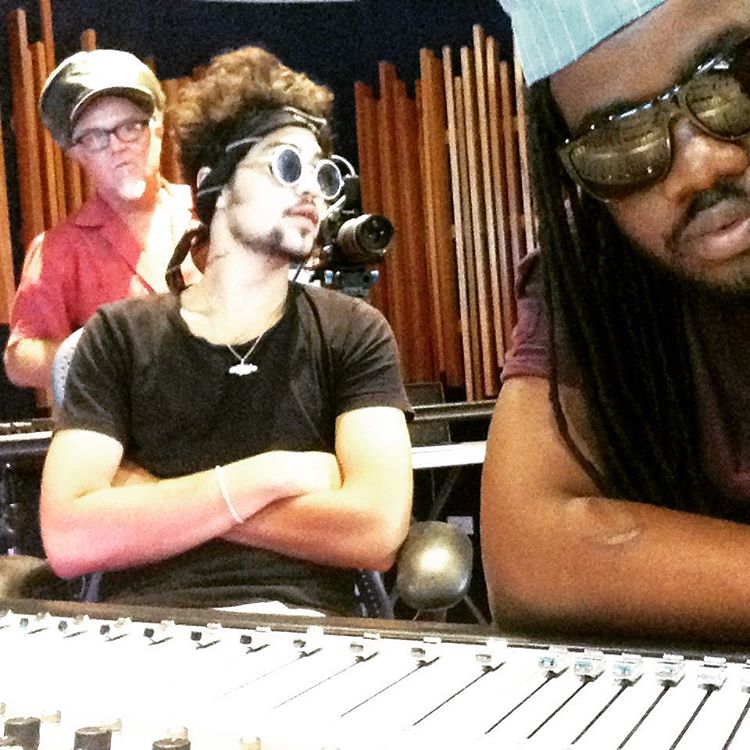
    Three male reggae artists

    The Technical Soul: Production and Sound

    For those of us at DubCorner who live in the studio, Bunny’s technical contribution is just as important as his vocal one. He was a multi-instrumentalist who understood the architecture of a track. He knew where the percussion needed to sit to create that "walking" feel. He understood the frequency of the bass: how it needed to be heavy enough to move the earth but clean enough to let the message through.

    His production style on the Solomonic label was a masterclass in independent music ownership. He was an early pioneer of the "DIY" spirit that we see today in the digital music landscape. He owned his masters, he directed his visuals, and he maintained control over his brand long before that was a standard industry buzzword.

    Vintage 1970s analog recording studio console, representing the independent production of classic roots reggae.

    Why He Still Matters in 2026

    Five years after his death, the world is a louder, more chaotic place. We are dealing with global crises, social injustice, and a digital landscape that often feels shallow. In this environment, Bunny Wailer’s music acts as a grounding wire.

    When you hear a track like "Battering Down Sentence," you aren't just hearing a song about prison life; you're hearing a critique of the "Babylon" system that continues to marginalize the poor. His music is a tool for survival. It provides the "life, health, and strength" he often spoke about in interviews.

    For the new generation of artists: the ones we feature in our lyrics breakdowns: Bunny is the blueprint. He showed that you can be successful without compromising your soul. He proved that the most "local" stories, when told with enough heart, become the most universal ones.

    The Final Verse

    Bunny Wailer was the last of the Mohicans. When he left us, an era of reggae ended, but the era of his influence is just beginning to mature. He taught us that the "Blackheart Man" isn't someone to be feared, but someone to be understood. He taught us that "Dreamland" isn't a place you find on a map, but a state of mind you cultivate through faith and music.

    As we look back on these five years, we don't mourn his death as much as we celebrate the fact that he was here at all. He gave us the spiritual depth that defined an entire era of roots reggae. He was the anchor, the mystic, and the soul.

    Rest in power, Jah B. The music continues.
    Producers in a recording studio

    Explore More on DubCorner: