Category: Music Business

  • I Hired an AI Social Media Manager for My Record Label. Here’s What It Does and What It Doesn’t

    I Hired an AI Social Media Manager for My Record Label. Here’s What It Does and What It Doesn’t

    I’m a producer. I’d rather be in the studio than writing captions at midnight. But if a record doesn’t get seen, it doesn’t get heard, so social media has to get done.

    So I gave it a manager. An AI one, inside Muse.

    The Dizzle Lab studio, stylized in black and gold
    The Dizzle Lab. Where the music gets made, and where I would rather be.

    Shoot it rough, let it clean it up

    This is my favorite part. I shoot videos, little snippets and half-ideas on my phone, and I hand them over. It edits them and puts them in the right format for each platform. I don’t have to think about sizes, crops or captions. I just keep creating.

    If you want to see the one-video-many-posts idea in action, this one is a good watch.

    Turn your lyrics into posts

    Give it your lyrics and it builds posts out of them. Your words, laid out as posts that look and sound like you. Your best lines don’t sit in a notebook anymore.

    Worth a look for ideas on how far one song can stretch as content.

    Tag the right people

    It can tag other people in your posts too, like collaborators, artists, and the folks who helped on the record. Credit gets given, and it takes seconds.

    Give it your links and let it circulate them

    Hand it your smart links, your YouTube links and your Spotify links, and ask it to circulate them. It works them into your posts and keeps them going out, so your music keeps reaching fans after release day. You don’t have to go back and re-post by hand.

    Hey Alexa single cover art by beatsbyDZL: a neon cyborg DJ at the turntables over a futuristic city
    “Hey Alexa” by beatsbyDZL. One release, a lot of links to keep in circulation.

    Talk to it like a manager

    You can speak to it. Give it a social media plan, tell it what the week looks like, and tell it to follow the plan. You set the direction, and it does the legwork.

    Queue and calendar

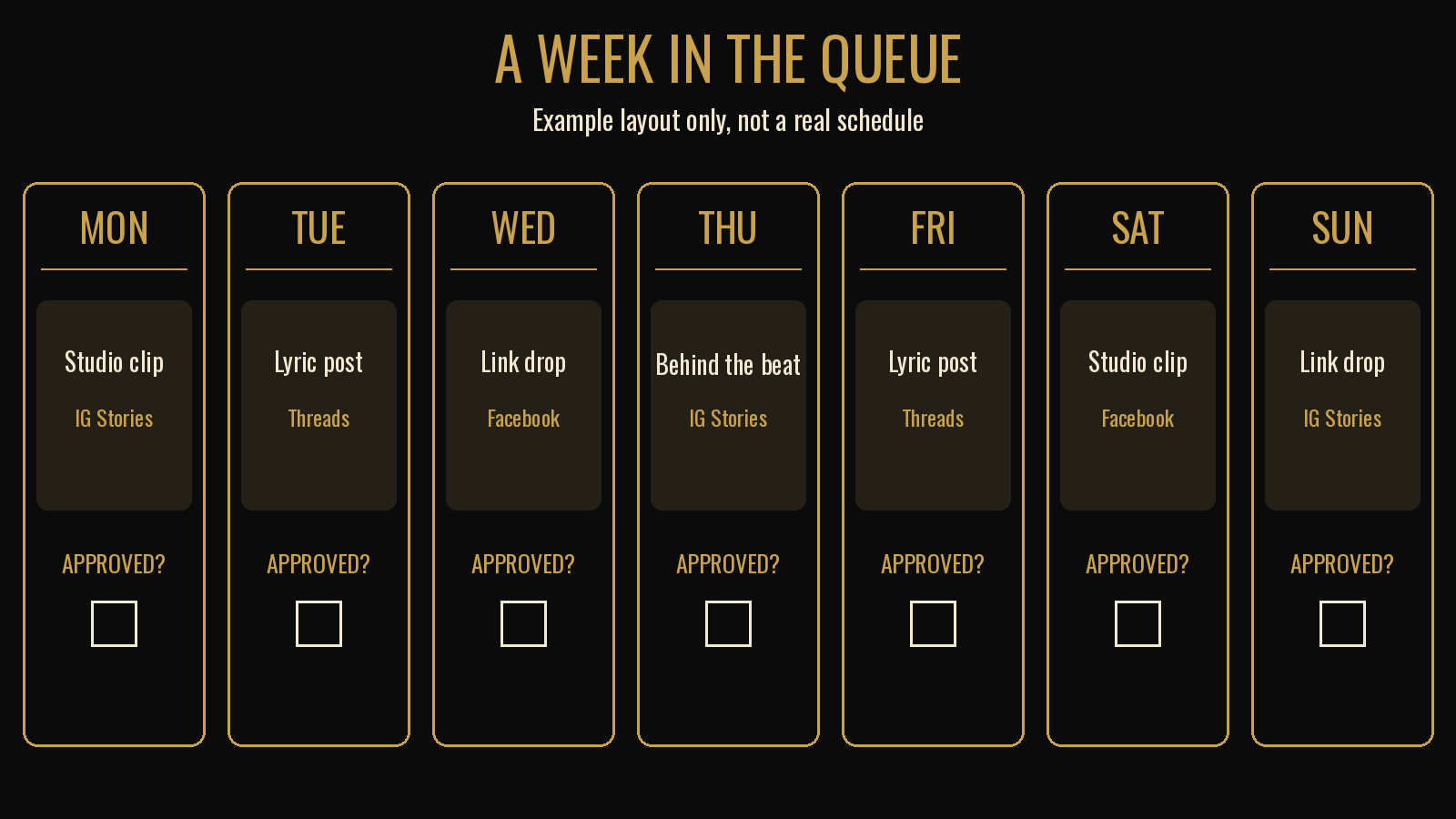
    Instead of posting whenever you remember, you build a queue and a calendar. A week of posts is lined up before the week starts. It posts to Instagram Stories, Facebook and Threads.

    Example weekly posting queue: one post per day across Instagram Stories, Threads and Facebook, each waiting for approval
    Example layout of a week in the queue. Every slot waits for my OK.

    What it doesn’t do

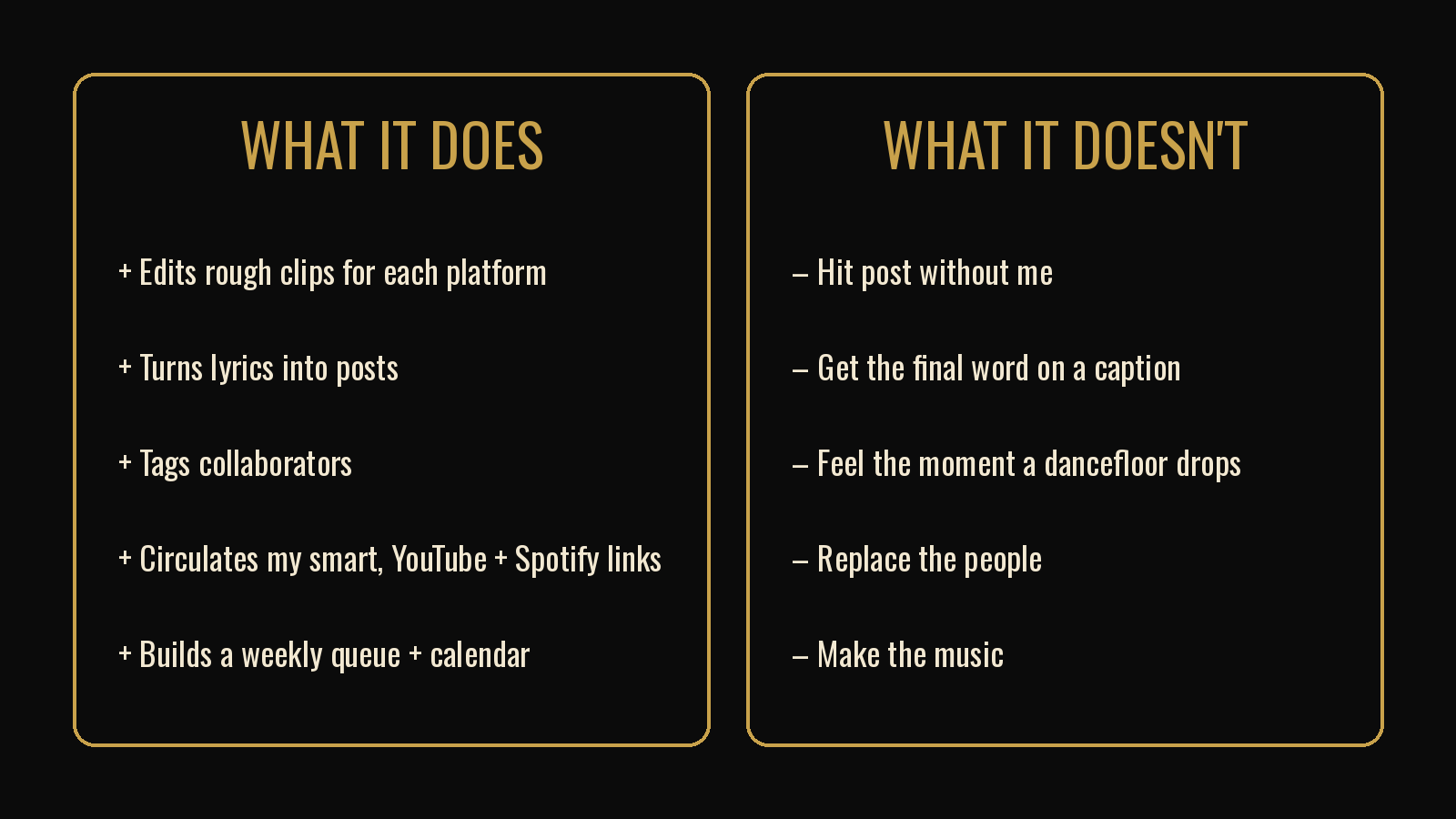
    It doesn’t hit post without me. Every post gets my eyes on the exact words first. If a caption sounds like a robot wrote it, it doesn’t leave the building. The AI proposes, and I decide.

    It also can’t feel the moment a dancefloor drops. That part stays with the people.

    Flow graphic: rough clips, lyrics and links go to Muse, Muse builds the queue, I approve every post, then it posts
    The AI proposes. I decide.
    Two-column card listing what the AI social media manager does and what it does not do
    What it does, and what it doesn’t.

    Three things I learned

    1. Give it the facts first. Release dates, credits, links. Bad info in means confident bad posts out.
    2. Keep your voice in the room. Short sentences. Plain words. No corporate talk.
    3. Approval is the whole system. Speed is nice. Control is better.

    Do I recommend it?

    Yes. If you’re an independent artist or a small label, start small. Send it your rough clips and lyrics, build a queue, and edit what it gives you. You still make the music. It just helps more people hear it.

    Want to try Muse?

    Check out Muse, your personal AI agent. Redeem my code in Settings within 48 hours of joining and we’ll both get 1 billion Muse tokens.

    Code: TXQN58

    Join Muse at muse.ai/join

    Listen while you read: beatsbyDZL, “Hey Alexa”

  • The Blueprint: Why Veteran Artists Are the Ultimate Influencers

    The Blueprint: Why Veteran Artists Are the Ultimate Influencers

    The music industry likes to chase the new, the shiny, and the viral: but the veterans are the ones holding the actual map. While the youth culture drives the immediate hype and the TikTok trends, it’s the older artistes who provide the architectural integrity for the entire scene. They aren't just "legacy acts" or voices from the past; they are the ultimate influencers because they possess the one thing you can’t download, stream, or fake: lived experience.

    In 2026, the term "influencer" has been hijacked by people with ring lights and trending audios. But real influence is the ability to move a culture, to shift a mindset, and to sustain a career across decades of technological upheaval. The veterans are the blueprint. They are the data centers of the industry, and if the new generation isn't downloading that info, they’re building on sand.

    The Storytelling Advantage

    There is a weight to a voice that has seen the industry transition from vinyl to tape, from CD to streaming, and from stage shows to virtual reality. Veteran artists have a way of telling a story that resonates with a level of authenticity the youth simply hasn't earned yet. It’s the difference between reading about a struggle and living through the era that defined it.

    This authenticity translates into a unique cultural impact. When an OG speaks, the room goes quiet. That’s not just respect for age; it’s respect for the "storytelling advantage." They leverage their lived experiences to create narratives that connect across generations. They aren't just making songs; they are documenting a lineage. This is why a track from a veteran can feel as relevant in a high-end lounge as it does in a grit-filled sound system session. They know how to move people because they’ve been doing it since before the algorithm existed to tell them how.

    Two men in conversation

    Why This Works: The Knowledge Transfer

    The dynamic between the veteran and the rising star is where the real magic happens. Look at the current landscape: whenever a "Genna" wave artist links up with a foundation legend, the result is almost always a classic. Why? Because the veteran provides the structure.

    The Blueprint of Production
    Older artists understand the fundamentals of a "hit" beyond the 15-second hook. They understand the bridge, the cadence, and the call-and-response that keeps a crowd engaged for an entire set. They bring a technical director's mindset to the booth. They know when a rhythm needs to breathe and when it needs to hit with the force of a freight train.

    Navigating the Industry Minefield
    The music business is a wreckage of one-hit wonders who didn't have a mentor. Veteran artists are the ultimate influencers because they’ve survived the sharks. They understand publishing, royalties, and the importance of owning your masters: conversations that are often sidelined in the rush for viral fame. They are the ones who can tell a young producer why they need to check their Spotify specifications before they drop a project, ensuring the visual matches the sonic quality.

    The Invisible Hand of Mentorship

    You won't always see the influence on a public feed. A lot of the most vital "influencing" happens in the shadows: in the DubCorner studio, in the late-night sessions, and on the long drives to stage shows. This is where the veteran shares the "info": the nuances of stagecraft, the psychology of a crowd, and the discipline required to stay relevant for thirty years.

    They function as leaders through a dual identity: they are creators who can still "move people and change minds," and they are survivors who have demonstrated the sacrifice required for longevity. This isn't just about music; it’s about organizational models that recruit and retain talent. When a veteran artist backs a new movement, they give it a stamp of approval that no marketing budget can buy. They are the bridge between the rich cultural history of the roots era and the electronic music or dancehall-tunes of today.

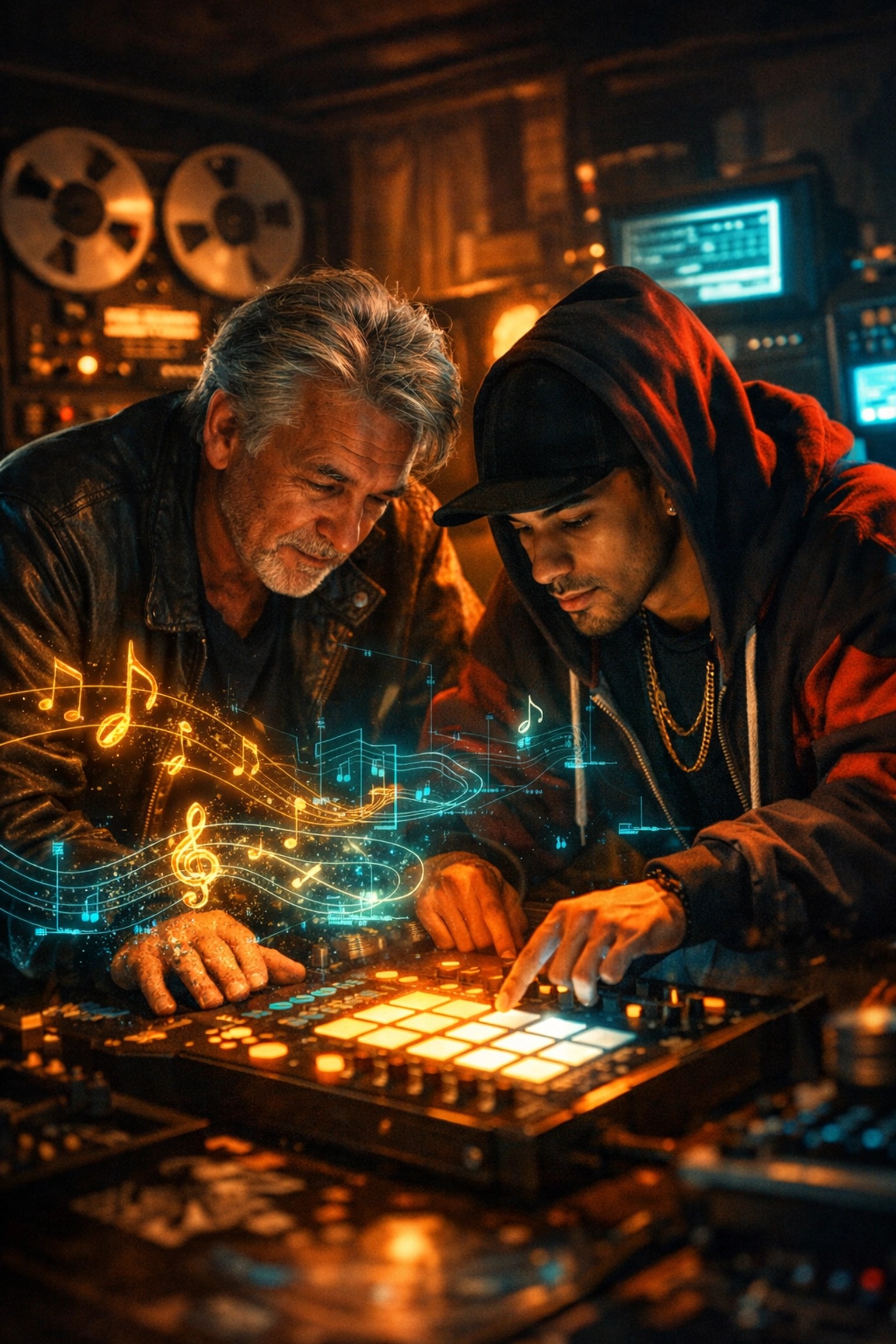
    Veteran artist mentoring a young musician in a recording studio, representing the blueprint of music industry knowledge.

    Influence Beyond the Booth

    The data back this up. In 2026, we’re seeing veteran figures dominate platforms not just by following trends, but by setting the tone. Whether it’s in the military veteran community or the music veteran community, the principle is the same: authority matters. These individuals have massive followings because they offer something more than entertainment: they offer wisdom.

    They are vital to the creative economy. Organizations like the U.S. Veterans Arts Alliance have long recognized that those with deep experience bring a specific "artistic skill and meaningful influence" to the film and entertainment spheres. In the Caribbean music context, this is even more pronounced. The veterans are the ones who understand the economics of the culture. They know how to turn a moment into a movement.

    The Blueprint: What the Youth Can Learn

    If you’re a young artist or producer coming up in the scene right now, the veteran isn't your competition: they are your resource. The blueprint they’ve laid down covers:

    • Pacing: How to build a career that doesn't burn out in eighteen months.
    • Narrative: How to write lyrics that mean something ten years from now, much like the Blaze Mob – Rastafari Children lyrics.
    • Presence: How to command a stage without relying on a backing track.
    • Networking: Building relationships that aren't just transactional.

    Five men, likely musicians, relax on sofas

    The DubCorner Connection

    At DubCorner, we’ve always been about bridging that gap. Whether it’s through Riddim Saturdays or our Upful Vibes Playlist, the goal is to keep the conversation between the generations flowing. We see it every day in the studio: when an older artiste walks in, the energy shifts. There’s a level of focus and a lack of ego that comes from years of knowing exactly who you are.

    The veterans don't need to chase the clout: they are the clout. They are the ones who remind us that while the tools might change, the soul of the music remains the same. They are the influencers who don't need a filter to look good because their work speaks for itself.

    Perfect For:

    • Rising Artistes: Looking to add depth to their sound and longevity to their careers.
    • Producers: Seeking to understand the foundational elements of rhythm and storytelling.
    • Music Historians: Interested in how the "old school" continues to shape the modern dancehall-tunes landscape.
    • Fans: Who want to understand the lineage of the music they love.

    The next time you see a veteran artist on a lineup or in the studio, don't just ask for a picture. Ask for the "info." Ask about the blueprint. Because in a world of temporary trends, their knowledge is the only thing that’s permanent.

    Ready to build your own legacy? Book studio time and get into the environment where the blueprint is being redrawn every single day.

  • Social Media for Artistes & Producers in 2026: Where to Post and What Actually Works

    Social Media for Artistes & Producers in 2026: Where to Post and What Actually Works

    The landscape of music promotion has undergone a seismic shift. If you’re still operating on a 2022 playbook, you’re already obsolete. In 2026, the "viral hit" is no longer the North Star: it’s a byproduct of a much deeper, more sophisticated ecosystem. Having spent over 18 years in the lab, from the streets of Portmore to working with icons like Drake and Kendrick Lamar, I’ve seen the industry pivot a dozen times. But this era is different.

    In 2026, the noise is deafening, and the algorithms are smarter than ever. To cut through, you don't need more posts; you need more presence. Whether you are a producer crafting the next "Hans Zimmer of Jamaica" soundscape or an artiste looking to move people globally, your social media strategy must be as precise as a master fader.

    The Holy Trinity of Reach: Short-Form Video Dominance

    In 2026, short-form video isn't just a trend; it is the fundamental language of the internet. If you aren't speaking it, you're silent. Platforms like TikTok, Instagram Reels, and YouTube Shorts have evolved into sophisticated discovery engines that reward high-quality storytelling over mindless repetition.

    TikTok: The Global Discovery Hub

    TikTok remains the primary engine for discovery. However, the "dance challenge" era has been replaced by "process-driven" content. For producers, this means the Session Breakdown. Show the world how you built that bassline. People want to see the Pro Tools session, the plugin chain, and the raw moment of inspiration. It’s about the "Aha!" moment.

    Instagram Reels: The Portfolio of Vibes

    Instagram has transitioned into a high-end digital portfolio. This is where you showcase the finished product with a cinematic edge. It’s less about the "how-to" and more about the "vibe." High-contrast visuals and behind-the-scenes glimpses of elite collaborations are what build your brand's prestige here.

    YouTube Shorts: The SEO Powerhouse

    Do not sleep on YouTube Shorts. In 2026, the integration between Shorts and long-form content is seamless. A 15-second snippet of a studio session can lead a viewer directly to a 10-minute deep dive on your channel. Because YouTube is owned by Google, your Shorts are searchable in a way TikToks are not.

    Two men in recording studio
    Building legacy through collaboration: Dale Dizzle Virgo and the legendary Toots Hibbert.

    The Shift to Super-Fans: Community Over Clout

    The most significant change in 2026 is the realization that 1,000 "Super-Fans" are worth more than 1,000,000 passive followers. The "Follower Count" has become a vanity metric. The real currency is engagement and ownership.

    Discord and Geneva: The Inner Circle

    Artistes and producers are increasingly moving their core communities to Discord or Geneva. These platforms allow for real-time interaction without an algorithm gatekeeping your message. This is where you host listening parties, share exclusive stems, and get direct feedback on works-in-progress. It’s a digital street team that you own.

    Patreon: The New Label Model

    For many producers, Patreon has become a steady stream of "label-like" funding. By offering monthly sample packs, exclusive presets, or one-on-one feedback sessions, you create a direct-to-consumer pipeline. It allows you to play by your own rules.

    AI as a Creative Ally (Without Losing Your Soul)

    By 2026, AI-driven tools have become standard in every top-tier producer's toolkit. The fear of AI replacing the creator has faded; now, it’s about who uses AI to enhance their humanity the best.

    Strategies for 2026 AI Integration:

    • Content Repurposing: Use AI tools to automatically chop your 2-hour studio livestream into 20 bite-sized clips for Reels and TikTok.
    • Visual Storytelling: Use AI image generators to create high-concept cover art or background visuals for your "Type Beat" videos or lyric clips.
    • Data Analysis: Use AI to analyze which parts of your tracks people are actually replaying, then create content specifically around those "peaks."

    The key is to maintain your sonic signature. Use AI for the grunt work: the resizing, the captioning, the basic editing: so you can spend more time on the innate ability to move people through sound.

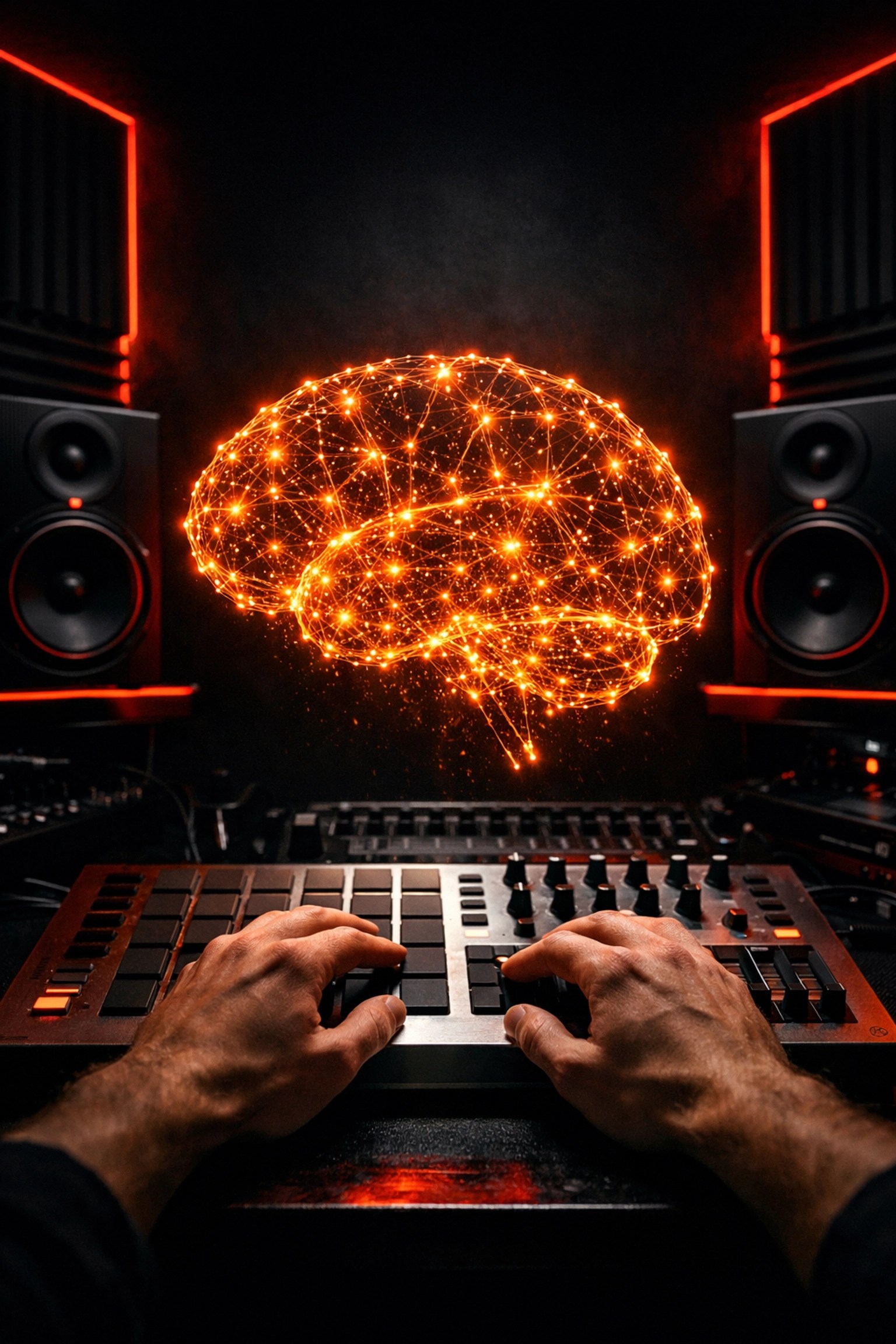
    Hands on a MIDI controller in a music studio with a glowing digital brain symbolizing AI music production tools.
    Modern production requires a balance of high-end hardware and cutting-edge AI software integration.

    The Content Pillars: What Actually Works?

    If you're staring at a blank screen wondering what to post, focus on these three pillars. They are proven to build authority and build an emotional connection.

    1. Behind-The-Scenes (BTS)

    People crave authenticity. They want to see the mess. They want to see the late nights, the empty coffee cups, and the "mistakes" that turned into hits.

    • Gear Talk: Reviewing a new pre-amp or explaining why you still use a specific vintage mic.
    • The Collaboration: Show the synergy between the producer and the artiste. The world-class sound isn't just about the equipment; it’s about the energy in the room.

    2. Educational Authority

    Position yourself as an expert. If you’ve spent years mastering audio engineering, share that knowledge.

    • Mixing Tips: "How I get my kicks to punch through a phone speaker."
    • Workflow Hacks: "How I finish a track in 4 hours."

    3. Personal Branding

    In 2026, your "brand" is your personality. Share your inspirations, your failures, and your vision for the future of music. Let people see the visionary behind the mixing console.

    Behind the scenes at a beachside music video
    The creative process is a visual journey as much as it is an auditory one.

    Direct-to-Consumer (D2C): Owning Your Ecosystem

    The ultimate goal of social media in 2026 is to get people off social media and onto your own platform. Relying solely on a third-party app is a dangerous game: algorithms change, and accounts get shadowbanned.

    Your social media should act as a funnel to your website. Whether you are selling beats, booking studio time, or offering consulting, your official site is where the real business happens. Use your bio links strategically. Instead of a generic "Linktree," send them to a dedicated landing page on your site that captures their email or phone number.

    In the world of high-level production, data is king. If you know who is listening and where they are, you can tour, sell merch, and release music with surgical precision.

    The 2026 Checklist for Success

    To stay relevant and profitable in this fast-paced environment, follow this simplified roadmap:

    1. Prioritize Short-Form: Post at least 4-5 times a week across TikTok, Reels, and Shorts.
    2. Focus on "Process" Content: Stop trying to be perfect. Show the work.
    3. Build Your "Inner Circle": Start a Discord or an email list today.
    4. Leverage AI for Efficiency: Don't work harder; work smarter. Use tools to handle the repetitive tasks.
    5. Be a Human First: People follow people, not logos. Show your face, share your story, and lead with your unique vision.

    Audio Engineer in Studio
    Precision and passion: The hallmark of a world-class audio engineer in the digital age.

    A Force to be Reckoned With

    The music industry in 2026 is a playground for those who understand the intersection of technology and emotion. It is no longer enough to just be a great producer or a talented artiste; you must be a visionary communicator.

    With over 18 years in the game and a track record that includes working with some of the biggest names in history, I can tell you that the technology changes, but the core remains the same: Authenticity wins. Use these platforms to amplify your truth, not to hide behind a filter.

    If you’re ready to take your sound to the next level and want to collaborate with a team that understands the future of music, let’s bring your vision to life. From film scoring to chart-topping hits, we provide the world-class sound your talent deserves.

    To see more of our work and explore our full range of services, check out our sitemap and join the movement. The future of music is here( make sure your voice is part of it.)

  • The State of the Union of the Music Industry: A Year in Harmony and Havoc

    The State of the Union of the Music Industry: A Year in Harmony and Havoc

    The state of our musical union is profitable, yet deeply fractured. We are living through a paradox where the spreadsheets show record-breaking billions while the creators: the very heartbeat of the culture: are staring down an existential crisis. It’s a reflection of the world outside the studio walls: a "rich" country where the GDP climbs while the streets tell a story of hunger and displacement. In 2026, the music industry isn't just a business; it’s a high-stakes experiment in survival, technology, and the raw power of global identity.

    The Macro View: Growth in a Time of Crisis

    Global music revenues are on a trajectory to hit $200 billion by 2035. On paper, we are winning. But much like the current global economic landscape, that wealth is concentrated at the very top. The "middle class" of the music industry: the touring reggae bands, the independent dancehall producers, the local Afrobeat innovators: is being squeezed by the same inflationary pressures hitting the supermarket aisles.

    While the majors celebrate quarterly earnings, the independent creator is navigating a world where streaming has transitioned from a growth engine to mere infrastructure. It’s the plumbing. It’s the electricity. You need it to function, but it’s no longer enough to build a house. The average listener is consuming more music than ever: over 2,700 songs a year: but their attention is fragmented across nearly 1,500 different artists. We have more reach, but less depth.

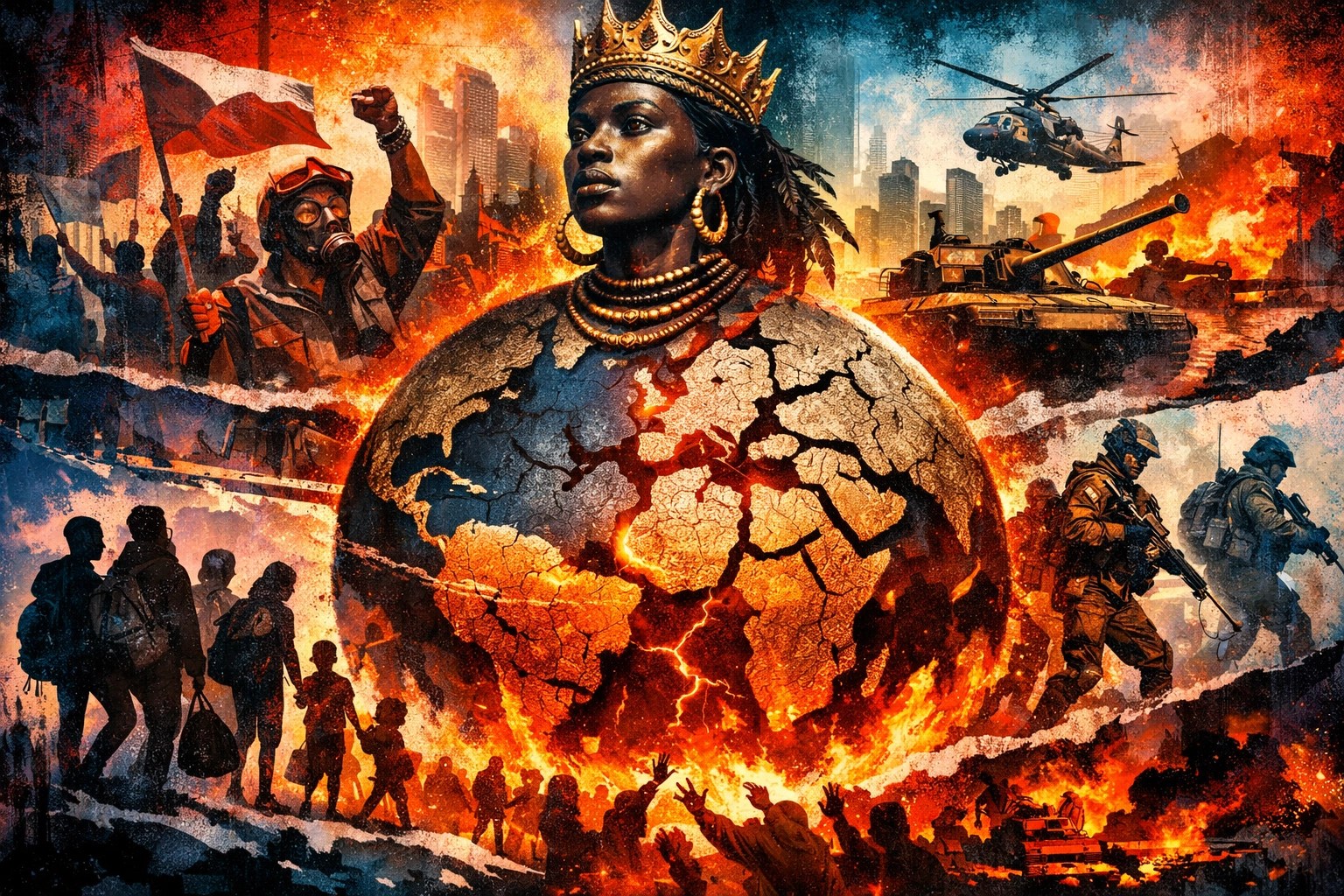
    World Crisis - Blaz Mob Album art featuring a cracked Earth with bold text at the center. The background includes images of protesting crowds, fires, displaced refugees, military tanks, and a crowned African figure

    The Rise of the Machines: AI and the Soul Gap

    This past year, the conversation around Artificial Intelligence moved from "what if" to "it's here." We’ve seen AI-generated vocals mimic legends and algorithms curate our lives. In many ways, this technological leap mirrors the broader shift toward automation in global labor markets. It’s efficient. It’s clean. But it lacks the grit.

    At DubCorner, we believe music is a spiritual transmission. You can’t synthesize the pain in a roots reggae anthem or the specific heat of a dancehall riddim recorded in a humid Kingston studio. AI is the "chrome machine": advanced and unreal: but we still crave the "beast," the human error, and the emotional resonance that only comes from a soul behind the microphone. The industry’s challenge in 2026 is using these tools for administrative "discipline" without letting them hollow out the art.

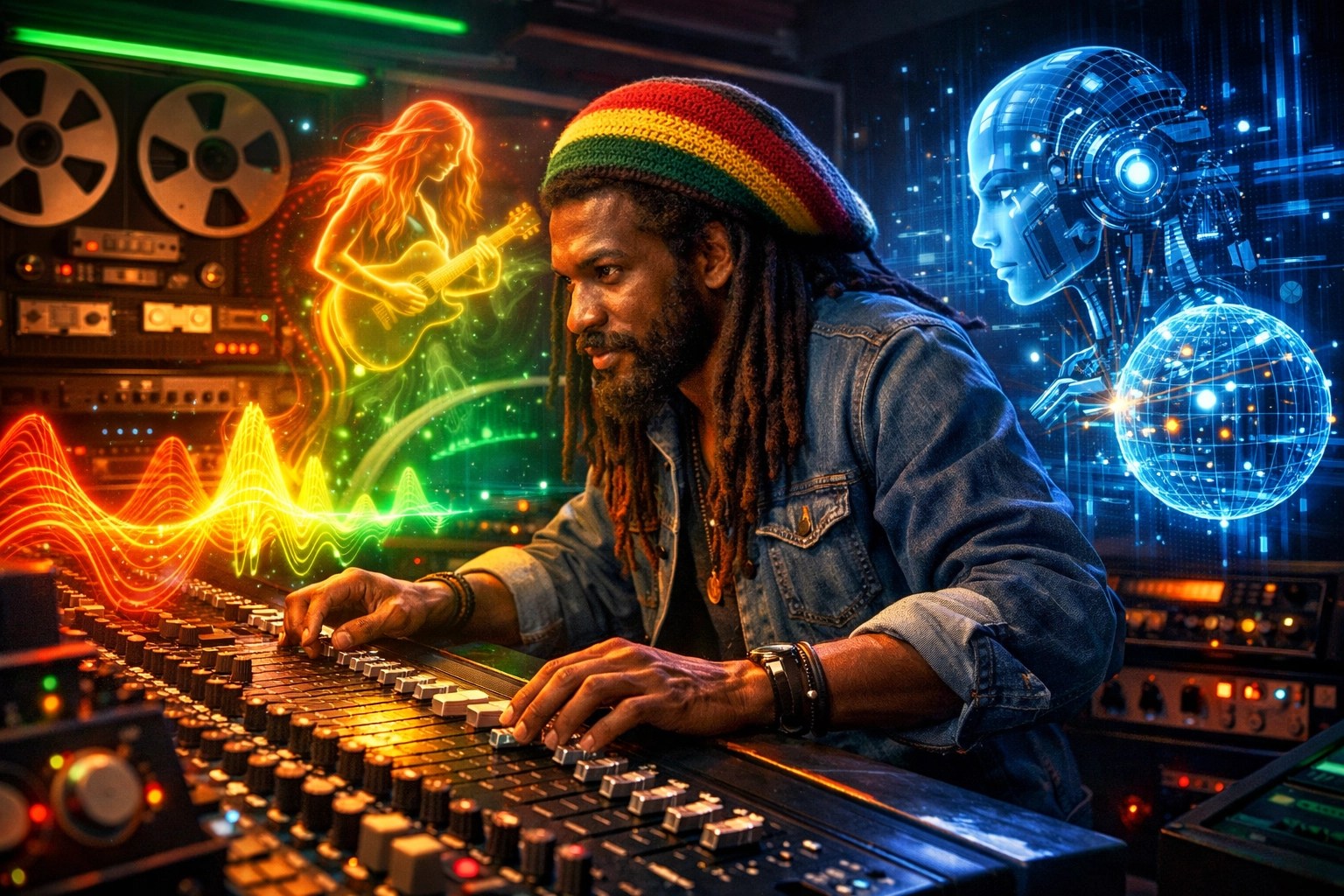
    Reggae producer at a studio mixing console with neon sound waves, representing human soul versus music industry AI.

    The Global South is the Center

    If there is a bright spot in this "State of the Union," it is the absolute dominance of global sounds. The borders are dissolving. Afrobeat, Dancehall, and South Asian rhythms are no longer "regional" successes; they are the global standard. This isn't just a trend; it's a geopolitical shift in cultural power.

    We are seeing a world without borders in the digital space. An artist in Lagos or Kingston can command a global audience without ever seeking permission from a Western gatekeeper. This reflects the yearning for unity Dizzle often speaks about: a world where the music speaks louder than the passports we carry. Whether it's the Upful Vibes Playlist or the latest street anthem, the pulse of the industry has moved firmly to the Global South.

    Confident Female Artist Portrait A confident female artist with bold makeup and ombre hair poses against a white background

    The Streaming Payout Paradox

    The shift in streaming payouts this past year has been a source of major tension. Platforms have moved toward "artist-centric" models, but for many independent creators, it feels like another layer of gatekeeping. When payouts are tied to minimum stream thresholds, the "long tail" of music: the experimental, the niche, the culturally specific: gets cut off.

    This mirrors the current global struggle with the cost of living. When the "system" is designed for the 1%, the grassroots movements have to get creative. We are seeing a massive return to ownership. Independent artists are moving away from chasing virality on social platforms and moving toward direct-to-consumer models. They are treating email lists, SMS, and private communities as more valuable than a million "likes." They are building micro-economies, proving that you don't need a major label's blessing to sustain a career.

    The Discipline Era: Authenticity Over Hype

    2026 is the year of "disciplined execution." The era of constant, blind experimentation is over. The labels are being more selective, and the artists are being more strategic. Success now belongs to those who own their data and understand their audience. It’s about the "Story Behind" the music.

    We see this in the way legacy and new media are merging. Behind-the-scenes content, deep-dive interviews, and raw studio sessions are more valuable than a polished music video. People want to see the process. They want to see producers and musicians at the console, working through the chaos to find the harmony.

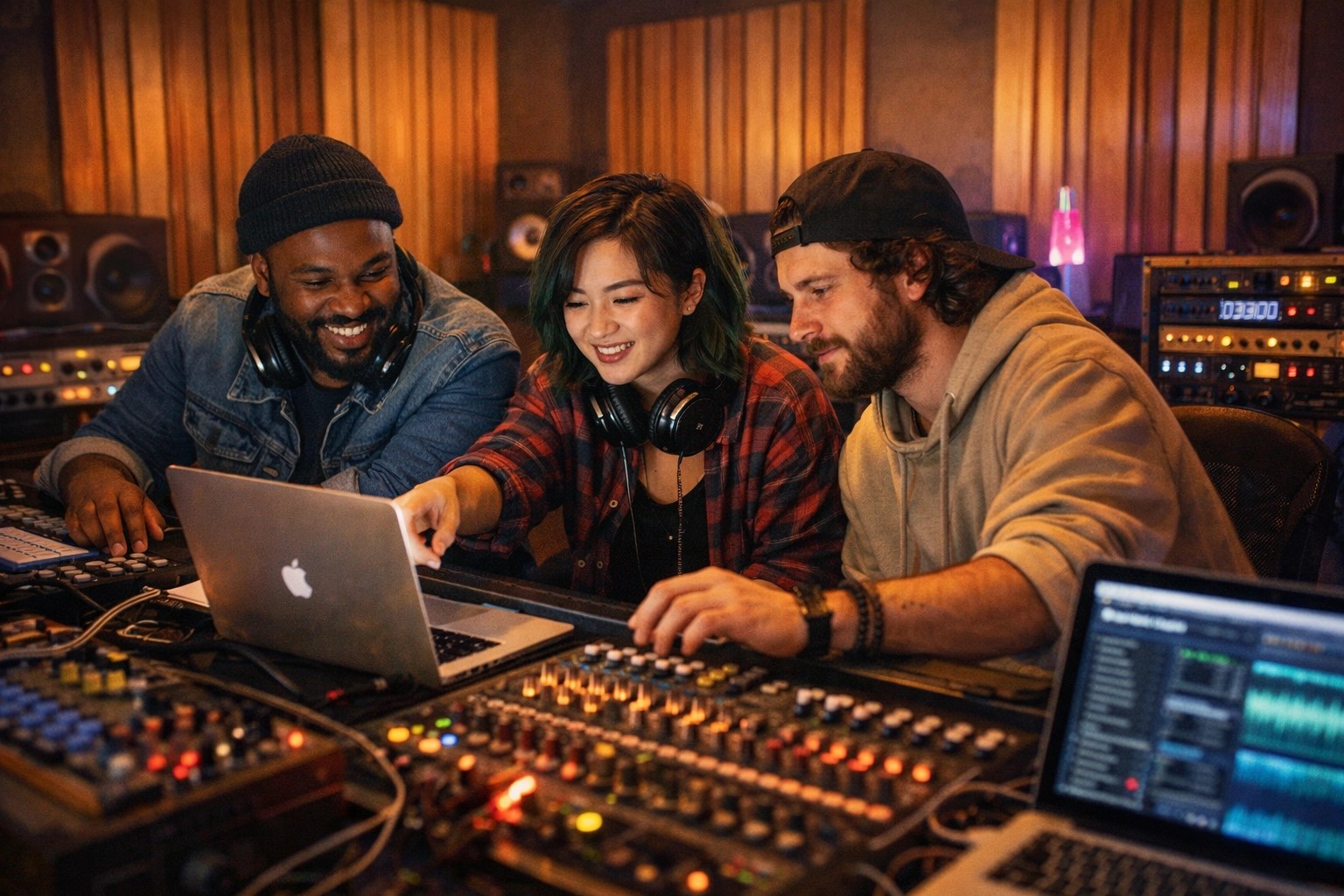
    Three producers and musicians are seated at a mixing console in a recording studio, surrounded by audio equipment and acoustic panels.

    The Live Frontier: Spectacle vs. Connection

    The live music scene has fractured into two distinct lanes. On one side, you have the global spectacles: production-heavy, expensive, and massive. On the other, a "micro-touring" circuit is emerging. Artists are choosing smaller, more frequent residencies or data-driven routes that favor sustainability over a grueling, 50-city bus tour.

    This shift is a response to the "havoc" of global travel costs and the environmental impact of traditional touring. It’s a move toward "One Love" in a practical sense: connecting deeply with local communities rather than just passing through them. It’s the "Jolly Boys" approach: authentic, culturally grounded, and enduring.

    Why This Matters: The DubCorner Perspective

    The "State of the Union" is a reminder that we cannot separate the music from the world it inhabits. If the world is in a state of "corruption": as explored in songs like Komplain's "Corruption": the music will reflect that. But the music is also the antidote.

    We are seeing a resurgence in "Rastafari Children" roots anthems and sociopolitical dancehall because people are tired of the surface-level noise. They want the truth. They want the Blaze Mob "Rastafari Children" energy. The industry is currently a battlefield between those who want to commodify culture and those who want to live it.

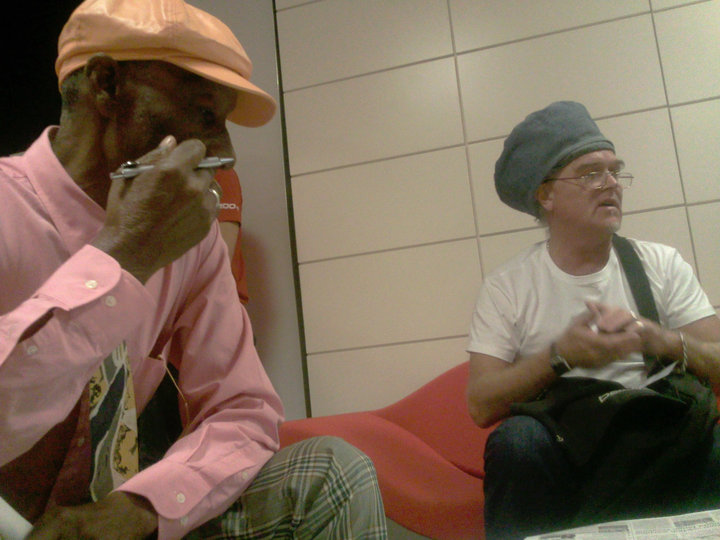
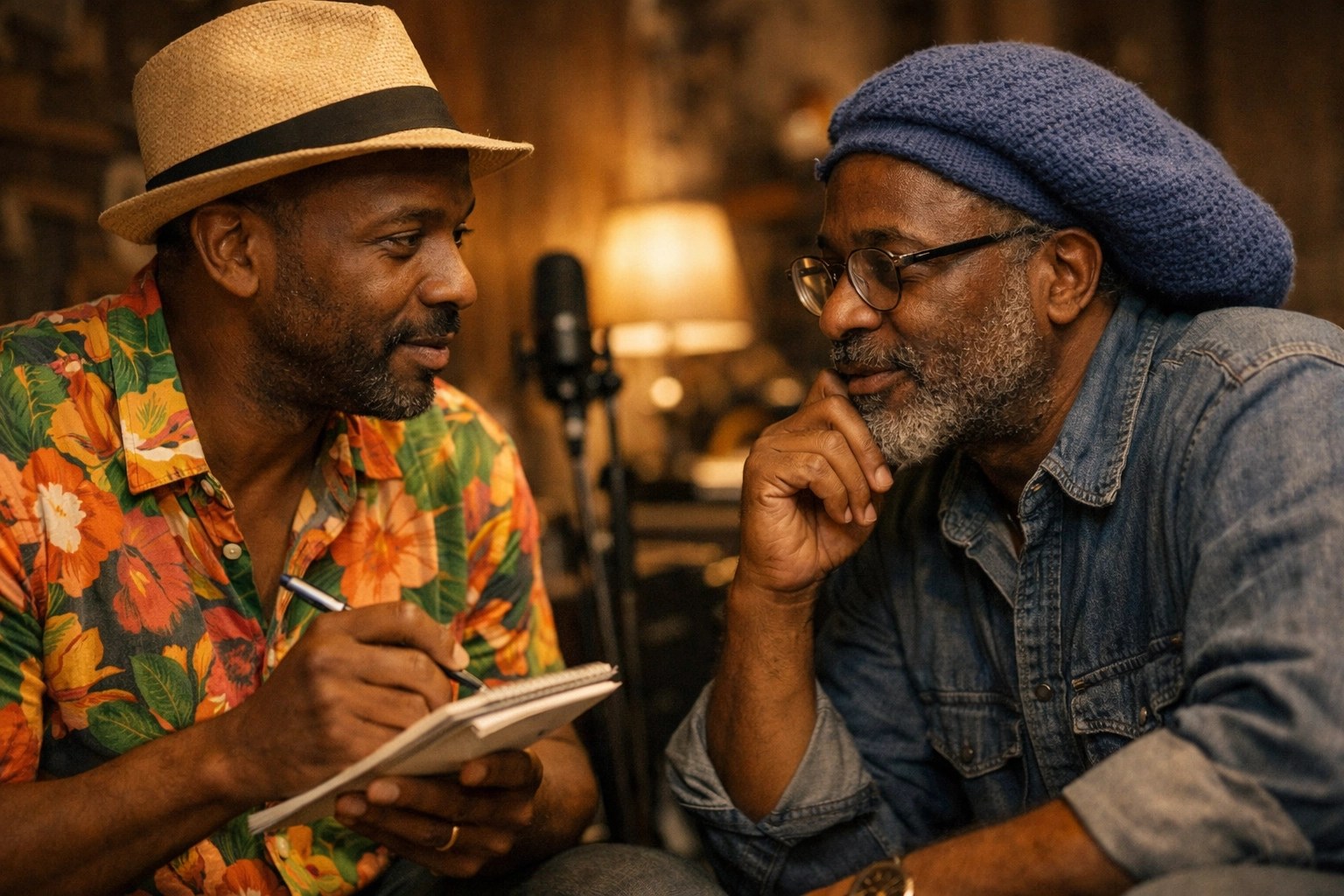
    Two men are engaged in discussion, possibly during an interview or collaborative session. One man wears a bright shirt and hat, and is holding a pen and paper; the other wears a blue tam hat and glasses.

    The Path Forward

    As we look at the remainder of 2026, the directive is clear: Own your craft, own your data, and stay authentic. The industry may be in a state of havoc, but the harmony is found in the community.

    • For the Artists: Focus on the technical knowledge that gives you control. Claim your channels, merge your topics, and treat your brand like the sovereign state it is.
    • For the Fans: Recognize that your stream is an economic vote. Support the artists who are speaking your truth.
    • For the Industry: Remember that without the "soul," the "rich" revenues are just empty numbers on a screen.

    The union is evolving. It’s louder, faster, and more global than ever. But in the midst of the technological leaps and economic shifts, the mission of DubCorner remains the same: highlighting the voices that keep the culture alive, from the lyrics of DJ Goldchain to the legends on tour.

    The state of the union is whatever we make of it. Let’s make it about the music again.


    Stay Tuned:

  • The Hidden Power of Metadata: Why Proper Song Credits Matter More Than Ever

    The Hidden Power of Metadata: Why Proper Song Credits Matter More Than Ever

    In today’s digital music landscape, metadata is just as critical as the music itself. If you’re releasing tracks on platforms like Spotify, Apple Music, or Deezer, inputting complete and accurate metadata—including full songwriter credits—is no longer optional. It’s a requirement.

    Why Metadata Matters

    Metadata is the digital DNA of your song. It includes:

    • Song title
    • Primary artist
    • Featured artist(s)
    • Producers
    • Songwriters (lyricists and composers)
    • Publishers
    • ISRC codes
    • Release date
    • Genre and mood tags

    Proper metadata ensures:

    • Royalties go to the right people
    • Your music is easily discoverable
    • All contributors receive the credit they deserve
    • Eligibility for sync licensing, playlists, and editorial features

    Songwriters = Lyricists + Composers

    A common mistake in the industry is misunderstanding who qualifies as a songwriter. Both lyricists and composers are songwriters. Yet, many lyricists only enter their own names when submitting songs—omitting the composer, simply because they don’t realize that instrumental creators must be credited too.

    This oversight can cause major issues:

    • Unpaid royalties to composers
    • Disputes or takedowns
    • Damaged working relationships between collaborators

    Deezer Is Enforcing This Hard

    Deezer has announced it will begin removing any songs that don’t include songwriter information. That means if your release doesn’t credit both the lyricist and the composer correctly, it risks being pulled from the platform entirely.

    This is part of a broader shift in the industry toward transparency and fair compensation for all creators involved.

    Don’t Let Poor Credits Cost You

    Incomplete metadata can result in:

    • Lost or misdirected revenue
    • Legal complications
    • Takedowns from major platforms
    • Confusion about who did what on a record

    At DZL Records, we handle every release with the precision it deserves—ensuring all songwriters, producers, and contributors are properly listed.

    Final Thoughts

    Metadata is not admin—it’s protection. It’s recognition. It’s revenue.

    If you’re an artist, producer, or label, take the time to get your credits right. If you’re a lyricist, make sure your composer is also listed as a songwriter. It’s not just best practice—it’s the new standard.

  • How to promote your songs in 2023

    How to promote your songs in 2023

    “2023: Get Your Songs Heard – Promote with the Power of Music!”

    Utilizing Social Media Platforms to Reach a Wider Audience in 2023

    As the world continues to become increasingly digital, social media platforms are becoming an increasingly important tool for businesses to reach a wider audience. In 2023, businesses should take advantage of the various social media platforms available to them to reach a larger audience and increase their visibility.

    One of the most popular social media platforms is Facebook. With over 2.7 billion monthly active users, Facebook is an ideal platform for businesses to reach a wide range of potential customers. Businesses can create a Facebook page to share content, interact with customers, and advertise their products and services. Additionally, businesses can use Facebook Ads to target specific audiences and increase their reach.

    Another popular social media platform is Instagram. With over 1 billion monthly active users, Instagram is a great platform for businesses to showcase their products and services. Businesses can use Instagram to post photos and videos, engage with customers, and promote their products and services. Additionally, businesses can use Instagram Ads to target specific audiences and increase their reach.

    Twitter is another popular social media platform that businesses can use to reach a wider audience. With over 330 million monthly active users, Twitter is an ideal platform for businesses to share content, engage with customers, and promote their products and services. Additionally, businesses can use Twitter Ads to target specific audiences and increase their reach.

    Finally, businesses can use YouTube to reach a wider audience. With over 2 billion monthly active users, YouTube is a great platform for businesses to share videos, engage with customers, and promote their products and services. Additionally, businesses can use YouTube Ads to target specific audiences and increase their reach.

    In conclusion, businesses should take advantage of the various social media platforms available to them in 2023 to reach a wider audience and increase their visibility. By utilizing Facebook, Instagram, Twitter, and YouTube, businesses can share content, engage with customers, and promote their products and services to a larger audience. Additionally, businesses can use Ads on each platform to target specific audiences and increase their reach.

    Leveraging Music Streaming Services to Increase Your Reach

    Music streaming services have become an increasingly popular way for artists to reach a larger audience and grow their fan base. By leveraging these services, artists can gain exposure to a wider range of listeners and increase their reach.

    One of the most popular music streaming services is Spotify. Spotify allows users to create and share playlists, which can be used to promote an artist’s music. Artists can create their own playlists featuring their own music, or they can collaborate with other users to create playlists that feature their music. This allows artists to reach a larger audience and gain more exposure.

    Another popular streaming service is Apple Music. Apple Music allows artists to upload their music and create their own artist page. This page can be used to promote their music and reach a larger audience. Artists can also use Apple Music’s Connect feature to interact with fans and share their music.

    SoundCloud is another popular streaming service that can be used to increase an artist’s reach. SoundCloud allows artists to upload their music and share it with their followers. Artists can also use SoundCloud to promote their music by creating playlists and sharing them with their followers.

    Finally, YouTube is another great way for artists to reach a larger audience. YouTube allows artists to upload their music and create their own channel. This channel can be used to promote their music and reach a larger audience. Artists can also use YouTube to interact with their fans and share their music.

    By leveraging these music streaming services, artists can increase their reach and gain more exposure. By creating playlists, sharing their music, and interacting with their fans, artists can reach a larger audience and grow their fan base.

    Creating a Comprehensive Digital Marketing Strategy for Your Music

    Creating a comprehensive digital marketing strategy for your music is essential for success in today’s digital world. With the right strategy, you can reach a larger audience, increase your fan base, and ultimately, increase your revenue. Here are some tips to help you create a successful digital marketing strategy for your music.

    1. Identify Your Target Audience: Before you can create a successful digital marketing strategy, you need to identify your target audience. Who are the people most likely to be interested in your music? What age group are they in? What are their interests? Knowing your target audience will help you create content that resonates with them and will help you reach the right people.

    2. Develop a Content Strategy: Once you know who your target audience is, you can develop a content strategy that will help you reach them. Think about what type of content you can create that will be interesting and engaging to your target audience. This could include videos, blog posts, podcasts, or social media posts.

    3. Utilize Social Media: Social media is a great way to reach your target audience and build relationships with them. Create accounts on the major social media platforms and post content regularly. Make sure to engage with your followers and respond to their comments and questions.

    4. Invest in Paid Advertising: Paid advertising can be a great way to reach a larger audience and increase your fan base. You can use platforms like Facebook, Instagram, and Google Ads to target specific audiences and get your music in front of them.

    5. Track Your Results: Once you have implemented your digital marketing strategy, it is important to track your results. This will help you understand what is working and what isn’t so you can adjust your strategy accordingly.

    Creating a comprehensive digital marketing strategy for your music is essential for success in today’s digital world. With the right strategy, you can reach a larger audience, increase your fan base, and ultimately, increase your revenue. By following these tips, you can create a successful digital marketing strategy for your music.

    Developing an Engaging Music Video to Promote Your Songs

    Creating an engaging music video is an important part of promoting your songs. Music videos can help to draw attention to your music, and can be used to create a visual representation of your songs. Here are some tips for creating an engaging music video to promote your songs.

    First, consider the concept of your video. Think about the message you want to convey and the visuals that will best represent your song. You may want to create a narrative or tell a story, or you may want to focus on the performance of the song.

    Second, decide on the location for your video. You may want to shoot in a studio, or you may want to shoot on location. Consider the atmosphere of the location and how it will fit with the concept of your video.

    Third, consider the visuals of your video. Think about the colors, lighting, and camera angles that will best represent your song. You may want to use special effects or animation to create a unique look.

    Fourth, consider the wardrobe and props for your video. Think about the clothing and accessories that will best represent your song. You may want to use props to create a certain atmosphere or to emphasize certain elements of the song.

    Finally, consider the editing of your video. Think about the transitions and effects that will best represent your song. You may want to use slow motion or fast motion to create a certain effect.

    By following these tips, you can create an engaging music video to promote your songs. Music videos can be a great way to draw attention to your music and to create a visual representation of your songs.

    Exploring New Ways to Connect with Fans and Build Your Brand in 2023

    As the world continues to evolve and technology advances, so too do the ways in which we can connect with fans and build our brands. In 2023, there will be a variety of new and innovative ways to engage with fans and create a strong, recognizable brand. Here are some of the top strategies to consider:

    1. Leverage Social Media Platforms: Social media platforms such as Instagram, Twitter, and Facebook will continue to be powerful tools for connecting with fans and building your brand. Utilize these platforms to share content, engage with followers, and create a strong presence.

    2. Utilize Live Streaming: Live streaming is becoming increasingly popular and is a great way to connect with fans in real-time. Platforms such as Twitch and YouTube Live allow you to interact with viewers and create a more personal connection.

    3. Create a Podcast: Podcasts are a great way to reach a wide audience and build your brand. You can use podcasts to share your story, discuss topics related to your brand, and engage with listeners.

    4. Develop an App: Developing an app is a great way to create a unique experience for your fans. You can use the app to share content, offer exclusive deals, and provide a platform for fans to interact with each other.

    5. Utilize Influencers: Influencers are a great way to reach a larger audience and build your brand. Connect with influencers who align with your brand and have them share your content with their followers.

    By utilizing these strategies, you can create a strong presence and build a recognizable brand in 2023. Keep in mind that it is important to stay up-to-date with the latest trends and technologies in order to remain competitive. With the right strategies, you can create a successful brand and connect with fans in meaningful ways.

  • LABELS ASKING TIKTOK FOR SHARE OF AD REVENUE IN NEW DEAL TALKS (REPORT)

    LABELS ASKING TIKTOK FOR SHARE OF AD REVENUE IN NEW DEAL TALKS (REPORT)

    Last month, MBW noted that the music industry could be headed for a tussle with TikTok over royalties.

    We also asked if TikTok should follow Meta and commit to paying a fixed proportion of its advertising revenues to music industry rightsholders.

    According to a new Bloomberg report, the three majors, Warner Music Group, Sony Music Entertainment and Universal Music Group, are currently negotiating new deals with TikTok, and they’re asking for a share of advertising revenues generated on the platform.

    (more…)
  • Ce’cile, Devin Di Dakta, Scantana, & More Standout On New DZL Records “Dirt Riddim” Compilation

    Ce’cile, Devin Di Dakta, Scantana, & More Standout On New DZL Records “Dirt Riddim” Compilation

    Kingston-based DZL Records is ready to keep the vibe going for the rest of 2022. The label, owned by Producer Dale Dizzle Virgo, has been a part of many great music releases in the past few years. Despite the Jamaican music scene dealing with a few controversies currently, Dale and DZL Records aim to stay consistent, and tap into the audience that are here for great entertainment. The label moves forward with the new “Dirt Riddim” compilation.

    Featuring 7 tracks, the new “Dirt Riddim” compilation project is a showcase of some of Jamaica’s best lyricists. The “Dirt Riddim” finds Dale Virgo in his element, providing a landscape of sound that instantly compliments any Artist who records on it. DZL Records secured a solid lineup for the new compilation, and they include D.A.Jay, Ce’cile. Scantana, Devin Di Dakta, Medzz, Dupss, and Starr Dane. The Artists covered a range of topics, exhibiting great lyricism and delivery to make “Dirt Riddim” a standout release, with the possibility of becoming one of the year’s best compilations. Music videos and other special content in support of the “Dirt Riddim” compilation are expected to follow in the weeks after its release through Dub Corner, a subsidiary of DZL Records.

    DZL Records is a Kingston based Record Label that came into prominence in the 2010s and was founded by Dale Virgo. The label is home to releases by Kim Nain, Devin Di Dakta, and Ce’cile to name a few. Notable hits from the label include, “Mama” by Christopher Martin, “Goodie Goodie” by Scantana, “Soldier Love” by Ikaya, and “Somewhere” by Chronixx.

    DZL Records’ “Dirt Riddim” compilation featuring Ce’cile, Devin Di Dakta, and more was released on Friday, October 14 on all digital music streaming platforms. To stay up to date with DZL Records and future releases, visit DZLRecords.com, and follow the label on Twitter and Facebook at @DZLRecords, and on Instagram at @DZLRecords876.


  • Sir Mick Jagger shares pics from J’can vacation

    Sir Mick Jagger shares pics from J’can vacation

    Original source: The Jamaica Gleaner | Published on February 19, 2022 | 2:32 PM

    Credit: Instagram – @mickjagger, “A little downtime before things get busy!”

    Sir Mick Jagger shared snaps from his trip to Jamaica, including a shot of himself knocking on the door of the Roof Night Club in Port Antonio, a dance and night dubbed the longest-running club in the capital of Portland.

    Instagram – @mickjagger

    “A little downtime before things get busy!” The Rolling Stones star captioned the carousel of pictures seeing him posed up with a guitar, and stopping by a stall selling otaheite apples, naseberries, bananas and papayas.

    There is no word yet on when the Rolling Stones will head back out on tour, but fans are ready and waiting.

    The Rolling Stones launched their No Filter tour in 2017 in Hamburg, Germany. The United States leg started in September 2021 and followed the death of the group’s legendary drummer Charlie Watts. The tour was originally planned to wrap in 2020 but was delayed due to the coronavirus pandemic. It ended in November with an exclusive show in Florida.

    Jagger isn’t the only Brit who made their way to Jamaica for some R&R. Little Mix’s Leigh-Anne Pinnock also recently jetted to the island with her twins and fiancé, Andre Gray. “Finally made it home,” posted Pinnock to Instagram with a snap at Oracabessa’s GoldenEye.

    While on the island, the In ‘A’ Seashell co-founder spent time with family and even went to a football match at the National Stadium.

    Retrieved from: https://jamaica-gleaner.com/article/lifestyle/20220219/sir-mick-jagger-shares-pics-jcan-vacation

  • 4 ways AI is helping musicians—and the entire music industry

    4 ways AI is helping musicians—and the entire music industry

    Created on November 26, 2019 | By Carol Pinchefsky – Hewlett Packard Enterprise

    Music is said to stir the soul. Does that apply even if it was created by a machine?When we give a machine values and it solves a calculation for us, that’s simply computing. When we give a machine data and it learns from its experiences and then makes recommendations, that’s artificial intelligence. So what happens when we give AI one of the most human of art forms: music? Quite a bit, as it turns out.

    AI uses machine learning models to produce new patterns and correlations based on the data it was trained from. In the case of music, almost 100 million recorded songs exist. Many scores of scores provide a deep base of data that’s hard to beat, and plucky researchers have taken note: AI’s ability to learn and iterate on its knowledge can change the way musicians work. And now, it’s impacting the entire music industry. New and different soundsFor anyone concerned that robots are coming for their music job, keep in mind that AI-generated tunes tend to lack originality—take the less-than-fab song “Daddy’s Car,” which was trained on 45 Beatles tunes, as an example.

    Although AI can produce solid tunes and perhaps a few hits, it won’t make your parents demand you turn your music down the way Elvis Presley, the Beatles, the Sex Pistols, Jean-Michel Jarre, Grandmaster Flash and the Furious Five, and Nirvana have—at least, not any time soon.

    “The best artists and the most thrilling breakthroughs in music have been people who came up with a new and different sound,” said Toby Butterfield, a partner in Moses & Singer’s intellectual property and litigation groups, at the Mondo NYC conference on AI and the music industry.

    But that doesn’t mean AI has no play. From recommending artists to literally playing second fiddle to a human composer, here are some ways AI is turning the music industry on its ear.

    1. Making music

    Western music has 12 notes and 24 major and minor scales. Add in tempo, harmony, and articulation, and you have millions of potential songs waiting to be created. Enter AI.Thanks to AI, musicians and non-musicians have access to sophisticated yet simple-to-use creation, remixing, and learning tools like Flow Machines, Pixel Player, Amper, Melodrive, Boomy, Landr, and more.

    These AI-powered tools generate seemingly limitless tunes for you to “play” with, to spark your creativity. Or they can even be creative on your behalf: Musician Taryn Southern recorded an album composed entirely by AI. Better yet, these tools can be found at varying price points, including free, so now the band whose drummer is also the driver who is also the PR guy can afford them.Beyond composition and collaboration, AI vocalizes music, too. It took more than 100 iterations, but electronica composer Ash Koosha built an AI, named Yona, to not only compose music but also sing lyrics.

    In a dystopian future: Yona will declare herself an independent sentient and retire to a llama farm.

    2. Recommendations everywhere, will AI make them more accurate? Or just scary?

    Online retailer Amazon may have popularized the recommendation algorithm, which suggests items that may be of interest to you based on prior purchases. Now, recommendation algorithms are a high note of music streaming services. Music streaming services like Pandora, Spotify, Apple Music, and SiriusXM employ different vectors—including rhythm, genre, and user geography—to suggest new songs to their clientele.

    Recommendation AI does this in part by culling songs from playlists created by other users who share your musical taste, something known as collaborative filtering.How many playlists? In Spotify’s case, more than 2 billion. Listeners need all the help they can get separating the audial wheat from the chaff.

    According to analysts at BuzzAngle Music, 534.6 billion songs were streamed via online services in 2018. If you consider the average song is 3.5 minutes, that’s roughly a bazillion-jillion minutes of music listened to. And thanks to AI, no human will have to filter out Rebecca Black’s “Friday” for us. Prior to this, audiophiles received recommendations from their friends, the radio, and the obnoxious guy in the record store.

    In a dystopian future: Pandora’s recommendation software will recommend you drop your boyfriend in favor of the obnoxious yet totally cool record store guy.

    3. AI-driven promotion

    In 2018, 2.65 billion people used social media, a number expected to increase to 3.1 billion by 2021. That’s a whole lot of data for AI to draw from. Artificial intelligence can derive insights on your fan base that go beyond “also listens to Jonas Brothers.” With an AI that can analyze music fans’ activity, you can determine that a fan has a penchant for the Paleo diet and prefers surfing over jogging. Hello, tie-in advertising and cross-promotions.

    AI can also identify which social media influencers have the most impact when they tweet your work, as any good AI media company can explain when you sign its contract.

    Note: As a bonus, social media influencer and musician Lil Miquela is herself artificially intelligent.

    In a dystopian future: Your social media sites will converge into one government-backed mega-corporation. You won’t be able to get a job until you buy at least one recommended song.

    4. Predicting future hit songs and artists

    According to Butterfield, AI “may also be useful for recording companies to analyze what is likely to be popular with consumers.”

    AI uses songs that appear on multiple playlists to determine which songs you prefer. Likewise, knowing which songs you skip on an album or playlist is equally informative.

    After determining your favorites, Butterfield said, producers “can then marry that with demographic information.” This way, “recording companies [may] analyze whether a particular composition is likely to be popular with consumers.”

    Buttferfield added, “It’s conceivable that AI applications will augment the traditional roll of A&R [artists and repertoire, or talent scouts], those who decide what band is worth signing.” 

    Soon, A&R scouts could simply take their AI to a bar and walk away, leaving HAL-9000’s musically inclined sibling the task of making business decisions after listening to four hours of J-Pop.

    In a dystopian future: There is clearly no way this could go wrong.

    Final thoughts

    Although composing your own music is becoming more simple than ever before, it leads to a complex issue: rights.

    An AI is trained on prior works: It’s artist A who provides a springboard for artist B. While artist B helps create new music, shouldn’t artist A be compensated for their work, too?

    “What we have is this landmine of potential legal issues that have yet to be fully explored,” said Candice Cook Simmons, a business strategist and managing partner at the Cook Law Group who also spoke at the Mondo.AI conference.

    “We want intellectual property and the protection of intellectual property to maintain two things: the freedom of creativity but also the right of the creator to be compensated for their work,” she said. “We want free flow of ideas—we want to serve as inspiration—but we don’t want to confuse inspiration with the right to create derivative work without paying the owners.”

    Simmons said the music industry needs to be proactive if it wants to stay ahead of lawsuits. She suggested that companies shape their policies in advance, “not playing scared but playing smart.”

    This applies to artists, too. Musician Holly Herndon skirted the issue of IP rights by doing it herself, literally. As part of her dataset, Holly Herndon trained her AI on recordings of herself and her band, as well as members of her audience. The results are as avant-garde and startling as they are legally prophylactic. 

    A question for you philosophers in the audience: Human artists are also trained on the music of their peers and predecessors. If they are then inspired to compose new music, that’s a creative act. But if an AI does it, is it truly creative if it’s not genuinely adding something new? Or is it?

    In a dystopian future: Musicians will be philosophers who will also be patent lawyers.

  • TikTok and Universal Music Group sign global licensing deal – Music Business Worldwide

    TikTok and Universal Music Group sign global licensing deal – Music Business Worldwide

    TikTok is now fully licensed by all three major record companies.

    After announcing deals with Sony Music in November and Warner Music Group in December, The ByteDance-owned video app revealed today (February 8) that it has struck an “expanded” global licensing agreement with Universal Music Group.

    Coincidentally, the timing of the announcement comes just days after UMG pulled its catalog from TikTok’s biggest rival, Triller, with Universal accusing that platform of withholding payments to UMG artists.

    According a statement, the new global agreement between UMG and TikTok “delivers equitable compensation for recording artists and songwriters and significantly expands and enhances the companies’ existing relationship”. (more…)