

Mento survives because it refuses to stay trapped in one version of the past, and Jahmi Roc’s Jottings : Season 3, Episode 16 makes that argument through the Jolly Boys, Great Expectation, and the productive friction between scholarship and studio instinct.
Watch “Jahmi Roc’s Jottings : Season 3, Episode 16”
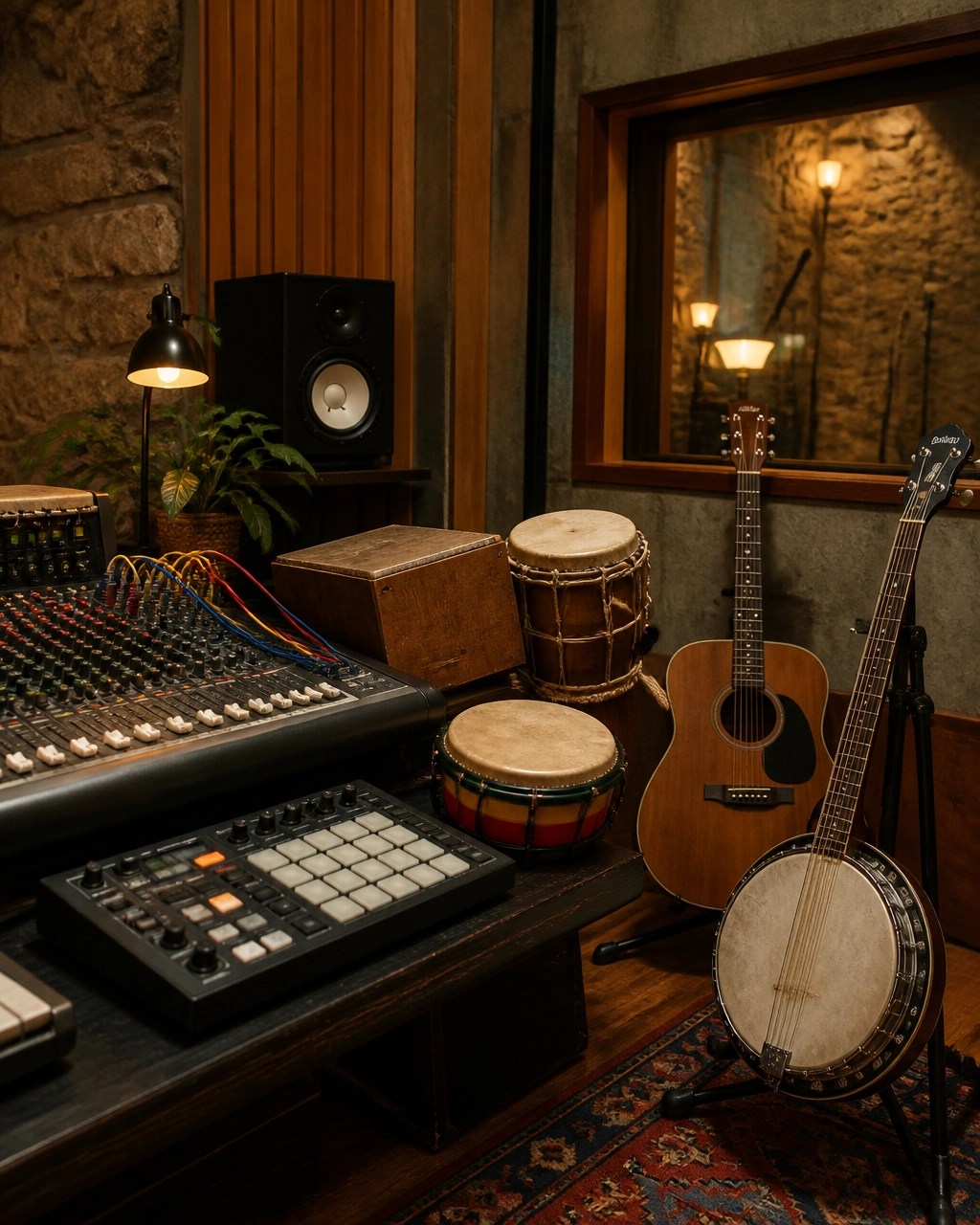
Hosted by Jahmi Roc : Racquel Bernard : the episode continues a conversation about Jamaican mento, the island’s original commercially recorded popular music.
Nikkita “Nuclear Blackness” and DJ Papalot join the discussion, with Reggae Moms present in spirit, while the central guests return for a deeper look at the Jolly Boys’ modern-era resurgence: ethnomusicologist Dr. Daniel T. Neely and Dale Dizzle Virgo.
The conversation is rooted in the making of Great Expectation, the Jolly Boys album released in 2010. Dizzle co-produced the record with John Baker, played percussion, and brought his experience as a producer and engineer. Neely served as music director, played banjo and guitar, and carried the historical weight of his mento scholarship into the studio.
That combination gives the episode its charge. This is not a debate between someone who “understands tradition” and someone who wants to destroy it. It is a debate between two people who understand that tradition is already full of movement.
The argument: preservation needs a pulse
The episode’s central argument is clear: mento is not one fixed sound waiting to be protected behind glass.
Neely explains that mento changes according to region, era, instrumentation, audience, and performance setting. A band in Clarendon does not necessarily sound like a band in Portland. A North Coast hotel ensemble does not carry the same musical identity as musicians performing in West Kingston. The repertoire may overlap, but the feel shifts.
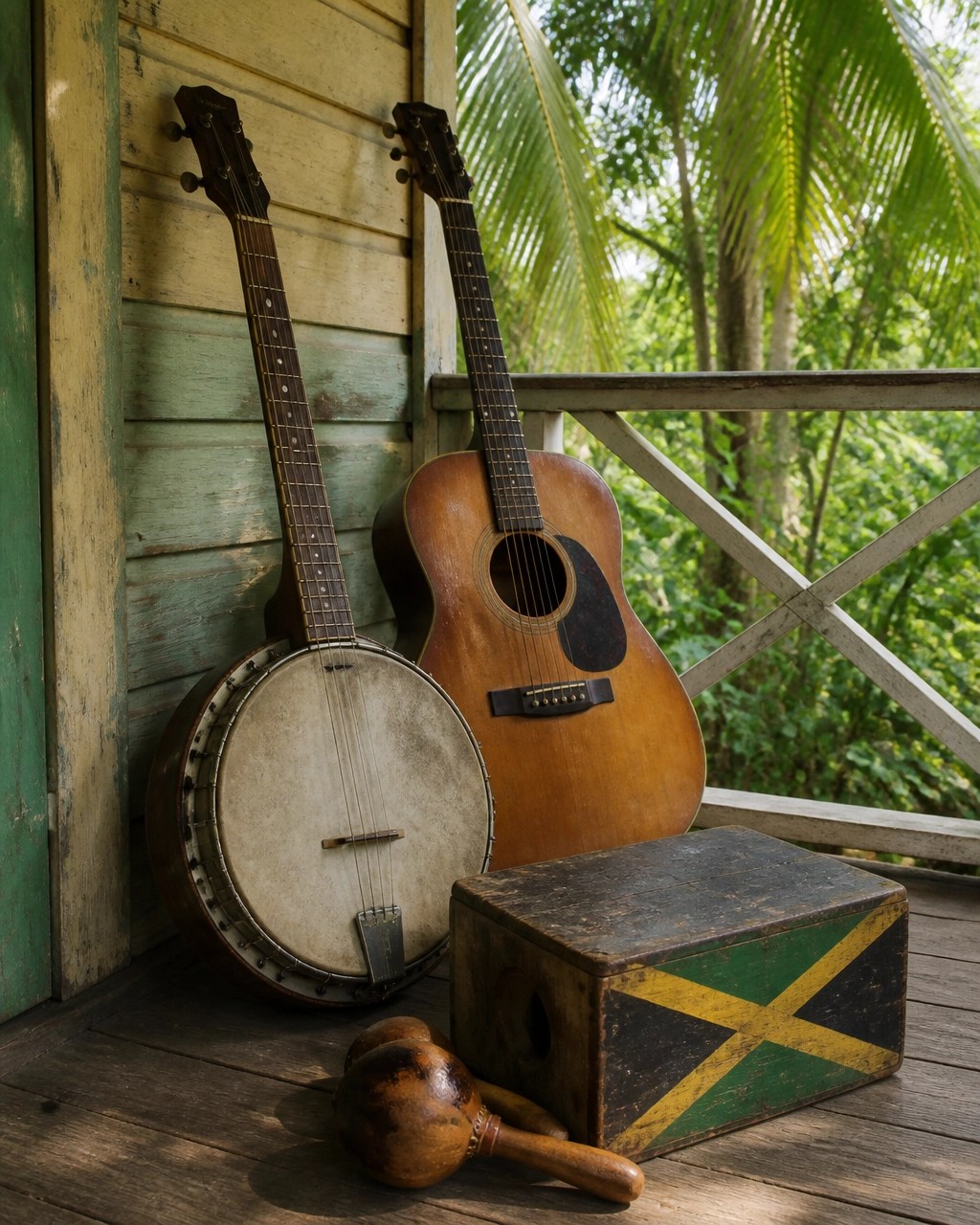
That matters because mento is often presented as a single historical object : a quaint acoustic precursor to ska and reggae, complete with banjo, guitar, rumba box, maracas, flirtation, and double entendre. The episode pushes against that narrowing. Mento has always been broader and stranger than the simplified postcard version.
Dizzle’s perspective comes from the studio floor. He describes encountering the Jolly Boys as a traditional acoustic band, then recognizing that the musicians and their repertoire could support something more expansive. The project did not simply document a band playing old songs. It placed their sound into conversation with global pop, rock, punk, hip-hop production, and contemporary recording methods.
That is where the tension with Neely becomes useful.
Neely recalls disagreements around arrangements, including the question of whether songs such as The Clash’s “Should I Stay or Should I Go” belonged inside the project. Dizzle was less interested in drawing a hard line around what mento was allowed to touch. His instinct was exploratory: take the old form, listen for what it can carry, then build from there.
Neither position wins. That is the point.
The argument becomes a creative engine. Neely protects the historical specificity of the music. Dizzle tests its range. John Baker’s vision : “G Jam as an Apple store in the jungle” : sits in the middle: modern infrastructure, rooted environment, no clean separation between the two.
Albert Minott brought the archive to life
The most vivid parts of the episode concern Albert Minott, the Jolly Boys’ lead singer during the Great Expectation period.
Neely describes Albert as a strident, commanding performer with the flair of an old-time North Coast entertainer. He was a fire eater, a stilt walker, a fashion presence, and a musician with wide-ranging tastes. Dizzle remembers someone who listened beyond the standard mento vocabulary : jazz, blues, Sinatra, R&B, ballads, and even dancehall.
That detail changes the way the album is heard.
Albert was not simply a vessel carrying an inherited style. He had his own appetite. He understood performance as spectacle, but also as musical personality. His fashion, movement, voice, and experimental instincts gave the Jolly Boys a center of gravity that could not be manufactured through overdubs or arrangement choices.
The conversation also makes room for the musicians around him. Johnny is described as an original member and a bearer of the group’s older history. Powa represents another layer of the band’s lineage. Brutus, remembered with affection, brought his own deep musicianship and connection to Burning Spear.
The Jolly Boys’ story is therefore not a neat succession from “old” to “new.” It is a gathering of different generations, personalities, and musical abilities around a shared name.
“Rehab,” the synthesized banjo, and the sound of negotiation
The discussion of “Rehab,” the Jolly Boys’ Amy Winehouse cover, gives the episode its sharpest production detail.
Dizzle explains that he built much of the track with modern studio tools, including a drum machine, keyboard, electric bass, piano, and a synthesized banjo sound. Neely then pushed for the presence of a real banjo. The final mix layered the synthetic and acoustic instruments together, with the real banjo sitting deeper in the texture.
That small production story contains the entire argument.
The synthesized banjo is not automatically a betrayal of the instrument. The real banjo is not automatically authentic simply because it was played by hand. The finished sound comes from the collision : the fake and the real, the programmed and the performed, the sampled and the live.
Dizzle also describes using a hip-hop sampling approach in the track. That matters because it places mento inside a larger African diasporic production history. Jamaican music has always absorbed, reshaped, and redistributed sound. The studio is not outside that tradition. It is one of the places where the tradition continues.
The episode’s treatment of instruments opens an even wider door. The rumba box is discussed as a defining but not universal part of mento’s sound. Acoustic guitar, banjo, fiddle, percussion, bass, and later electrified instruments all enter the story at different points.
Neely’s explanation of the banjo’s African origins is especially important. The instrument is often filed under American country music, but its deeper history belongs to the African diaspora and the recreation of remembered instruments in the Americas. That history connects Jamaica, Black American musical traditions, country music, gospel, and the movement of missionaries from the American South.
The episode does not resolve that thread. It identifies the next question.
From mento to reggae-mento
The conversation also places mento inside reggae’s continuing bloodstream.
Neely discusses reggae-mento as a subgenre and points to figures such as Stanley Beckford and Neville Willoughby. The idea is not that reggae suddenly discovered mento in the twenty-first century. Mento rhythms, melodies, performance habits, and lyrical attitudes have continued to surface in reggae and dancehall.
Dizzle connects that lineage to more recent work, including Steven McGregor’s hill-and-gully-riddim-era productions. The Jolly Boys’ modern project becomes part of a longer cycle: musicians return to older Jamaican forms, not to imitate them perfectly, but to reactivate what they still contain.
That is why Great Expectation matters beyond its covers. Reworking “Rehab,” “Riders on the Storm,” “The Passenger,” “Ring of Fire,” and other global songs in a Jolly Boys framework introduced mento to listeners who may never have sought out the tradition directly. The album became a bridge between old-time Jamaican performance and global pop recognition.
The bridge worked because the musicians did not abandon their identity. They carried it into unfamiliar material.
What the episode does well
The strongest feature is the chemistry between Neely and Dizzle. Their disagreements feel lived-in rather than staged. There is respect, laughter, correction, memory, and the occasional interruption : the texture of people who actually made something together.
Jahmi Roc’s hosting keeps the conversation moving while allowing the guests room to wander.
That wandering produces some of the episode’s best material: the story of meeting Powda in Port Antonio, Herby Miller’s role in Jamaican music history, bestival, the 2011 European tour with Sade, and the unexpected international recognition the Jolly Boys received in Dubai and the Maldives.
The archival photos and audio clips strengthen the discussion. Seeing Albert’s performance presence, the band’s tour styling, and the wider world surrounding the project gives the history a body. The episode does not treat scholarship as a stack of documents. It lets the people, clothes, instruments, studios, stages, and memories remain visible.
That approach also gives Jahmi Roc’s Jottings practical value.
Producers can hear how arrangement decisions become cultural decisions. Musicians can think about adaptation without confusing it with erasure. Researchers get a firsthand account of a major modern mento project. Fans receive context for an album that is easy to describe as a set of covers but much richer when understood as a negotiation between Jamaica’s past and its global present.
Where the conversation falls short
The episode’s informal, at-home podcast production gives it warmth, but it also creates limitations. Audio levels and visual sharing are not always seamless, and some of the photographs and clips depend on the audience following along through the stream rather than receiving a polished documentary presentation.
The long conversational digressions will also test listeners who want a tightly edited historical lecture. The discussion moves from mento to tourism, Errol Flynn, celebrity press photos, paparazzi, the mechanics of studio production, and the social meaning of performance. Those detours are often entertaining, but they occasionally interrupt the main line of inquiry.
Some of the most promising subjects are left for future episodes. The history of mento instrumentation deserves a dedicated examination. So does the relationship between the African banjo, American country music, Jamaican gospel, missionary networks, and reggae’s later development. The question of how Jamaican audiences hear mento differently from listeners abroad also remains open.
Those gaps are not fatal. They reveal how much territory the conversation is trying to cover.
Final verdict
Jahmi Roc’s Jottings : Season 3, Episode 16 is a strong video review conversation because it understands that the Jolly Boys’ modern resurgence cannot be reduced to preservation or crossover.
The episode shows scholarship and production meeting in the same room. It shows a banjo arguing with a synthesizer. It shows a traditional band moving through global pop without surrendering the Jamaican ground beneath it.
Most importantly, it refuses to make mento small.
Mento is living DNA : present in reggae, dancehall, gospel, country connections, acoustic performance, studio sampling, flirtation, rhythm, and the instinct to reshape whatever enters the room. Great Expectation matters because it made that DNA audible to a wider world while leaving enough friction in the sound for listeners to hear the argument.
That argument is still alive.
For more DubCorner coverage of Caribbean music history, production, and artist stories, visit our Music News section and Media archive. The Jolly Boys’ Great Expectation is also available to explore alongside NPR’s feature on the band. Share the episode with a musician, DJ, researcher, or anyone still claiming that old music has to stay old.
